Working Across Generations: Beyond the Stereotypes
Abi Adamson
Book a demo →from €2,250 for your whole company
Book a demo →from €2,250 for your whole company
This one runs as an interactive workshop: the hour includes exercises your colleagues do themselves, not only a talk.
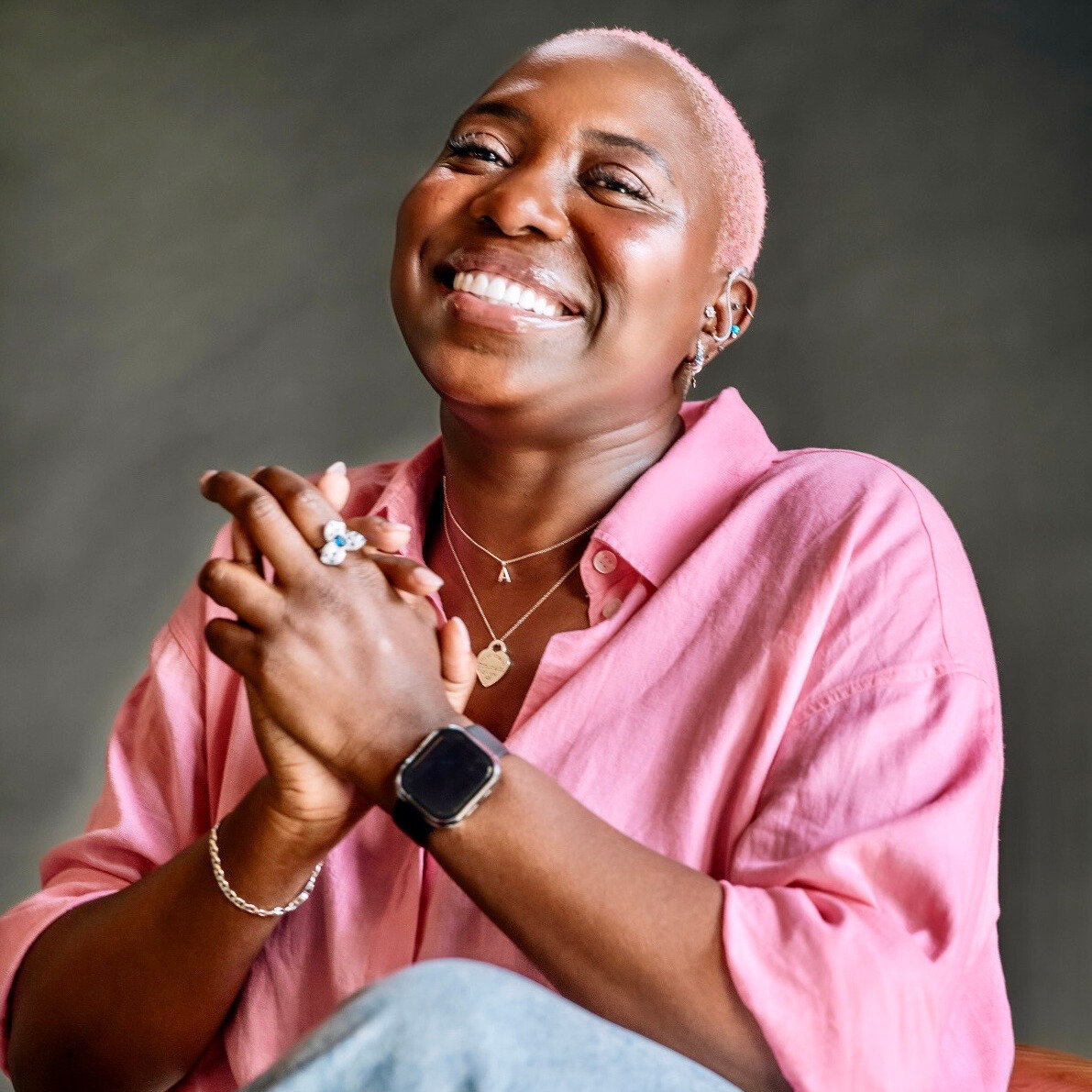
Abi Adamson, Founder of The Culture Partnership, is a pioneering voice in workplace culture transformation, recognized by The New York Times as one of the "Stars of LinkedIn." She has designed and implemented cultural strategies for global industry leaders, including Spotify, Sony Music, SoHo House, and Wise, focusing on creating environments where belonging thrives. A sought-after consultant with demonstrable impact, Abi regularly contributes insights to prominent publications including The Metro, Raconteur, People Management, and HR Zone. She will deliver her first TEDx talk "Who Owns Culture" in November 2025 and release her debut book "Culture Blooming: Nurturing Workplaces Where People Grow" with Berrett-Koehler Publishers in August 2026. Abi transforms organizations by equipping leaders with practical tools to navigate complex conversations around inclusion and psychological safety, ensuring everyone can authentically contribute their unique strengths.
All sessions by Abi →Five generations in one workplace, and we're still pretending the tension is about work ethic or technology. This workshop exposes how ageism flows in all directions and why generational conflict is often about power, respect, and whose experience counts as expertise.
We'll unpack why "OK Boomer" and "lazy millennials" are symptoms of deeper exclusion, how different generations mask similar needs with different language, and what happens when we stop treating age diversity as a problem to solve. Participants will learn to recognize how generational bias intersects with other forms of discrimination, challenge assumptions about who's "digital native" versus who's "seasoned," and build bridges that honor both institutional knowledge and fresh perspectives. Because innovation needs both wisdom and disruption.
During the expert session, Abi Adamson engages the audience through a live Q&A session. Inspiring reflection and encouraging active participation from all attendees.
1. Look Beyond Generational Stereotypes
Understand that age-related tension is often about power, respect, and belonging—not just work style.
2. Recognize Bias Across All Ages
See how ageism flows in every direction and intersects with other forms of exclusion.
3. Bridge Wisdom and Innovation
Foster collaboration that values both experience and fresh perspective to drive true innovation.
In this expert session, Abi Adamson discusses the intricacies of generational diversity in the workplace and the importance of addressing age bias in its entirety. She begins by reminding us that generational diversity, like all forms of diversity, is multifaceted and interconnected.
Age bias cannot be fully understood without acknowledging how it connects with other forms of identity and systemic inequalities.
Abi then emphasizes the importance of recognizing power dynamics within organizations. Older workers may face ageism but hold more power due to their tenure, while younger employees often lack opportunities for advancement.
She stresses that a comprehensive approach is required to address generational bias, which includes acknowledging and addressing power imbalances and systemic issues.
Delving deeper into the topic, Abi discusses the unique communication styles and preferences among various generations in the workforce. For instance, older generations tend to value directness and efficiency in feedback, while younger generations prefer context and explanation before criticism.
However, she urges us to move beyond stereotypes and labels, focusing instead on creating inclusive workplaces where all employees feel valued and respected regardless of their age or other characteristics.
Abi also emphasizes the importance of breaking down stereotypes and assumptions about different generations by asking individuals what they need in terms of communication and feedback styles. She suggests using a framework called "calling in" to address biases and microaggressions in real-time, encouraging reflection and private education rather than accusation or negative feelings.
Moreover, Abi highlights the strengths that each generation brings to the workplace and encourages organizations to leverage these diverse strengths instead of trying to fix generational differences. She recommends removing age requirements from job descriptions, making mentorship multidirectional, and focusing on individual contributions when evaluating competence rather than age.
Throughout the session, Abi emphasizes respecting individuals for who they are and valuing their unique perspectives and experiences. She concludes by encouraging companies to embrace generational diversity in the workplace and create an environment where all generations feel valued for their unique contributions.
Before wrapping up, Abi invites participants to engage in a Q&A session using the Mentimeter app displayed on their screens. She also plans to distribute a survey link later for further input. In response to a question regarding the challenges companies face when dealing with generational diversity, Abi suggests focusing on understanding each individual's unique needs and avoiding making blanket statements about employees based on their generation.
Another query about approaching managers who rely heavily on experience when recruiting new talent leads Abi to recommend having an open conversation and expressing the potential loss of top talent if they fail to adapt to the evolving business landscape. As the session comes to a close, Abi expresses her gratitude for sharing her insights and encourages participants to fill out the Mentimeter survey and look out for the survey link in the chat.
No prior knowledge is assumed. It is built for a general working audience, and people who already know the subject get the research and the practical side rather than an introduction. What the hour itself covers: Five generations in one workplace, and we're still pretending the tension is about work ethic or technology. This workshop exposes how ageism flows in all directions and why generational conflict is often about power, respect, and whose experience counts as expertise.
A workshop. The description of this session says so itself: the hour includes exercises and activities that participants do, not only an expert speaking. It still runs live and online, for as many colleagues as you want to invite.
Abi Adamson is one of the experts we auditioned ourselves, and we produce every session so we see how each one lands. Participants rate this session 4.4 out of 5, across 60 responses, and rate Abi personally 4.6 out of 5.
It is interactive, and the block higher up on this page says exactly how for this session. Nobody has to speak up who does not want to: the chat and the polls carry most of it, and the questions can come in anonymously.
It runs 45 min / 15 min: the talk, then live questions. All you do is pick a date. We brief Abi, produce the session, host and moderate it, run the Q&A, and send you the report within an hour of the end.
A team, a department, an employee network or every single employee at once, with no cap and no per-seat price. It runs inside your own Microsoft Teams, Zoom or Google Meet, or on a branded page we build. No integration, no login, no company device or e-mail.
The session is delivered in English. You can add high accuracy live subtitles in 8, 16 or 24 languages, so everyone follows in their own. That is a paid option, priced by the number of languages you need.
No, and that is by design. There is nothing to install, nothing to integrate and no connection to your systems, so there is nothing for IT to validate: we join your own Teams, Zoom or Meet as a guest speaker, or we host a page and your people open a link. No software, no accounts, and no data of yours that we can reach. It is why hundreds of companies, among them some of the largest technology and financial firms in the world, were able to start within a day.
We never receive or hold personal data about your employees. Because the session runs in your own environment, attendance and identity stay with you, and what we report back is aggregated: numbers, ratings and survey answers, not people. That is also why IT approval usually takes minutes rather than weeks.
You keep the recording and can share it internally. You also get attendance over time, participant ratings for the content and the speaker, the survey answers, and the topics your people asked for next.
Allyship isn't a title you claim; it's work you do when no one's watching.
In this expert session, Abi shared her personal experiences and insights into living with hearing loss in a work environment and…
Most workplace conflicts aren't about the surface disagreement; they're about unmet needs, unheard voices, and unequal power…
What we'll cover: Why most feedback fails (and it's not the person receiving it) The psychology of receiving criticism - what…
Growth mindset isn't just corporate buzzwords - it's the difference between people who see challenges as dead ends and those who…
Emotional intelligence isn't a personality trait you either have or you don't. It's a practice shaped by the culture around you.
Leadership isn't about having all the answers; it's about creating space for everyone's brilliance to emerge.
In this session, Abi Adamson explores the quiet ways AI is reshaping how people feel at work: the pressure to keep pace with…
Most workplaces are getting AI wrong. Not because they are investing too much in the technology, but because they are forgetting…
Psychological Safety is a well documented driver of high performance in teams and organisations.
Ramadan and Eid are deeply significant periods in the Islamic calendar, marked by fasting, prayer, and community celebrations.
The topic of culture can sometimes seem dry or theoretical, however in reality we all have a natural ability to connect with…
Female Leadership is in high demand in organizations but numbers show that often women are still not present at the tables of…
Skillful communication and warm connection are needed today more than ever before — whether that be in your professional or…
AI has the power to shape our world, and is increasingly becoming part of our daily lives - but what happens when it inherits…