Strategic Thinking for Leaders Who Are Still Too Deep in the Weeds
Olga Labutina
Book a demo →from €2,250 for your whole company
Book a demo →from €2,250 for your whole company
This one runs as an interactive workshop: the hour includes exercises your colleagues do themselves, not only a talk.
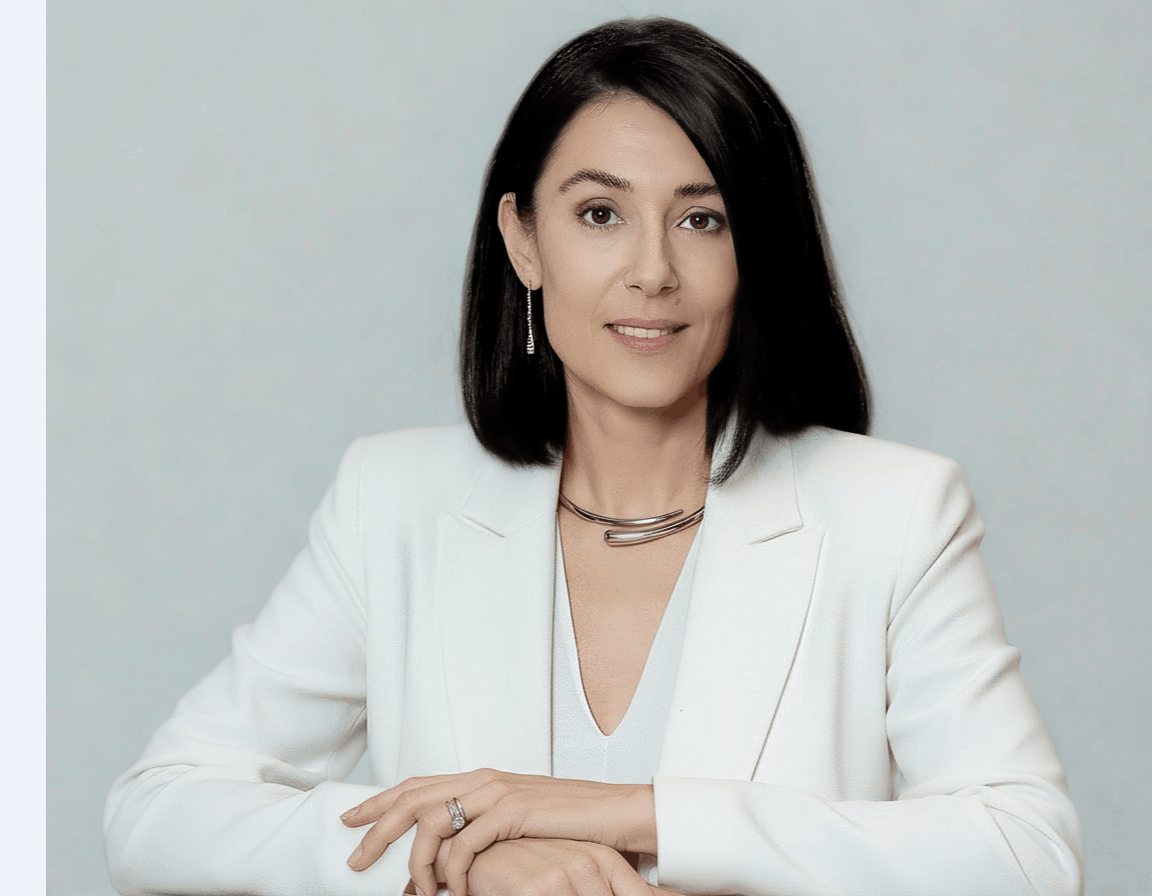
Olga Labutina is an Executive & Leadership Coach who works with senior leaders from companies like Amazon, Stripe, Microsoft, LVMH and many more. She specialises in executive presence, strategic communication, and stakeholder management, helping high-performing leaders translate their expertise into influence, credibility, and impact at the most senior levels. Olga holds an MSc in Sociology and Social Psychology, an MBA from SDA Bocconi School of Management, and is an ICF Master Certified Coach (MCC) - a distinction held by fewer than 3% of coaches globally. With over 20 years of corporate and entrepreneurial experience, she brings both deep psychological insight and real-world business credibility to her work. Her approach blends behavioural science with organisational reality, equipping leaders to navigate pressure, politics, and visibility with confidence and authority.
All sessions by Olga →Most organizations can identify their strongest executors. Fewer can identify who among them is ready to think like a strategist. This session closes that gap.
Strategic thinking is consistently cited as one of the top leadership capabilities organizations struggle to develop and one of the clearest differentiators between leaders who plateau and leaders who grow. This workshop gives mid-to-senior leaders the specific mental moves and habits that shift them from executing work to shaping direction.
What This Session Addresses:
The leaders in your organization are not failing to think strategically because they lack intelligence or ambition. They are doing it because the habits that made them successful- reliability, execution speed, deep expertise- are the same habits that now work against them. No one taught them how to unlearn this.
Outcomes for Your Organization:
After this session, participants will be able to identify when they are operating at the wrong level, reframe problems before jumping to solutions, and bring a point of view rather than a progress report to senior stakeholders. These are not soft skills.
They are observable behavioral shifts that affect meeting quality, decision speed, and leadership readiness.
Who This Is For:
Mid-to-senior leaders who are strong performers but not yet operating at full strategic altitude. Especially effective for leaders preparing for expanded scope, new levels of responsibility, or transitions from functional expert to cross-functional leader.
During the expert session, Olga Labutina engages participants through a series of interactive activities and Q&A using Mentimeter, an interactive engagement tool.
the specific transition from expert to strategist that most mid-to-senior leaders miss and what gets in the way
practical tools for distinguishing operational from strategic thinking, and how to train the switch between them
the communication shift that signals readiness for the next level
Strategic thinking is an essential skill for any organization to thrive. Leaders who stall are rarely the ones who stopped working hard. They are the ones who kept working hard at the wrong level. Executing tasks that should be delegated.
Solving problems that should be reframed. Reporting progress where they should be shaping direction. It is all a natural consequence of how strong performers are developed and rewarded early in their careers.
In this workshop leaders will learn the specific applicable ways to shift from being into the weeds to leading strategically.
The session opens by naming the transition honestly: what it looks like when a leader is operating too tactically, why it often reads as strength from the outside, and why it quietly limits both their progression and their team's performance. This diagnostic moment creates immediate recognition, the kind that makes the rest of the session land.
From there, participants learn a practical set of moves: how to ask the upstream question before solving the downstream one, how to use inversion to surface risks before committing to direction, how to identify second-order consequences rather than reacting to first-order problems. These are not abstract principles.
They are specific behaviors with immediate application to the decisions your leaders are facing this week.
The final section addresses strategic communication. How leaders translate their thinking into language that resonates with senior stakeholders. How to show up to leadership conversations with a point of view rather than a status update.
How to position themselves as someone who shapes the agenda rather than reports against it.
No prior knowledge is assumed. It is built for a general working audience, and people who already know the subject get the research and the practical side rather than an introduction. What the hour itself covers: Most organizations can identify their strongest executors. Fewer can identify who among them is ready to think like a strategist.
A workshop. The description of this session says so itself: the hour includes exercises and activities that participants do, not only an expert speaking. It still runs live and online, for as many colleagues as you want to invite.
Olga Labutina is one of the experts we auditioned ourselves, and we produce every session so we see how each one lands. Participants rate this session 4.6 out of 5, across 25 responses, and rate Olga personally 4.8 out of 5.
It is interactive, and the block higher up on this page says exactly how for this session. Nobody has to speak up who does not want to: the chat and the polls carry most of it, and the questions can come in anonymously.
It runs 45 min / 15 min: the talk, then live questions. All you do is pick a date. We brief Olga, produce the session, host and moderate it, run the Q&A, and send you the report within an hour of the end.
A team, a department, an employee network or every single employee at once, with no cap and no per-seat price. It runs inside your own Microsoft Teams, Zoom or Google Meet, or on a branded page we build. No integration, no login, no company device or e-mail.
The session is delivered in English. You can add high accuracy live subtitles in 8, 16 or 24 languages, so everyone follows in their own. That is a paid option, priced by the number of languages you need.
No, and that is by design. There is nothing to install, nothing to integrate and no connection to your systems, so there is nothing for IT to validate: we join your own Teams, Zoom or Meet as a guest speaker, or we host a page and your people open a link. No software, no accounts, and no data of yours that we can reach. It is why hundreds of companies, among them some of the largest technology and financial firms in the world, were able to start within a day.
We never receive or hold personal data about your employees. Because the session runs in your own environment, attendance and identity stay with you, and what we report back is aggregated: numbers, ratings and survey answers, not people. That is also why IT approval usually takes minutes rather than weeks.
You keep the recording and can share it internally. You also get attendance over time, participant ratings for the content and the speaker, the survey answers, and the topics your people asked for next.
Most leaders were promoted because they had answers. That's exactly what makes coaching hard.
You can be the most competent person in the room and still lose the budget, the headcount, the promotion.
You spend weeks building rigorous analysis. Leadership thanks you and moves on.
You're doing the work. Someone else is getting the promotion. If you've been told you're "reliable," "detail-oriented," or that…
"People will forget what you said... but people will never forget how you made them feel," - Maya Angelou This hands-on workshop…

Psychological Safety is a well documented driver of high performance in teams and organisations.

How do successful people, teams, and organisations become even more successful?
- Session available on-site only - Sometimes, the way we approach a problem becomes the problem itself, but we may not be aware…

In a world of uncertainty, we cannot always control all the bad things that happen to us, but we can control the way that we…

At this point, the integration of AI in the workplace seems inevitable as many professionals are using it daily.