This one runs as an interactive workshop: the hour includes exercises your colleagues do themselves, not only a talk.
- Session available on-site only -
Sometimes, the way we approach a problem becomes the problem itself, but we may not be aware of it. For instance, when we address complex situations with a linear mindset and find that our solutions have limited impact, it can be surprising.
This workshop offers an experiential approach to help people understand what happens when there's a mismatch between the type of problem they encounter and the kind of solutions they try. You will grasp the Cynefin model from IBM, which views problems as "living" in different domains and requiring appropriate leadership styles for response. The lecture is dynamic and lively, yet quite philosophical in nature.
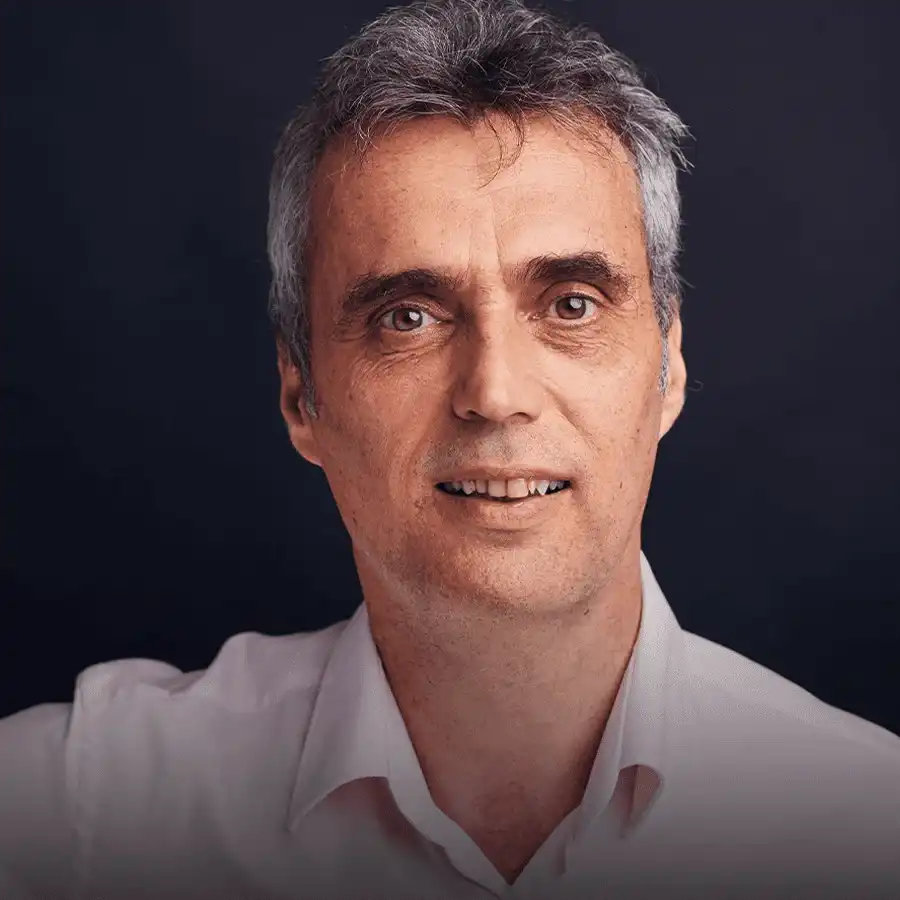
During the expert session, Robert Wolfe engages the audience through a mix of storytelling and interactive exercises.
Learn to differentiate between the types of problems—simple, complicated, complex, or chaotic—and understand how each requires distinct approaches and solutions.
Discover how to apply appropriate leadership styles based on the problem domain to enhance the effectiveness of your responses.
Gain insights into aligning your problem-solving strategies with the specific characteristics of the issues you face, leading to more impactful and effective solutions.
- Session available onsite only -
Often, the way we approach a problem can become the problem itself, particularly when we apply a linear mindset to complex situations and find our solutions falling short. This workshop offers an experiential learning approach to uncover how a mismatch between the nature of a problem and the solutions we apply can limit effectiveness.
Participants will explore this concept through the Cynefin model, developed by IBM, which categorizes problems into different domains and advocates for tailored leadership styles to address each type effectively.
The Cynefin model provides a framework for understanding that problems are not one-size-fits-all. It helps participants recognize how different problems—whether simple, complicated, complex, or chaotic—require distinct approaches and responses.
By delving into this model, attendees will learn to align their problem-solving strategies with the specific characteristics of the issues they face.
This dynamic and philosophical workshop encourages a deep reflection on how our problem-solving approaches can be adjusted to achieve better outcomes. Through engaging activities and discussions, you will gain valuable insights into effective leadership and problem-solving strategies, enhancing your ability to address challenges in a more impactful and nuanced manner.
It is interactive, and the block above says exactly how for this session. Nobody has to speak up who does not want to: the chat and the polls carry most of it, and the questions can come in anonymously.
- Session available on-site only - Sometimes, the way we approach a problem becomes the problem itself, but we may not be aware of it. For instance, when we address complex situations with a linear mindset and find that our solutions have limited impact, it can be surprising. It is built for a general working audience: no prior knowledge is assumed, and people who already know the subject get the research and the practical side rather than an introduction.
A workshop. The description of this session says so itself: the hour includes exercises and activities that participants do, not only an expert speaking. It still runs live and online, for as many colleagues as you want to invite.
Robert Wolfe is one of the experts we auditioned ourselves, and we produce every session so we see how each one lands. Participants rate this session 4.4 out of 5, across 749 responses, and rate Robert personally 4.6 out of 5.
It runs 45 min / 15 min: the talk, then live questions. All you do is pick a date. We brief Robert, produce the session, host and moderate it, run the Q&A, and send you the report within an hour of the end.
A team, a department, an employee network or every single employee at once, with no cap and no per-seat price. It runs inside your own Microsoft Teams, Zoom or Google Meet, or on a branded page we build. No integration, no login, no company device or e-mail.
The session is delivered in English, Dutch. You can add high accuracy live subtitles in 8, 16 or 24 languages, so everyone follows in their own. That is a paid option, priced by the number of languages you need.
No, and that is by design. There is nothing to install, nothing to integrate and no connection to your systems, so there is nothing for IT to validate: we join your own Teams, Zoom or Meet as a guest speaker, or we host a page and your people open a link. No software, no accounts, and no data of yours that we can reach. It is why hundreds of companies, among them some of the largest technology and financial firms in the world, were able to start within a day.
We never receive or hold personal data about your employees. Because the session runs in your own environment, attendance and identity stay with you, and what we report back is aggregated: numbers, ratings and survey answers, not people. That is also why IT approval usually takes minutes rather than weeks.
This one is live only. You also get attendance over time, participant ratings for the content and the speaker, the survey answers, and the topics your people asked for next.

"People will forget what you said... but people will never forget how you made them feel," - Maya Angelou This hands-on workshop…
In a few interactive, playful exercises Rod shows people how to switch from ‘Yes, but’ to ‘Yes, and’.
In this 60 minute interactive session, Rod makes the case that the success or failure of everything we do depends on only one…
Rod Ben Zeev discusses the nuances of online facilitation, focusing on the importance of psychological safety and understanding…
How do you give and receive feedback? We often find it difficult to tell someone what we really think.

Psychological Safety is a well documented driver of high performance in teams and organisations.