Fearless & Female: Improve Executive Presence - Lead with Impact
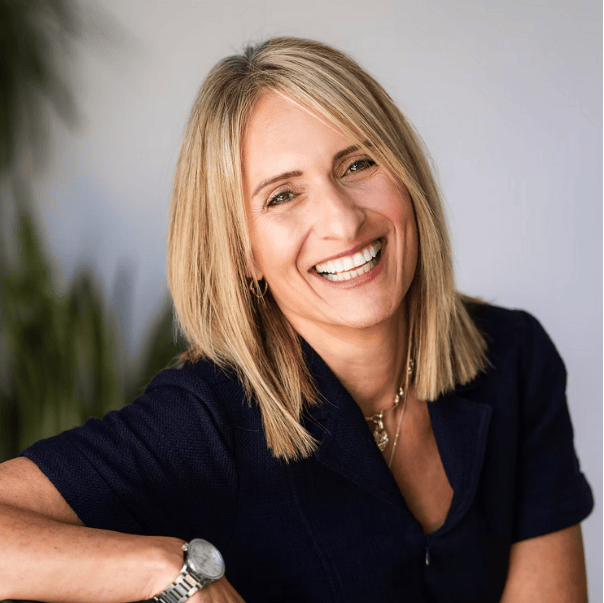
Sarah Farmer
Book a demo →from €2,250 for your whole company
Book a demo →from €2,250 for your whole company
This one runs as an interactive workshop: the hour includes exercises your colleagues do themselves, not only a talk.
Sarah Farmer is a Global Executive Coach, author, and founder of Bright & Brilliant Ltd., a leadership development firm specialising in supporting C-suite executives, leadership teams, emerging senior leaders, and business owners. With a degree in Applied Chemistry and a lifelong interest in psychology and human behaviour—sparked early on by exposure to her mother’s work as a psychologist—Sarah combines analytical rigour with deep insight into what drives people. Her coaching is grounded in a practical understanding of how the brain works, helping leaders manage themselves more effectively and create lasting behavioural change in others.
All sessions by Sarah →Highly capable women often hesitate at key moments at work, not due to a lack of ability or confidence, but because they are navigating multiple expectations, responsibilities, and pressures simultaneously. This constant mental load can lead to overthinking, second-guessing, and delayed decision-making, particularly in high-stakes or high-visibility situations.
This International Women’s Day session explores why overthinking is so prevalent for women in the workplace, how it affects confidence, executive presence, and leadership impact, and what practical strategies women can use to think more clearly and act decisively under pressure. Participants will gain insight into how to reduce mental overload, strengthen self-trust, and lead with greater clarity and effectiveness in complex environments.
During the expert session, Sarah Farmer engages the audience through visuals, interactive Q&A, and live polling.
EP is defined by how others experience your capability, not just your internal knowledge. It acts as the essential bridge between being competent and being perceived as a leader. True presence requires the consistent expression of confidence, emotional intelligence, and clear communication, especially under pressure.
When the "heat is on," the brain triggers a threat response that causes leaders to leak tension. This results in three counterproductive patterns: compensating (over-explaining), concealing (holding back), or misinterpreting (seeing neutral cues as negative). Recognizing these biological triggers is the first step to interrupting them.
Impact starts with internal stability. Leaders can reset in seconds by lengthening their exhale to calm the nervous system, dropping their shoulders to release physical rigidity, and using grounding phrases like "I am steady." Using a "Power Pose" before high-stakes moments further signals strength to the brain.
In this session, Sarah Farmer delivers a masterclass on maintaining authority and "leading brightly" when the stakes are highest. She begins by redefining Executive Presence (EP) as the vital link between being high-performing and being seen as ready for senior leadership.
Sarah argues that while many women possess immense capability, they often struggle with how that ability is perceived under intense pressure. She breaks EP down into three foundational pillars: Confidence (avoiding both the "imposter" dip and over-confidence), Emotional Intelligence (the ability to choose a response rather than simply reacting), and Communication Effectiveness (the versatility to adapt your style to the needs of your audience).
The session dives deep into the neuroscience of stress, explaining how the brain’s "threat response" can sabotage even the most seasoned leaders. Sarah illustrates how high-pressure environments, such as presenting to senior boards or navigating difficult feedback, cause our biology to leak signals of discomfort.
Using a color-coded archetype system (Red, Blue, Green, and Yellow), she demonstrates how our natural communication strengths can become "too loud" and jarring when we are deregulated. To counter this, she provides a "re-calibration" toolkit of immediate physical and mental exercises.
From the "Power Pose" to specific breathing techniques and grounding self-talk, the session empowers women to stay intentionally calm and focused. Ultimately, Sarah teaches that being "fearless" is not about the absence of nerves, but about the self-regulation required to ensure your capability shines through even when the heat is on.
No prior knowledge is assumed. It is built for a general working audience, and people who already know the subject get the research and the practical side rather than an introduction. What the hour itself covers: Highly capable women often hesitate at key moments at work, not due to a lack of ability or confidence, but because they are navigating multiple expectations, responsibilities, and pressures simultaneously. This constant mental load can lead to overthinking, second-guessing, and delayed decision-making, particularly...
A workshop. The description of this session says so itself: the hour includes exercises and activities that participants do, not only an expert speaking. It still runs live and online, for as many colleagues as you want to invite.
Sarah Farmer is one of the experts we auditioned ourselves, and we produce every session so we see how each one lands. Participants rate this session 3.9 out of 5, across 28 responses, and rate Sarah personally 4.3 out of 5.
It is interactive, and the block higher up on this page says exactly how for this session. Nobody has to speak up who does not want to: the chat and the polls carry most of it, and the questions can come in anonymously.
It runs 45 min / 15 min: the talk, then live questions. All you do is pick a date. We brief Sarah, produce the session, host and moderate it, run the Q&A, and send you the report within an hour of the end.
A team, a department, an employee network or every single employee at once, with no cap and no per-seat price. It runs inside your own Microsoft Teams, Zoom or Google Meet, or on a branded page we build. No integration, no login, no company device or e-mail.
The session is delivered in English. You can add high accuracy live subtitles in 8, 16 or 24 languages, so everyone follows in their own. That is a paid option, priced by the number of languages you need.
No, and that is by design. There is nothing to install, nothing to integrate and no connection to your systems, so there is nothing for IT to validate: we join your own Teams, Zoom or Meet as a guest speaker, or we host a page and your people open a link. No software, no accounts, and no data of yours that we can reach. It is why hundreds of companies, among them some of the largest technology and financial firms in the world, were able to start within a day.
We never receive or hold personal data about your employees. Because the session runs in your own environment, attendance and identity stay with you, and what we report back is aggregated: numbers, ratings and survey answers, not people. That is also why IT approval usually takes minutes rather than weeks.
You keep the recording and can share it internally. You also get attendance over time, participant ratings for the content and the speaker, the survey answers, and the topics your people asked for next.
Leading people through change becomes easier when leaders understand how the human brain reacts to uncertainty.
When change occurs, communication can either calm people or create panic.
Imagine walking into a difficult conversation feeling calm, prepared and genuinely confident, not bracing for disaster, not…
At the heart of bold decisions and breakthrough results is a confident, emotionally intelligent inner world.
Psychological Safety is a well documented driver of high performance in teams and organisations.
Ramadan and Eid are deeply significant periods in the Islamic calendar, marked by fasting, prayer, and community celebrations.
The topic of culture can sometimes seem dry or theoretical, however in reality we all have a natural ability to connect with…
Female Leadership is in high demand in organizations but numbers show that often women are still not present at the tables of…
Skillful communication and warm connection are needed today more than ever before — whether that be in your professional or…
AI has the power to shape our world, and is increasingly becoming part of our daily lives - but what happens when it inherits…