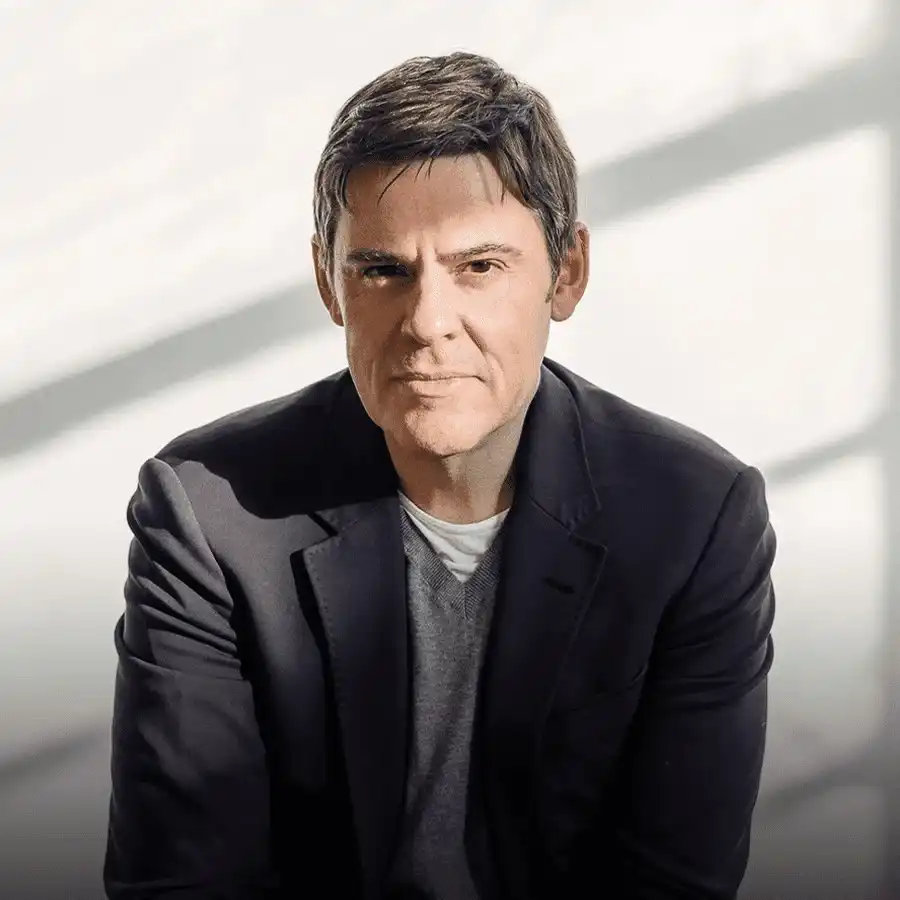
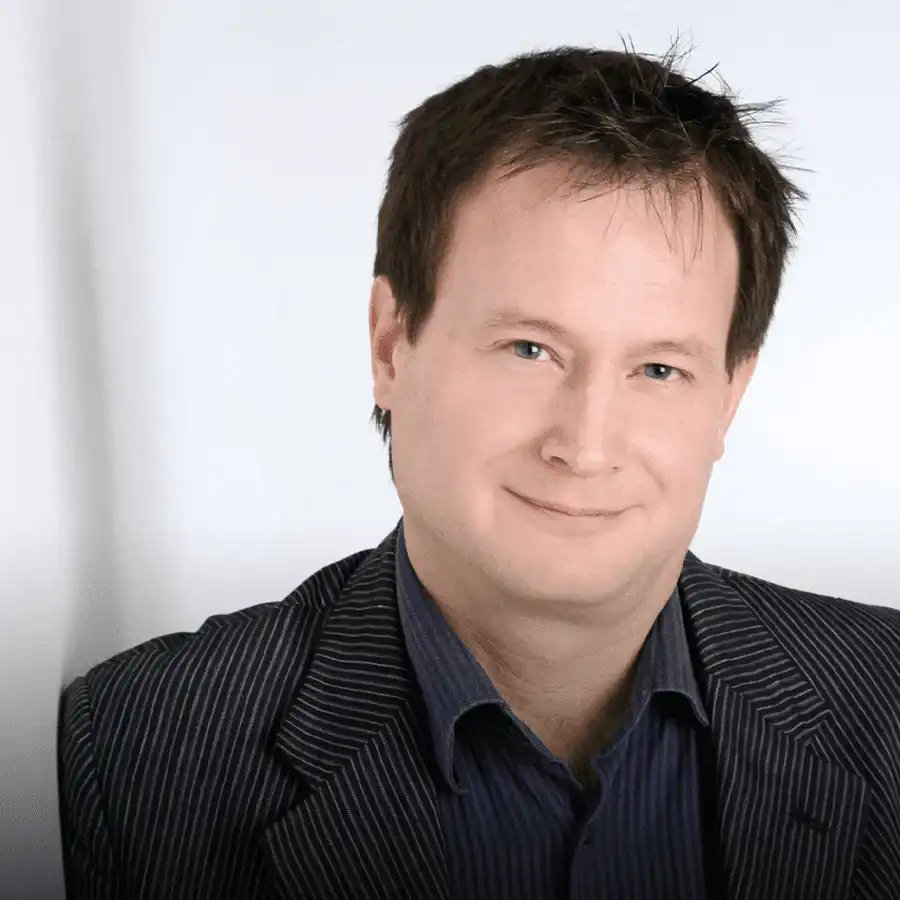
Robert Rowland Smith was for 7 years a Prize Fellow at Oxford and is a consultant, leqturer and writer on philosophy, literature and psychoanalysis. For years, he had a column in the Sunday Times on moral dilemmas and he contributes regularly to BBC TV and radio.
All sessions by Robert →Sometimes we make good decisions. Other times, we make really bad ones. What is it that creates the difference? The answer tends to polarise. On the one hand, it is thought that the way to good decision-making lies in pure reason.
The more logical and objective we are, the better the decision. On the other hand, people say that the best decisions are based on gut instinct. The most rigorous analysis is no substitute for a hunch.
In this session, philosopher and psychologist Robert Rowland Smith will take us through the fascinating world of decision-making, and ask us to decide in turn whether making good decisions is a science or an art.
During the expert session, Robert Rowland Smith, a philosopher, engages the audience through methods like a Q&A session, live demonstrations using Mentimeter for interactive exercises and polls, and group discussions. He explores decision-making from philosophical and psychological perspectives while encouraging audience participation.
Using examples and scenarios, Smith highlights the significance of good and bad decisions, the impact of emotions on choice, and the role of effective communication in persuasion. Participants share their insights through Mentimeter activities and open discussions.
Understanding how our unconscious mind influences decision-making through scenarios like parapraxis is essential for gaining a more holistic perspective on the choices we make.
Categorizing decisions into System 1 (intuitive) and System 2 (rational) helps us identify which choices require deeper thought, ensuring we approach decision-making with clarity and intention.
Being aware of our assumptions when making decisions is crucial for avoiding potential biases and ensuring that our choices are based on accurate information.
In this expert session, philosopher Robert Rowland Smith leads a captivating exploration into the intricacies of decision-making, drawing insights from both philosophical and psychological perspectives. The session begins with Robert acknowledging that while some decisions require deep thought and consideration, such as Sophie's Choice in the film, many everyday choices we make consume equal mental energy.
He asks participants to share good decisions they have made that day, emphasizing that even small choices contribute to our learning and growth. Introducing the concept of Hobson's Choice and binary versus ternary choices, Robert discusses how making a choice can give us a sense of control and agency, while also highlighting the impact of having too many options on decision-making.
Using Mentimeter, an engagement tool, Smith asks participants to make decisions between Kate Middleton and Megan Markle, illustrating the psychological effect of having to choose between two options. He then shares a scenario with three choices and delves into the nuances of making a decision in such contexts.
Throughout the session, Robert encourages audience participation and incorporates their insights through the chat function. As he discusses the importance of emotional and rational approaches to decision-making, Smith touches upon various tools like the Eisenhower Matrix and scenario planning.
He also emphasizes the significance of effective communication, using logic, emotion, and credibility when trying to persuade others.
Smith explores complexities in decision-making by discussing emotional states such as love and fear and their impact on choices. Using examples from abusive relationships and politics, he illustrates how contradictory feelings can lead to complicated choices.
Comparing the human brain to a computer that makes yes or no decisions quickly, Smith discusses the Ajzenberg Paradox and its implications for group decision-making. He then introduces the concept of System 1 and System 2 decision-making, highlighting the importance of being aware of unconscious influences on our choices.
Towards the end of the session, Robert engages participants with a thought-provoking scenario about unconscious desires and decisions, using Freud's interpretation of parapraxis as an example. He encourages individuals to reflect on their intuitive versus rational decisions and suggests categorizing them for better decision-making clarity.
Smith also emphasizes the significance of being aware of assumptions and checking them when making choices and acknowledges that our unconscious mind might sometimes make decisions for us. The session concludes with a Q&A opportunity, where participants can ask questions or share their thoughts on the topic.
From the survey every participant gets when the session ends, in their own words.
I enjoyed it very much. The presenter did a wonderful job getting us all involved, which helped all of us pay attention and made it easier/more comfortable to get involved.
Great facilitator, good examples, perfect amount of interactivity. Thanks!
Excellent. Useful information presented in a clear, engaging way, both in slides and verbal presentation. Very inspiring to see someone who is expert on this subject, being able to present it in an easy, engaging and down to earth way.
Very "enjoyable", informative and eye-opening session, the hour flew past. I really liked that the speaker not only interacted with the audience but also reacted to facial expressions and gestures. This is not common in today's world of "online sessions".
I really enjoyed Robert's presentation. It was an interactive and fun way to learn something new.
How to stitch together multiple, complex topics into one story with a thread running through it. Robert is a superb speaker who naturally adapts to his audience!
Good stuff, very interesting story telling by the speaker, much better than the previous ones, by a margin.
Good pace, very informative talk with actionable takeaways. Liked the level of engagement.
No prior knowledge is assumed. It is built for a general working audience, and people who already know the subject get the research and the practical side rather than an introduction. What the hour itself covers: Sometimes we make good decisions. Other times, we make really bad ones.
Robert Rowland Smith is one of the experts we auditioned ourselves, and we produce every session so we see how each one lands. Participants rate this session 4.1 out of 5, across 110 responses, and rate Robert personally 4.3 out of 5.
It is interactive, and the block higher up on this page says exactly how for this session. Nobody has to speak up who does not want to: the chat and the polls carry most of it, and the questions can come in anonymously.
It runs 45 min / 15 min: the talk, then live questions. All you do is pick a date. We brief Robert, produce the session, host and moderate it, run the Q&A, and send you the report within an hour of the end.
A team, a department, an employee network or every single employee at once, with no cap and no per-seat price. It runs inside your own Microsoft Teams, Zoom or Google Meet, or on a branded page we build. No integration, no login, no company device or e-mail.
The session is delivered in English. You can add high accuracy live subtitles in 8, 16 or 24 languages, so everyone follows in their own. That is a paid option, priced by the number of languages you need.
No, and that is by design. There is nothing to install, nothing to integrate and no connection to your systems, so there is nothing for IT to validate: we join your own Teams, Zoom or Meet as a guest speaker, or we host a page and your people open a link. No software, no accounts, and no data of yours that we can reach. It is why hundreds of companies, among them some of the largest technology and financial firms in the world, were able to start within a day.
We never receive or hold personal data about your employees. Because the session runs in your own environment, attendance and identity stay with you, and what we report back is aggregated: numbers, ratings and survey answers, not people. That is also why IT approval usually takes minutes rather than weeks.
You keep the recording and can share it internally. You also get attendance over time, participant ratings for the content and the speaker, the survey answers, and the topics your people asked for next.

"People will forget what you said... but people will never forget how you made them feel," - Maya Angelou This hands-on workshop…
Psychological Safety is a well documented driver of high performance in teams and organisations.
How do successful people, teams, and organisations become even more successful?
- Session available on-site only - Sometimes, the way we approach a problem becomes the problem itself, but we may not be aware…
In a world of uncertainty, we cannot always control all the bad things that happen to us, but we can control the way that we…

At this point, the integration of AI in the workplace seems inevitable as many professionals are using it daily.