Cognitive Skills for Navigating Change
Pranay Sanklecha
In person only. We run this session on location, at your venue. It is not available live online.
Book a demo →Price on request

In person only. We run this session on location, at your venue. It is not available live online.
Book a demo →Price on request
This one runs as a masterclass: Pranay Sanklecha takes your colleagues through the research and the thinking behind it, with live questions throughout.
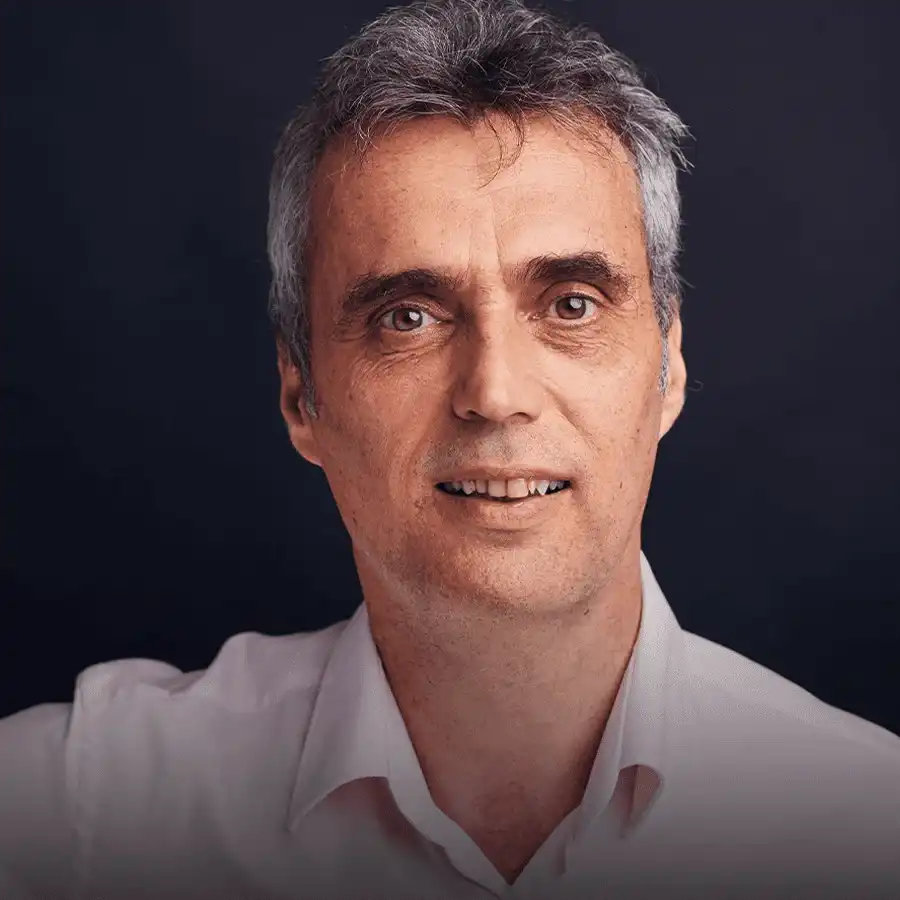
Dr. Pranay Sanklecha is a former professor of philosophy and the founder of a consultancy dedicated to helping businesses think better about the things that matter. With a career that spans academia, commodities trading, restaurant ownership, and corporate advising, Dr. Sanklecha brings a unique blend of philosophical insight and practical experience to his work with clients, who range from start-ups to global organizations. He leads The Economist's programs on critical thinking and business and AI, in which capacity he equips leaders and teams with the cognitive tools needed to navigate complex challenges and make more informed, impactful decisions. Driven by the belief that better thinking is the key to a winning edge, Dr. Sanklecha is passionate about guiding organizations to realize their full potential through levelling up their cognitive skillsets.
All sessions by Pranay →In this 60-minute interactive session, Pranay makes the compelling argument that successfully navigating change requires us to develop some specific cognitive skills: thinking deliberately, thinking differently, and thinking dangerously. Drawing on his background as a professor of philosophy, Pranay distils ground-breaking research and cutting-edge insights, for example from the work of Nobel Prize-winning psychologist Daniel Kahneman, into practical tools, processes, and insights that transform abstract ideas into actionable strategies.
During the expert session, Pranay engages the audience through a series of interactive exercises using the Mentimeter app. He begins with an introduction to Deliberate Thinking and leads participants in an exercise that promotes intuitive vs. deliberate thought processes.
Pranay then introduces Different Thinking and asks attendees to imagine problem-solving from various influential figures' perspectives, followed by a discussion on Dangerous Thinking and the 'what if' game for exploring alternative possibilities. These activities help participants grasp the practical application of cognitive skills essential for navigating change.
Practicing intentional analysis and questioning assumptions is crucial when navigating unexpected changes. Deliberate thinking ensures accurate decision-making by challenging assumptions and evaluating alternatives, helping you respond effectively to unforeseen circumstances.
Considering various viewpoints during times of change broadens your problem-solving abilities and helps avoid being stuck in outdated thought patterns. By adopting the mindset of influential figures or imagining alternative solutions, you will expand your thinking and find innovative ways to adapt to new situations.
Taking calculated risks and challenging conventional thought processes is essential for successful navigation of change. The 'what if' game encourages exploring alternative possibilities, enabling you to tackle complex challenges in unique and effective ways while remaining open-minded and flexible.
In this expert session, Pranay provides valuable insights into the cognitive skills necessary for navigating change and adapting to unexpected circumstances. He starts by explaining the concept of 'black swans,' referring to unforeseen events or situations that challenge our assumptions and defy our expectations.
Pranay highlights the limitations of white swan thinking, which relies on predictability and routine, in managing change.
To help session participants identify and apply cognitive skills for dealing with change effectively, Pranay introduces the 3D framework: Deliberate Thinking, Different Thinking, and Dangerous Thinking. Let's delve deeper into each of these concepts.
Firstly, deliberate thinking involves intentional analysis and questioning of assumptions to ensure accurate decision-making during times of change. Pranay shares an exercise using the Mentimeter app, where participants practice deliberate thinking by crossing their arms in opposite orders to reflect intuitive vs. deliberate thought processes. He emphasizes the importance of following up a call for action with a clear process.
Next, Pranay introduces Different Thinking, which requires considering various perspectives and ideas when approaching change to avoid being stuck in old ways of thinking. He shares an exercise where participants imagine solving a problem from the perspective of different influential figures, such as Elon Musk or Mother Teresa.
By doing so, they broaden their understanding of potential solutions and expand their creative thinking abilities.
Lastly, Pranay discusses Dangerous Thinking, which involves taking risks and challenging conventional thought patterns to navigate change effectively. He introduces the 'what if' game as a tool for exploring alternative possibilities.
By asking 'what if' questions, individuals can identify potential outcomes and consider alternative solutions that may not have been initially apparent.
Throughout the session, Pranay encourages participants to cultivate these three cognitive skills for successful navigation of change. These abilities enable individuals to adapt to new situations, manage uncertainty, and thrive in dynamic environments.
By practicing deliberate thinking, considering various perspectives, and challenging conventional thought patterns, one can effectively navigate change and embrace the opportunities it presents. The session concludes with an opportunity for participant queries, allowing attendees to further explore these concepts and gain a deeper understanding of their application.
From the survey every participant gets when the session ends, in their own words.
Sessions like this are an awesome investment, thank you.
This was brilliant - but I don’t think the title accurately captured or did justice to what the session was about. I’m not too bad with change so almost didn’t attend but it was really useful for how to challenge yourself and approach things differently
The three Ds were insightful and easy to remember. I enjoyed hearing from a Doctor of Philosophy!
These are way better than the internal sessions from the past couple of years that mostly just pushed us into small breakouts to do roleplay!! Expert lecturers that are actually TEACHING us. It's awesome.
This was the best one out of the ones I’ve been to this afternoon - good combination of speaking and interactivity. And was good to have someone else on screen for him to bounce off. Liked having an experienced external speaker
Great short, and highly effective session.
No prior knowledge is assumed. It is built for a general working audience, and people who already know the subject get the research and the practical side rather than an introduction. What the hour itself covers: In this 60-minute interactive session, Pranay makes the compelling argument that successfully navigating change requires us to develop some specific cognitive skills: thinking deliberately, thinking differently, and thinking dangerously. Drawing on his background as a professor of philosophy, Pranay distils...
A masterclass. Pranay Sanklecha takes your colleagues through the subject and the reasoning behind it, and answers live questions. It is practical in what people take away, without the hour turning into an exercise class.
It is interactive, and the block higher up on this page says exactly how for this session. Nobody has to speak up who does not want to: the chat and the polls carry most of it, and the questions can come in anonymously.
It runs 45 min / 15 min: the talk, then live questions. All you do is pick a date. We brief Pranay, produce the session, host and moderate it, run the Q&A, and send you the report within an hour of the end.
A team, a department, an employee network or every single employee at once, with no cap and no per-seat price. It runs inside your own Microsoft Teams, Zoom or Google Meet, or on a branded page we build. No integration, no login, no company device or e-mail.
The session is delivered in English. You can add high accuracy live subtitles in 8, 16 or 24 languages, so everyone follows in their own. That is a paid option, priced by the number of languages you need.
No, and that is by design. There is nothing to install, nothing to integrate and no connection to your systems, so there is nothing for IT to validate: we join your own Teams, Zoom or Meet as a guest speaker, or we host a page and your people open a link. No software, no accounts, and no data of yours that we can reach. It is why hundreds of companies, among them some of the largest technology and financial firms in the world, were able to start within a day.
We never receive or hold personal data about your employees. Because the session runs in your own environment, attendance and identity stay with you, and what we report back is aggregated: numbers, ratings and survey answers, not people. That is also why IT approval usually takes minutes rather than weeks.
You keep the recording and can share it internally. You also get attendance over time, participant ratings for the content and the speaker, the survey answers, and the topics your people asked for next.

"People will forget what you said... but people will never forget how you made them feel," - Maya Angelou This hands-on workshop…

Psychological Safety is a well documented driver of high performance in teams and organisations.

How do successful people, teams, and organisations become even more successful?
- Session available on-site only - Sometimes, the way we approach a problem becomes the problem itself, but we may not be aware…

In a world of uncertainty, we cannot always control all the bad things that happen to us, but we can control the way that we…

At this point, the integration of AI in the workplace seems inevitable as many professionals are using it daily.