Understanding White Privilege: A Conversation for the Workplace
Taz Latif
Book a demo →from €2,250 for your whole company
Book a demo →from €2,250 for your whole company
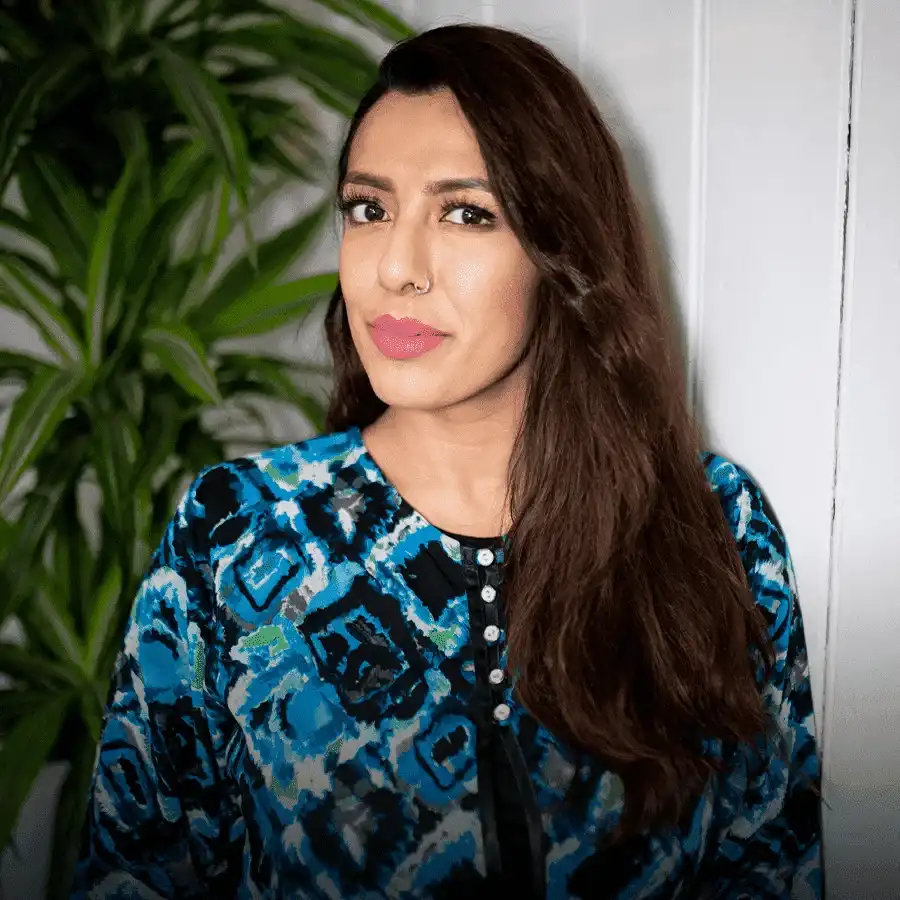
Taz spent over 4 years as a teacher before making the move to hire global teams in the Startup space. Frustrated with the lack of diversity and inclusion in her industry, she began to focus her efforts onto more strategic hiring – educating founders and leaders on the importance of mental health, wellbeing, race, religion, culture, gender, neurodiversity and so on. She’s now a full-time Diversity, Inclusion & Wellbeing Consultant and public speaker, delivering workshops from school students to CEOs and speaking to international audiences. Taz has collaborated with the likes of GoogleForStartups, Ministry of Justice, Facebook, Financial Times, Expedia, TechInclusion and Bloomberg. In her spare time, she’s an EnrolYourself alumni, part- time spin instructor, conqueror of Kilimanjaro, charity skydiver and a huge foodie.
All sessions by Taz →Having white privilege and recognising it is not racist. But white privilege exists because of historic, enduring racism and biases. White privilege is not the assumption that everything a white person has accomplished is unearned; most white people who have reached a high level of success worked extremely hard to get there.
Instead, white privilege should be viewed as a built-in advantage, separate from one’s level of income or effort. In this interactive session Taz shows her audience how white privilege plays an important role in all of our lives.
You can test your own role, learn about various biases and most importantly, how you can become an ally.
During the expert session, Taz Latif, an inclusion consultant, engages the audience through a Q&A session using the chat function, live demonstrations of privilege exercises, and interactive discussions facilitated by the Mentimeter app. These activities encourage participants to share their experiences and insights on white privilege and unconscious bias, fostering open dialogue and understanding.
Taz's thoughtful approach allows attendees to grapple with complex concepts and contributes to an inclusive learning environment.
Understanding your unique experiences with privilege and acknowledging the advantages that come with them is essential for self-awareness and growth in inclusivity.
Participating in honest and respectful discussions about white privilege, unconscious bias, and discrimination helps create awareness, empathy, and a more inclusive environment.
Exploring the historical roots of racial privilege and systemic biases is crucial for gaining a deep understanding of this complex issue, encouraging continuous learning and action towards a more equitable society.
In this expert session, Taz Latif, a consultant specialized in inclusion and diversity issues, leads a thought-provoking discussion on the concept of white privilege. The session begins with Taz welcoming everyone to the virtual room and encouraging participants to use the chat function for questions and comments while keeping their microphones muted.
She mentions that the session will be recorded and shares her background in inclusive education and her current role as a consultant.
Taz introduces the topic of white privilege, acknowledging its complexity and potential discomfort. She emphasizes that this discussion is not about placing blame but rather an opportunity for learning and engagement.
Taz shares her personal experience of being mistaken for a PA due to her race and gender during a business meeting as a turning point in her career.
Participants are invited to share their definitions and understandings of white privilege, leading to an open and inclusive conversation about the topic. Some express difficulty grasping the concept while others discuss personal experiences with racial profiling and discrimination.
Taz encourages active participation through the chat function and shares her insights and experiences related to privilege.
Taz then introduces an exercise where participants score themselves based on statements related to their experiences, aiming to help individuals recognize unique privileges and challenges. She emphasizes that acknowledging privilege is not about blaming or making assumptions but about raising awareness.
The session continues with Taz addressing the importance of unconscious bias in the corporate setting and its relation to white privilege.
Tas encourages open dialogue and understanding, recognizing the difficulty of discussing such topics. He shares personal experiences of racism and historical context to help participants comprehend the long-term impact of racial privilege.
Tas emphasizes that everyone's experiences are unique and encourages a broad perspective on the issue, acknowledging that racism exists in various communities.
The expert session concludes with Tes expressing gratitude towards the participants for their openness and vulnerability during the discussion. He shares a survey link to gather further insights and invites participants to connect with him if they wish.
Tes assures attendees that they will revisit this topic in future sessions. Throughout the session, Tes utilizes the Mentimeter app to engage participants through interactive questions, fostering an engaging and dynamic discussion on white privilege.
No prior knowledge is assumed. It is built for a general working audience, and people who already know the subject get the research and the practical side rather than an introduction. What the hour itself covers: Having white privilege and recognising it is not racist. But white privilege exists because of historic, enduring racism and biases.
Taz Latif is one of the experts we auditioned ourselves, and we produce every session so we see how each one lands. Participants rate this session 4.3 out of 5, across 671 responses, and rate Taz personally 4.5 out of 5.
It is interactive, and the block higher up on this page says exactly how for this session. Nobody has to speak up who does not want to: the chat and the polls carry most of it, and the questions can come in anonymously.
It runs 45 min / 15 min: the talk, then live questions. All you do is pick a date. We brief Taz, produce the session, host and moderate it, run the Q&A, and send you the report within an hour of the end.
A team, a department, an employee network or every single employee at once, with no cap and no per-seat price. It runs inside your own Microsoft Teams, Zoom or Google Meet, or on a branded page we build. No integration, no login, no company device or e-mail.
The session is delivered in English. You can add high accuracy live subtitles in 8, 16 or 24 languages, so everyone follows in their own. That is a paid option, priced by the number of languages you need.
No, and that is by design. There is nothing to install, nothing to integrate and no connection to your systems, so there is nothing for IT to validate: we join your own Teams, Zoom or Meet as a guest speaker, or we host a page and your people open a link. No software, no accounts, and no data of yours that we can reach. It is why hundreds of companies, among them some of the largest technology and financial firms in the world, were able to start within a day.
We never receive or hold personal data about your employees. Because the session runs in your own environment, attendance and identity stay with you, and what we report back is aggregated: numbers, ratings and survey answers, not people. That is also why IT approval usually takes minutes rather than weeks.
You keep the recording and can share it internally. You also get attendance over time, participant ratings for the content and the speaker, the survey answers, and the topics your people asked for next.
What does being an ‘Ally’ mean? From case studies to the Wheel of Power and Privilege, this interactive session will take you…
Ramadan and Eid are deeply significant periods in the Islamic calendar, marked by fasting, prayer, and community celebrations.
During Taz's session ‘inclusive thinking’ you’ll learn to understand the impact of unconscious bias.
Psychological Safety is a well documented driver of high performance in teams and organisations.
The topic of culture can sometimes seem dry or theoretical, however in reality we all have a natural ability to connect with…
Female Leadership is in high demand in organizations but numbers show that often women are still not present at the tables of…
Skillful communication and warm connection are needed today more than ever before — whether that be in your professional or…
AI has the power to shape our world, and is increasingly becoming part of our daily lives - but what happens when it inherits…
Being late is disrespectful, assertiveness is not the same as being cheeky and the individual leads the collective.