Talent With a Disability In Your Organisation
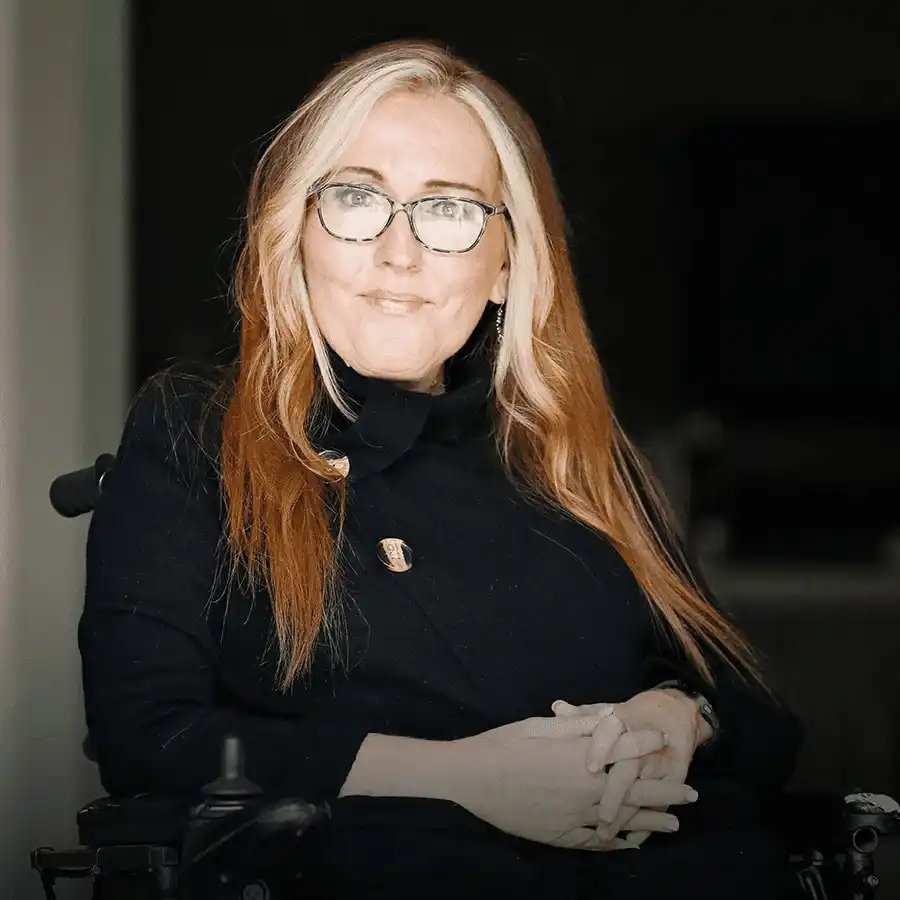
Lesa Bradshaw
Book a demo →from €2,250 for your whole company
Book a demo →from €2,250 for your whole company
This one runs as an interactive workshop: the hour includes exercises your colleagues do themselves, not only a talk.
Lesa is a strategic advisor to multi-national, national and local employers, public and private institutions, and an internationally acclaimed Disability Confidence Champion with 28 years of leadership experience across developed and developing economies. She combines professional expertise with lived experience of disability to help businesses unlock talent, improve performance, and build accessible, disability-confident cultures that drive meaningful change.
All sessions by Lesa →Actively recruiting talent with a disability, but not too sure where to look? Concerned about what ‘type’ of disability your business can accommodate? Preparing to face resistance or objections from the line managers in the selection process?
If you have answered ‘yes’ to any of these questions, then join Lesa Bradshaw as she reflects on the common practice frustrations in the recruitment, selection, development and retention process of talent with a disability. Providing a deeper understanding of the barriers to inclusion, and the simple yet effective practices required to remove these, Lesa brings a fresh perspective on navigating the journey with success.
She brings her lived experience as a business leader with a disability to this lively, humourous and stereotype-busting session, showcasing how a simple reframing of thought, tweak of practice, and relaxing of the fears can yield positive impact that benefits all.
During the expert session, Lesa Bradshaw engages the audience through methods like a Q&A session, live demonstrations using personal experiences, and interactive exercises with the Mentimeter app. Lesa discusses the importance of disability inclusion, the impact of disabling barriers, and the benefits for businesses to embrace this concept.
She encourages attendees to learn about accessibility and become allies for inclusion by implementing inclusive practices at work and in their communities.
Tapping into the vast consumer market of over 1.85 billion people with disabilities by making products, services, and workplaces accessible is essential for social justice and business competitiveness.
Understanding that what disables a person goes beyond their impairment, and addressing attitudinal and environmental barriers through policies, procedures, communication tools, and accessibility audits can lead to a more inclusive and productive workforce.
Learning about disability inclusion in various aspects of work and daily life, such as procurement, finance, marketing, and personal experiences, allows individuals to become advocates and create a culture that normalizes and accommodates people with disabilities.
In this expert session, Lesa Bradshaw discusses the importance of disability inclusion and the role it plays in society and businesses. Lesa emphasizes that what disables a person is not just their impairment but also influenced by various factors such as upbringing, community, personality, and access to resources.
Lesa highlights the American Disabilities Act as an example of legislative rights that prevent discrimination against people with disabilities and promote disability inclusion in workplaces and society as a whole. She emphasizes the significant consumer market represented by over 1.85 billion people with disabilities, making it essential for businesses to recognize their needs and make their products and services accessible.
The speaker shares her personal experiences and statistics that illustrate the potential loss of earnings for businesses that ignore this population's needs. She encourages working with people with disabilities to gain unique perspectives and insights into their requirements.
Lesa emphasizes the importance of addressing both environmental and attitudinal barriers to disability inclusion. Environmental barriers can be addressed through accessibility audits, removing physical obstacles, and creating a culture that normalizes and accommodates people with disabilities in the workplace.
Attitudinal barriers include low expectations and unconscious biases that limit opportunities for individuals with disabilities.
To create a more inclusive work environment, Lesa suggests policies and procedures should reflect an equalizing need rather than special treatment. Communication tools such as sign language interpreters and closed captioning can enable participation for people with disabilities.
The speaker argues that businesses often overlook the talent pool of individuals with disabilities, and investing in disability inclusion can lead to significant benefits. She encourages individuals to become allies for inclusion by learning about accessibility and inclusion in various aspects of work.
Lesa shares her belief that small actions can have a significant impact on creating a more inclusive world. She encourages participants to engage with their employers, join employee resource groups, or speak up in their organizations to learn more about disability inclusion and becoming an ally.
The session emphasizes the importance of proper terminology, manners, and open communication when discussing disability. Lesa suggests experiencing the challenges faced by individuals with disabilities through exercises like being blind for a few hours to better understand their day-to-day experiences.
In conclusion, Lesa Bradshaw's expert session emphasizes the importance of creating a culture that normalizes and accommodates people with disabilities in the workplace and society as a whole. She encourages individuals and businesses to recognize the potential benefits of disability inclusion and become allies for change.
From the survey every participant gets when the session ends, in their own words.
She was insightful, helpful and informative also really funny I loved this session!
As I mentioned in the chat, my husband has the exact same condition. Fortunately he is not yet in a wheelchair, but I know it's just a matter of time. I've noticed his steady decline the past few years, and I appreciate Lesa's candor. Thank you.
A lot!!! I know very little about disability, and this session was amazing to raise general awareness as well as provide very concrete tips for growing "disability confidence" in my personal and professional life:)
Less Bradshaw is magnetic and an exceptional speaker. It was a pleasure listening to her and learning such valuable information that will help me throughout my daily life.
Great descriptions & examples on inclusion vs confidence. Eye opening. Love the reiteration of not assuming you know what is best or what is needed to make resources “accessible”-appreciate tips not assume abilities/disabilities.
A lot of information in relation to disibility and such a great speaker with great positive energy
No prior knowledge is assumed. It is built for a general working audience, and people who already know the subject get the research and the practical side rather than an introduction. What the hour itself covers: Actively recruiting talent with a disability, but not too sure where to look? Concerned about what ‘type’ of disability your business can accommodate?
A workshop. The description of this session says so itself: the hour includes exercises and activities that participants do, not only an expert speaking. It still runs live and online, for as many colleagues as you want to invite.
Lesa Bradshaw is one of the experts we auditioned ourselves, and we produce every session so we see how each one lands. Participants rate this session 4.6 out of 5, across 66 responses, and rate Lesa personally 4.7 out of 5.
It is interactive, and the block higher up on this page says exactly how for this session. Nobody has to speak up who does not want to: the chat and the polls carry most of it, and the questions can come in anonymously.
It runs 45 min / 15 min: the talk, then live questions. All you do is pick a date. We brief Lesa, produce the session, host and moderate it, run the Q&A, and send you the report within an hour of the end.
A team, a department, an employee network or every single employee at once, with no cap and no per-seat price. It runs inside your own Microsoft Teams, Zoom or Google Meet, or on a branded page we build. No integration, no login, no company device or e-mail.
The session is delivered in English. You can add high accuracy live subtitles in 8, 16 or 24 languages, so everyone follows in their own. That is a paid option, priced by the number of languages you need.
No, and that is by design. There is nothing to install, nothing to integrate and no connection to your systems, so there is nothing for IT to validate: we join your own Teams, Zoom or Meet as a guest speaker, or we host a page and your people open a link. No software, no accounts, and no data of yours that we can reach. It is why hundreds of companies, among them some of the largest technology and financial firms in the world, were able to start within a day.
We never receive or hold personal data about your employees. Because the session runs in your own environment, attendance and identity stay with you, and what we report back is aggregated: numbers, ratings and survey answers, not people. That is also why IT approval usually takes minutes rather than weeks.
This one is live only. You also get attendance over time, participant ratings for the content and the speaker, the survey answers, and the topics your people asked for next.
Psychological Safety is a well documented driver of high performance in teams and organisations.
Ramadan and Eid are deeply significant periods in the Islamic calendar, marked by fasting, prayer, and community celebrations.
The topic of culture can sometimes seem dry or theoretical, however in reality we all have a natural ability to connect with…
Female Leadership is in high demand in organizations but numbers show that often women are still not present at the tables of…
Skillful communication and warm connection are needed today more than ever before — whether that be in your professional or…
AI has the power to shape our world, and is increasingly becoming part of our daily lives - but what happens when it inherits…