Neurodiversity: New understandings
Elisabeth Wiklander
Book a demo →from €2,250 for your whole company
Book a demo →from €2,250 for your whole company
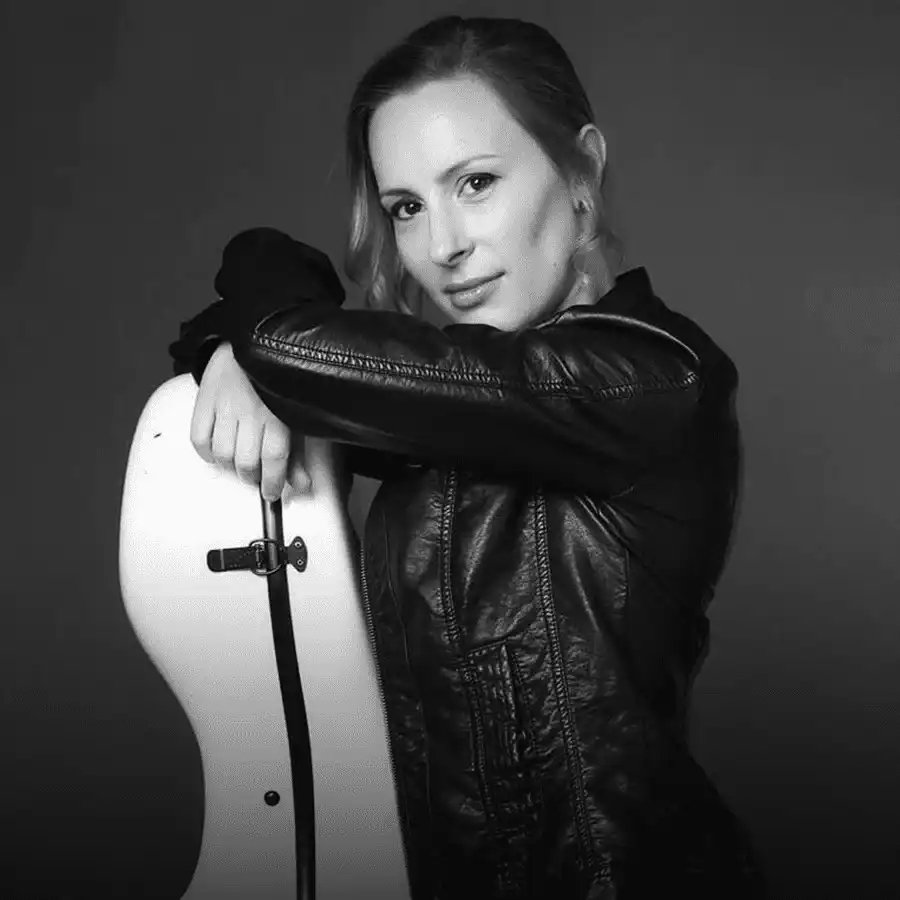
Award-winning cellist Elisabeth Wiklander worked in The Netherlands Philharmonic Orchestra before accepting her current position in The London Philharmonic Orchestra. Since 2015 she is connecting to audiences not only as a musician but also as an autistic Neurodiversity Advocate giving presentations on international platforms and to companies such as PVH corp. and The Southbank Centre in London. She is a Cultural Ambassador for The National Autistic Society, involved in research- and consultation projects in the EU and the US. Media appearances include a TEDx talk, The Daily Politics Show (BBC live), programs for Swedish Television and recording soundtracks for the award-winning autism documentary “The Reason I Jump”.
All sessions by Elisabeth →Innovative thinking doesn’t dwell within the comfort of “normal”. What is normal? We are starting to unravel how common it is to be cognitively different. Learning about and including these differences in our DEI efforts unlocks powerful potential and skillful contributions.
Explore neurodiversity through Elisabeth Wiklander whose talk will give a window into her life as an autistic. What are the challenges hidden underneath a successful surface and how can the workplace become an ally to the neurodivergent workforce?
Neurodiversity is more than a market buzzword, it highlights human rights issues with a paradigm that will play a crucial part in our pursuit of societal goals, minimizing injustices, reaching greater inclusion and extracting maximum benefits out of human talent.
During the expert session, Elisabeth Wiklander engages the audience through methods like a Q&A session, live demonstrations using the Mentimeter app for interactive exercises, and sharing personal experiences about neurodiversity from her perspective as an advocate and person with autism. These activities help participants grasp the importance of neurodiversity, inspire them to embrace unique perspectives, and address their questions or concerns.
Recognizing that neurodiversity is a natural form of diversity is essential for creating inclusive workplaces and society. Understanding the impact of neurodiversity on individuals' lives and adopting an inclusive approach is crucial for fostering empathy, reconciliation, and personal growth.
Developing skills to communicate effectively with neurodivergent individuals, such as those on the autistic spectrum, can lead to stronger relationships and a more inclusive workplace. Understanding different communication styles, body language, and thinking patterns, and fostering appreciation for these differences, can bridge gaps in understanding.
Making accommodations for neurodivergent individuals by providing quiet spaces, considering social aspects when designing office layouts, and offering opportunities like apprenticeships and internships can lead to a more inclusive workplace. Understanding the importance of individual support needs, open communication channels, and giving individuals with neurodivergent conditions a voice in creating inclusive policies is essential for creating a supportive work environment where everyone can thrive.
In this expert session, Elizabeth Wiklander, an advocate for neurodiversity and a member of the London Philharmonic Orchestra, shares her personal experiences and insights into neurodiversity. Elizabeth begins by introducing the concept of neurodiversity and explaining that it refers to the idea that our brains function differently, leading us to perceive and experience the world in various ways.
She emphasizes that neurodiversity is a natural form of diversity and discusses different terms related to neurodivergent individuals, such as neurotypical, neurodivergent, and neurological differences.
Elizabeth shares her personal experiences growing up with undiagnosed autism, describing the challenges she faced in communicating and understanding others due to a lack of language and community validation. She emphasizes that only when she and her father were recognized as autistic did they gain tools for healing and finding understanding within their family, leading to reconciliation and greater empathy.
Throughout the session, Elizabeth encourages an inclusive approach towards neurodiversity and emphasizes the need for societal changes to accommodate and support neurodivergent individuals fully. She believes that everyone can benefit from learning more about neurodiversity and recognizing the unique perspectives it brings.
Elizabeth discusses the two approaches when dealing with neurodiversity: the Neurodiversity Paradigm and the medical model of disability. The former respects neurodivergent individuals as naturally valuable and avoids pathologizing language, while the latter diagnoses and attempts to treat or change their differences.
Elizabeth emphasizes the importance of understanding these perspectives and recognizing the impact neurodiversity can have on people's lives.
Elizabeth shares her personal experiences with learning social skills and the importance of finding balance. She discusses how suppressing her instincts and camouflaging her distress to fit in took a toll on her mental health and didn't lead to genuine relationships or success.
She emphasizes that by advocating publicly for autistic rights and building a diverse global community, they can address the issues faced by the autistic community, which are often rooted in societal misunderstanding and exclusion.
Elizabeth critiques the medical model for its focus on personal traits as deficits without considering individual experiences or societal factors. She argues that it can force individuals into interventions and therapies to assimilate, creating stigma and negative attitudes towards neurological differences.
However, she acknowledges that the medical model serves an important purpose in offering medical intervention for those who need it.
Elizabeth then discusses the characteristics that differentiate autistic people from neurotypicals, such as body language and communication styles, thinking styles, and sensory experiences. She encourages fostering appreciation for these differences to bridge the gap in understanding.
Elizabeth emphasizes the importance of creating an accommodating society that values neurodiversity while recognizing the need for medical intervention when necessary. She believes that embracing different thinking styles and combining strengths can lead to remarkable achievements and benefits for individuals and businesses.
The expert session concludes with Elisabeth offering final words of wisdom: be kind, open-minded, and understanding towards individuals who may not conform to typical norms or follow expected behaviors.
From the survey every participant gets when the session ends, in their own words.
Excellent session, insightful and very well delivered.
The session from Elisabeth Wiklander was an excellent session, thank you.
It was fantastic! Thanks a lot for organising this!
I really enjoyed this session and found it very informative . The speaker was knowledgeable and clear, and the content was relevant and practical. I learned a lot about the topic and how to apply it in my own context.
Thank you for sharing your story and the valuable insights about neurodiversity. Your presentation is going to help me reach my own full potential on my own terms. One of the things that stays with me is that embrace who you are and accept who you are. Yo
Very good session and thanks for sharing also the personal story/ insights.
Great presentation and testimony, thank you very much !
I already had an interest in Neurodiversity and found it so inspirational and refreshing to hear Elisabeth's thoughts and feelings. I think that understanding in personal and business life will only enrich us as people and as a company.
No prior knowledge is assumed. It is built for a general working audience, and people who already know the subject get the research and the practical side rather than an introduction. What the hour itself covers: Innovative thinking doesn’t dwell within the comfort of “normal”. What is normal?
Elisabeth Wiklander is one of the experts we auditioned ourselves, and we produce every session so we see how each one lands. Participants rate this session 4.5 out of 5, across 138 responses, and rate Elisabeth personally 4.7 out of 5.
It is interactive, and the block higher up on this page says exactly how for this session. Nobody has to speak up who does not want to: the chat and the polls carry most of it, and the questions can come in anonymously.
It runs 45 min / 15 min: the talk, then live questions. All you do is pick a date. We brief Elisabeth, produce the session, host and moderate it, run the Q&A, and send you the report within an hour of the end.
A team, a department, an employee network or every single employee at once, with no cap and no per-seat price. It runs inside your own Microsoft Teams, Zoom or Google Meet, or on a branded page we build. No integration, no login, no company device or e-mail.
The session is delivered in English. You can add high accuracy live subtitles in 8, 16 or 24 languages, so everyone follows in their own. That is a paid option, priced by the number of languages you need.
No, and that is by design. There is nothing to install, nothing to integrate and no connection to your systems, so there is nothing for IT to validate: we join your own Teams, Zoom or Meet as a guest speaker, or we host a page and your people open a link. No software, no accounts, and no data of yours that we can reach. It is why hundreds of companies, among them some of the largest technology and financial firms in the world, were able to start within a day.
We never receive or hold personal data about your employees. Because the session runs in your own environment, attendance and identity stay with you, and what we report back is aggregated: numbers, ratings and survey answers, not people. That is also why IT approval usually takes minutes rather than weeks.
You keep the recording and can share it internally. You also get attendance over time, participant ratings for the content and the speaker, the survey answers, and the topics your people asked for next.

Psychological Safety is a well documented driver of high performance in teams and organisations.
Ramadan and Eid are deeply significant periods in the Islamic calendar, marked by fasting, prayer, and community celebrations.
The topic of culture can sometimes seem dry or theoretical, however in reality we all have a natural ability to connect with…
Female Leadership is in high demand in organizations but numbers show that often women are still not present at the tables of…
Skillful communication and warm connection are needed today more than ever before — whether that be in your professional or…
AI has the power to shape our world, and is increasingly becoming part of our daily lives - but what happens when it inherits…