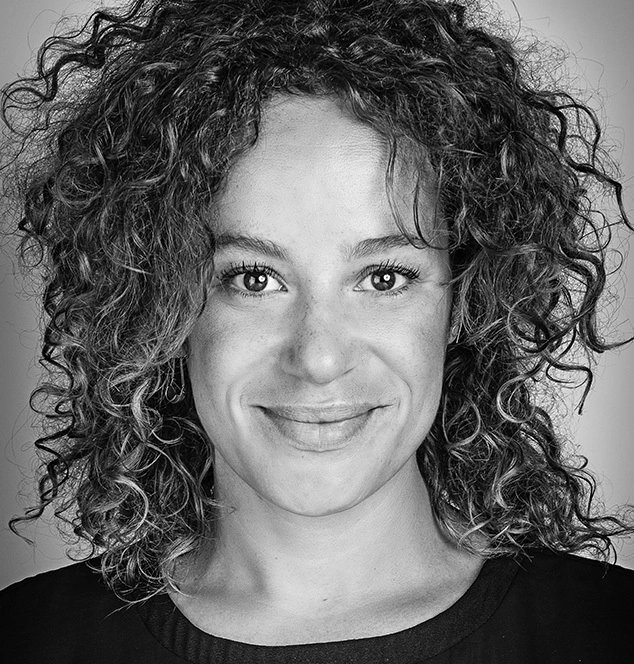
This one runs as a masterclass: Laura te Hennepe takes your colleagues through the research and the thinking behind it, with live questions throughout.

Laura te Hennepe brings over 15 years of expertise as a systemic expert deeply connected to the social dynamics of the workplace. Formerly associated with FranklinCovey, she has transitioned into a role as the founder of The Third, a pioneering company offering both strategic D&I programs for companies and immersive leadership programs for D&I changemakers. Drawing on her diverse background in both social psychology and dance, Laura brings a unique creative skillset to her work. She specializes in fostering psychological safety, navigating transgressive behavior, and addressing unconscious bias within organizational contexts. With a profound understanding of how these concepts impact both leaders and employees, Laura is dedicated to cultivating safe and inclusive environments where everyone can thrive.
All sessions by Laura →Harvard professor and psychiatrist Dr. Chester Pierce faced a specific form of discrimination in the 1970s. He described it as ‘subtle, mind-boggling, often automatic, and nonverbal exchanges that ‘put black people down’.
While Pierce’s research at the time focused on black people, microaggressions are familiar to all people of color. In short, micro-aggressions are small, subtle forms of bullying and discrimination that are easily brushed aside.
Significant is that it is often not intended that way and looks like a compliment. In this session, Laure teaches you to discover all microaggressions from ‘Have a nice evening, part-timer against a part-timer, to ‘Which one of you gave birth to the child?’ to a gay couple, to ‘You are really good at English for an expat’.
Laura takes you into how subtle these expressions are, how intense they can be experienced, how you can discover them and how you can speak to others about them.
During the expert session, Laura Te Hennepe engages the audience through interactive exercises using the Mentimeter app, thought-provoking questions, and encouraging participants to share personal experiences related to psychological safety in various systems.
Being open about our feelings and experiences is essential for creating a psychologically safe environment in both personal and professional contexts.
Recognizing the tendencies of presenting the best version of ourselves and avoiding uncomfortable situations can help us create more authentic connections and foster psychological safety.
Encouraging open communication, active listening, and empathy allows individuals to feel valued and respected, ultimately leading to a more psychologically safe environment for growth and collaboration.
In this expert session, Laura Te Hennepe delves into the significance of psychological safety in various systems, such as organizations and relationships. She shares her experience as an inclusion strategist and trainer, underlining the necessity of creating a safe environment where individuals can bring their authentic selves and address their vulnerabilities.
The speaker highlights two tendencies that impede psychological safety: impression management and the avoidance of pain. Impression management refers to the instinct to present an idealized self, while the avoidance of pain is a natural response to fear or potential harm.
However, these tendencies can lead to self-censorship, potentially hindering team dynamics and daily work.
Laura also emphasizes the importance of normalizing conversations around vulnerability and personal challenges in both professional and personal contexts. She encourages open dialogue about emotions and experiences, as this fosters understanding, empathy, and overall well-being.
To create a psychologically safe environment, Laura suggests several actions. First, one must be aware of one's own biases and assumptions and identify the root cause of any discomfort. This can help individuals address underlying issues and promote safety within their teams.
Secondly, practice active listening and empathy by truly understanding another person's perspective. By fostering respect and inclusion, collaboration and team growth can be achieved. Lastly, challenge the status quo in a positive manner by openly sharing ideas and encouraging others to do the same.
Laura also emphasizes the role of leaders in fostering psychological safety in the workplace. Leaders should create ground rules, set values, and facilitate constructive conversations and conflicts. By being vulnerable themselves, they can inspire their teams to do the same and ultimately build a more open and collaborative work environment.
It is interactive, and the block above says exactly how for this session. Nobody has to speak up who does not want to: the chat and the polls carry most of it, and the questions can come in anonymously.
Harvard professor and psychiatrist Dr. Chester Pierce faced a specific form of discrimination in the 1970s. It is built for a general working audience: no prior knowledge is assumed, and people who already know the subject get the research and the practical side rather than an introduction.
A masterclass. Laura te Hennepe takes your colleagues through the subject and the reasoning behind it, and answers live questions. It is practical in what people take away, without the hour turning into an exercise class.
Laura te Hennepe is one of the experts we auditioned ourselves, and we produce every session so we see how each one lands. Participants rate this session 4.3 out of 5, across 11 responses, and rate Laura personally 4.4 out of 5.
It runs 45 min / 15 min: the talk, then live questions. All you do is pick a date. We brief Laura, produce the session, host and moderate it, run the Q&A, and send you the report within an hour of the end.
A team, a department, an employee network or every single employee at once, with no cap and no per-seat price. It runs inside your own Microsoft Teams, Zoom or Google Meet, or on a branded page we build. No integration, no login, no company device or e-mail.
The session is delivered in English. You can add high accuracy live subtitles in 8, 16 or 24 languages, so everyone follows in their own. That is a paid option, priced by the number of languages you need.
No, and that is by design. There is nothing to install, nothing to integrate and no connection to your systems, so there is nothing for IT to validate: we join your own Teams, Zoom or Meet as a guest speaker, or we host a page and your people open a link. No software, no accounts, and no data of yours that we can reach. It is why hundreds of companies, among them some of the largest technology and financial firms in the world, were able to start within a day.
We never receive or hold personal data about your employees. Because the session runs in your own environment, attendance and identity stay with you, and what we report back is aggregated: numbers, ratings and survey answers, not people. That is also why IT approval usually takes minutes rather than weeks.
You keep the recording and can share it internally. You also get attendance over time, participant ratings for the content and the speaker, the survey answers, and the topics your people asked for next.

Psychological Safety is a well documented driver of high performance in teams and organisations.

Ramadan and Eid are deeply significant periods in the Islamic calendar, marked by fasting, prayer, and community celebrations.
The topic of culture can sometimes seem dry or theoretical, however in reality we all have a natural ability to connect with…
Female Leadership is in high demand in organizations but numbers show that often women are still not present at the tables of…
Skillful communication and warm connection are needed today more than ever before — whether that be in your professional or…

AI has the power to shape our world, and is increasingly becoming part of our daily lives - but what happens when it inherits…