Digital Wellbeing & Focus in the Attention Economy
Alessandra Patti
Book a demo →from €2,250 for your whole company
Book a demo →from €2,250 for your whole company
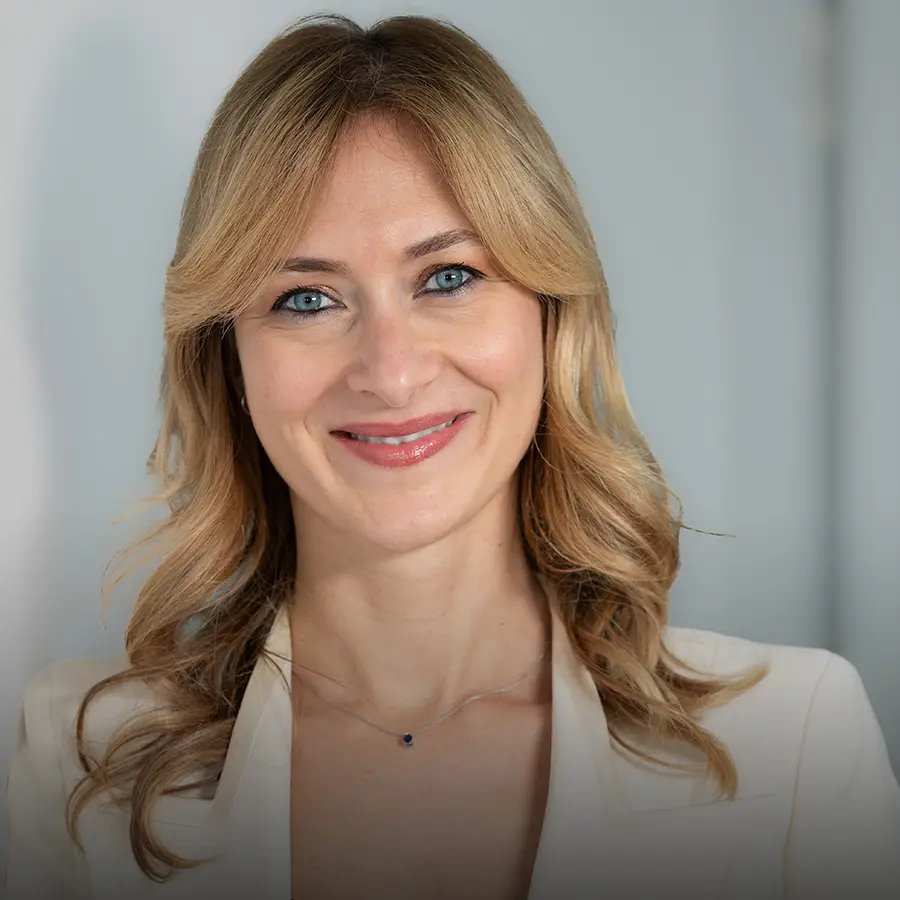
Alessandra Patti, is a professional trainer and consultant with a background in linguistics, psychology and marketing, and she has been nominated one of the top 15 coaches in Zurich for the year 2023.
All sessions by Alessandra →In the modern workplace, attention has become a scarce resource. Constant notifications, multitasking, and digital overload can reduce cognitive performance and increase stress levels. This session explores digital wellbeing as an organizational and leadership matter.
Participants learn how technology impacts focus, mental health, and workplace culture — and how to build healthier digital habits without rejecting technology. We tackle email use, meetings and the impact of AI in written communication and as emotional support of employees.
The neuroscience of infinite scrolling on internet browsers and our phone becomes clear and we can be more intentional about our technology use, without eliminating it.
The session includes interactive elements such as:
Participants reflect on both personal and organizational digital behaviors.
Participants will learn how to:
Digital tools increase efficiency — but they also reshape how we think, focus, and recover. This session explores:
The session also addresses emerging questions around AI use in communication — exploring both productivity gains and potential cognitive or relational risks. Participants leave with 2–3 immediately applicable changes to improve focus and digital balance at work.
From the survey every participant gets when the session ends, in their own words.
Excellent presentation, thank you!
Excellent session. Thank you.
This session has been great! Both the speaker and moderator have a great connection with each other and with the audience. Would recommend to my colleagues.
Fantastic session and so useful to be aware of the digital overwhelm that we all have. For me, it’s showing how important human-to-human experiences are key in the AI work we now live.
Very good presentation. Relevant content. Excellent speaker!
I loved the interactions with my colleagues, well done to the team & for selecting this Digital wellbeing topic of interest.
No prior knowledge is assumed. It is built for a general working audience, and people who already know the subject get the research and the practical side rather than an introduction. What the hour itself covers: In the modern workplace, attention has become a scarce resource. Constant notifications, multitasking, and digital overload can reduce cognitive performance and increase stress levels.
Alessandra Patti is one of the experts we auditioned ourselves, and we produce every session so we see how each one lands. Participants rate this session 4.5 out of 5, across 75 responses, and rate Alessandra personally 4.6 out of 5.
It is interactive, and the block higher up on this page says exactly how for this session. Nobody has to speak up who does not want to: the chat and the polls carry most of it, and the questions can come in anonymously.
It runs 45 min / 15 min: the talk, then live questions. All you do is pick a date. We brief Alessandra, produce the session, host and moderate it, run the Q&A, and send you the report within an hour of the end.
A team, a department, an employee network or every single employee at once, with no cap and no per-seat price. It runs inside your own Microsoft Teams, Zoom or Google Meet, or on a branded page we build. No integration, no login, no company device or e-mail.
The session is delivered in English/Spanish/Italian. You can add high accuracy live subtitles in 8, 16 or 24 languages, so everyone follows in their own. That is a paid option, priced by the number of languages you need.
No, and that is by design. There is nothing to install, nothing to integrate and no connection to your systems, so there is nothing for IT to validate: we join your own Teams, Zoom or Meet as a guest speaker, or we host a page and your people open a link. No software, no accounts, and no data of yours that we can reach. It is why hundreds of companies, among them some of the largest technology and financial firms in the world, were able to start within a day.
We never receive or hold personal data about your employees. Because the session runs in your own environment, attendance and identity stay with you, and what we report back is aggregated: numbers, ratings and survey answers, not people. That is also why IT approval usually takes minutes rather than weeks.
You keep the recording and can share it internally. You also get attendance over time, participant ratings for the content and the speaker, the survey answers, and the topics your people asked for next.
Clear communication is a core driver of psychological safety, performance, and wellbeing at work.
Feedback is considered essential in modern organizations — yet it is often poorly delivered, misunderstood, or emotionally…

Psychological Safety is a well documented driver of high performance in teams and organisations.

In a world of uncertainty, we cannot always control all the bad things that happen to us, but we can control the way that we…

“Netflix’s biggest competitor is sleep.”That statement captures the reality of today’s attention economy.

Stress appears to be one of the greatest threats to society. What can neuroscience tell you about what happens in your brain when…

1 in 4 people will experience a mental health disorder during their lifetime and the numbers keep rising.
There’s a myth fed by advertisement and social media that self-care is something like a luxurious spa-day, an extravagant weekend…