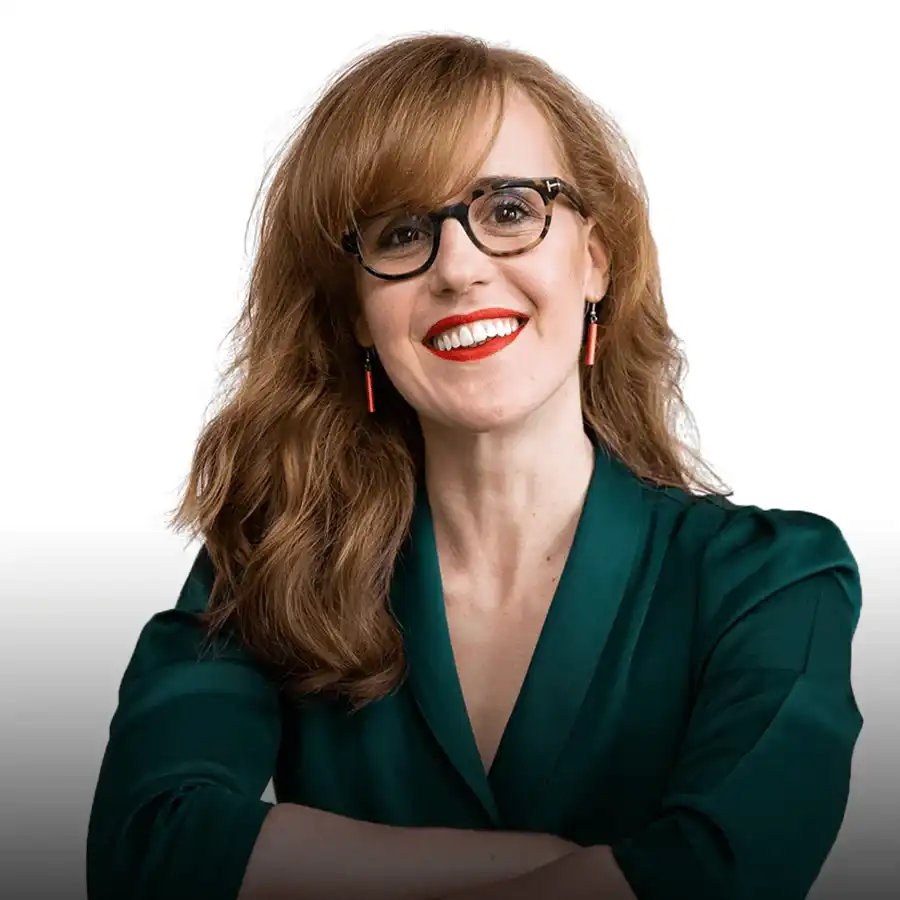
This one runs as a masterclass: Liesbeth Smit takes your colleagues through the research and the thinking behind it, with live questions throughout.
Are superfoods real? Is intermittent fasting healthy? Should we eat more eggs? Is milk a healthy drink? Is breakfast the most important meal of the day? Why is there so much confusion about which foods are healthy?
Does the science about what is healthy really change every year? Liesbeth separates facts from fiction in the confusing world of nutrition and shows you how misinformation and pseudoscience can spread.
Join Liesbeth in this session and find out if we should blame scientists, the media, or influencers and learn what you can do to live healthier.
During the expert session, Liesbeth Smit engages the audience through a Q&A session and interactive exercises using the Mentimeter app. She discusses various dietary habits and their health implications in different countries, emphasizing the importance of a healthy diet for preventing deaths.
Liesbets also encourages participants to question the scientific evidence behind nutritional advice and to consider their daily intake and lifestyle rather than individual foods. The audience asks questions on topics like powdered meals, dark chocolate consumption, alcohol's impact on health, baking bread with different flours, and magnesium supplementation.
Liesbeth shares her insights on these subjects, encouraging participants to make thoughtful and informed choices regarding their nutrition.
Focusing on daily intake and lifestyle instead of individual foods is key to maintaining good health.
Being skeptical of nutritional advice and questioning the scientific evidence behind it is essential for making informed food choices.
Incorporating whole grains like spelt into your diet provides more fiber and B vitamins compared to refined flours, supporting a balanced and healthy lifestyle.
In this expert session with Liesbeth Smit, the focus is on dietary habits and their health implications across various countries, as well as the importance of making informed food choices. Liesbeth begins by discussing typical diets in different regions, including the UK, where families consume a high amount of processed foods with little fruit and vegetables; the USA, with its high consumption of meat, pizza, sugary beverages, and fast food; Italy, known for its Mediterranean diet rich in fruits, vegetables, whole grains, and healthy fats; Japan, whose diet consists primarily of fish, rice, noodles, salty sauces, and condiments; and Chad, where diets are based on staple foods due to food scarcity.
The speaker then highlights the importance of a healthy diet in preventing deaths. Each year, 11 million people die due to unhealthy diets, a figure that can be reduced by switching to healthier options.
Unhealthy diets contribute to various diseases like cardiovascular disease, cancer, respiratory diseases, and diabetes. A healthy diet can prevent one in five deaths.
Liesbeth then addresses the ongoing debate about milk's health benefits, acknowledging the confusion surrounding this topic due to conflicting reports in media outlets. She advises looking at the entire body of evidence rather than focusing on individual studies and warns against sensational headlines that can contribute to mistrust of both the media and science.
The expert session also covers various food topics like fiber in orange juice, intermittent fasting, and healthy snacking options. Liesbeth emphasizes that a balanced diet is crucial, with special care needed when following vegetarian or vegan diets to avoid deficiencies.
She also advises reducing salt intake and avoiding sugary or salty treats, replacing them with fruits and vegetables instead.
In summary, during this insightful session, Liesbeth Smit emphasizes the importance of making informed choices regarding our diets to prevent various diseases and improve overall health. She advises looking at the entire body of scientific evidence rather than focusing on individual studies and warns against being misled by sensational headlines in media outlets.
Participants are encouraged to question nutritional advice, focus on long-term dietary habits, and enjoy experimenting with healthy food options.
From the survey every participant gets when the session ends, in their own words.
As a natrual Sicientist I was pleased that you had such good examples as for example the jar of jelly beans and how that translated to different independent studies. Thank you I will apply this example of studies of Climate Change!
A lot of really informative information. As someone who eats pretty well and doesn't drink it was interesting to see some of the options I thought were healthy not being healthy! THANK YOU!!!
I eat quite healthy!! Thank you very much for the interesting session!
Thanks again for this interesting Webinars
I enjoyed the debunking of the 'eat this ONE food' type of publications and the overall message which is to pay attention to a few simple aspects of nutrition instead of getting lost in the small details.
A lof of useful information about food groups and recommendations for a good balance in our daily diet. Thanks!
Please include one session about Mindfulness and its benefits :) Thank you!
Liesbeth was a very engaging speaker and it is a very interesting subject
It is interactive, and the block above says exactly how for this session. Nobody has to speak up who does not want to: the chat and the polls carry most of it, and the questions can come in anonymously.
Are superfoods real? Is intermittent fasting healthy? It is built for a general working audience: no prior knowledge is assumed, and people who already know the subject get the research and the practical side rather than an introduction.
A masterclass. Liesbeth Smit takes your colleagues through the subject and the reasoning behind it, and answers live questions. It is practical in what people take away, without the hour turning into an exercise class.
Liesbeth Smit is one of the experts we auditioned ourselves, and we produce every session so we see how each one lands. Participants rate this session 4.1 out of 5, across 268 responses, and rate Liesbeth personally 4.3 out of 5.
It runs 45 min / 15 min: the talk, then live questions. All you do is pick a date. We brief Liesbeth, produce the session, host and moderate it, run the Q&A, and send you the report within an hour of the end.
A team, a department, an employee network or every single employee at once, with no cap and no per-seat price. It runs inside your own Microsoft Teams, Zoom or Google Meet, or on a branded page we build. No integration, no login, no company device or e-mail.
The session is delivered in English/Dutch. You can add high accuracy live subtitles in 8, 16 or 24 languages, so everyone follows in their own. That is a paid option, priced by the number of languages you need.
No, and that is by design. There is nothing to install, nothing to integrate and no connection to your systems, so there is nothing for IT to validate: we join your own Teams, Zoom or Meet as a guest speaker, or we host a page and your people open a link. No software, no accounts, and no data of yours that we can reach. It is why hundreds of companies, among them some of the largest technology and financial firms in the world, were able to start within a day.
We never receive or hold personal data about your employees. Because the session runs in your own environment, attendance and identity stay with you, and what we report back is aggregated: numbers, ratings and survey answers, not people. That is also why IT approval usually takes minutes rather than weeks.
You keep the recording and can share it internally. You also get attendance over time, participant ratings for the content and the speaker, the survey answers, and the topics your people asked for next.
Psychological Safety is a well documented driver of high performance in teams and organisations.
The menopause has an impact on everyone. At work, at home, in your social life - where women have to navigate this brain-body…
Stress and Burnout are on the rise in the workplace now more than ever before.
"What’s their name again? Why did I walk into this room? What were my 4 actions from that last team meeting?
In a world of uncertainty, we cannot always control all the bad things that happen to us, but we can control the way that we…
“Netflix’s biggest competitor is sleep.”That statement captures the reality of today’s attention economy.