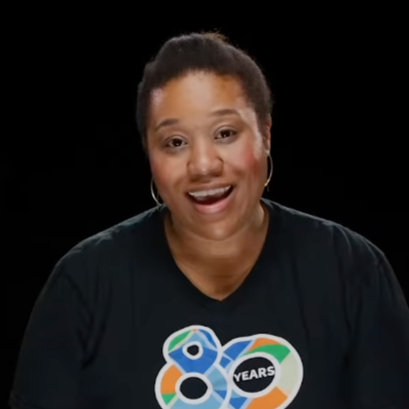
Cammy is an Executive Director at Inclusive Communities. In this role she utilizes her passions for promoting social justice, community building and organizational development to facilitate dialogues within the business community around Diversity, Equity and Inclusion.
All sessions by Cammy →In this expert session, Cammy explored microaggressions—subtle, everyday insults or slights targeting marginalized groups—and their impact in the workplace. Using real-life examples like unwarranted hair-touching and stereotypical jokes, she highlighted their prevalence and encouraged participants to share experiences.
Cammy introduced “calling in” for constructive reflection and “calling out” to stop harmful behavior, emphasizing a balance between accountability and respect. She addressed natural stress responses, promoting self-awareness and reflection as key to effective communication.
The session also covered team ground rules for inclusivity, such as active listening and clear expectations, offering practical tools like the “Values Fingerprint.”
During the expert session, Cammy engages the audience through a Q&A session, live demonstrations of communication techniques, and interactive exercises using the Mentimeter app. These activities facilitate open discussions on effective communication, self-awareness, and inclusive communication, while allowing for instant feedback and data collection from participants.
Understanding the impact of everyday subtle discrimination is essential for creating inclusive workplaces. Be aware of verbal, non-verbal, and environmental slights based on marginalized group membership to foster respect and equality.
Practicing self-awareness, perspective taking, active listening, and asking clarifying questions are crucial skills for handling difficult dialogues and resolving conflicts with empathy and understanding.
Incorporating interactive technologies like Mentimeter into communication sessions enhances engagement, promotes real-time data collection, and allows for immediate insights to improve future interactions.
In this expert session led by Cammy, the topic of microaggressions and effective communication is explored in depth. Microaggressions are defined as everyday subtle insults or slights that communicate hostile, derogatory, or negative messages based on an individual's marginalized group membership.
Cammy discusses the prevalence of microaggressions in the workplace, sharing statistics from a survey to illustrate their impact. She invites participants to share personal experiences, emphasizing the importance of specific examples over hypothetical situations.
Examples provided included unwarranted touch of someone's hair due to its texture, inappropriate jokes, and assumptions based on stereotypes.
Cammy introduces the concepts of "calling in" and "calling out," which aim to get a person to change their behavior and stop immediate harmful behavior, respectively. She emphasizes the importance of finding a balance between accountability and supporting others, avoiding ego or disrespect.
Discussing physiological responses to stressful situations, acknowledging that reactions like taking offense or overthinking are natural. She encourages participants to sit with their emotions instead of feeling guilty for defensive responses and emphasizes self-awareness as the first and last step in effective communication.
Later in the session, Cammy discusses creating ground rules for effective communication within a team setting. These include understanding and respect, minimizing side chatter, practicing active listening, setting expectations, and fostering inclusive communication using an online tool called "Values Fingerprint."
Throughout the session, Cammy emphasized self-awareness and introspection as crucial components of effective communication. She encourages participants to reflect on their own responses, ask clarifying questions instead of making assumptions, take time to reflect before engaging in difficult dialogues, and write down notes for self-reflection activities.
Overall, this expert session provides valuable insights into microaggressions, creating inclusive environments, and effective communication practices.
No prior knowledge is assumed. It is built for a general working audience, and people who already know the subject get the research and the practical side rather than an introduction. What the hour itself covers: In this expert session, Cammy explored microaggressions—subtle, everyday insults or slights targeting marginalized groups—and their impact in the workplace. Using real-life examples like unwarranted hair-touching and stereotypical jokes, she highlighted their prevalence and encouraged participants to share experiences.
It is interactive, and the block higher up on this page says exactly how for this session. Nobody has to speak up who does not want to: the chat and the polls carry most of it, and the questions can come in anonymously.
It runs 45 min / 15 min: the talk, then live questions. All you do is pick a date. We brief Cammy, produce the session, host and moderate it, run the Q&A, and send you the report within an hour of the end.
A team, a department, an employee network or every single employee at once, with no cap and no per-seat price. It runs inside your own Microsoft Teams, Zoom or Google Meet, or on a branded page we build. No integration, no login, no company device or e-mail.
The session is delivered in English. You can add high accuracy live subtitles in 8, 16 or 24 languages, so everyone follows in their own. That is a paid option, priced by the number of languages you need.
No, and that is by design. There is nothing to install, nothing to integrate and no connection to your systems, so there is nothing for IT to validate: we join your own Teams, Zoom or Meet as a guest speaker, or we host a page and your people open a link. No software, no accounts, and no data of yours that we can reach. It is why hundreds of companies, among them some of the largest technology and financial firms in the world, were able to start within a day.
We never receive or hold personal data about your employees. Because the session runs in your own environment, attendance and identity stay with you, and what we report back is aggregated: numbers, ratings and survey answers, not people. That is also why IT approval usually takes minutes rather than weeks.
You keep the recording and can share it internally. You also get attendance over time, participant ratings for the content and the speaker, the survey answers, and the topics your people asked for next.

"People will forget what you said... but people will never forget how you made them feel," - Maya Angelou This hands-on workshop…
Robert Wolfe lets you experience how you can use a story from your own life to convey a message and convince the people around…

“Netflix’s biggest competitor is sleep.”That statement captures the reality of today’s attention economy.
Feedback should help people grow, but too often it creates tension, confusion or defensiveness.
Skillful communication and warm connection are needed today more than ever before — whether that be in your professional or…

Public speaking is nerve-racking for most people and is often named as the one thing people fear most.