How to Build an Open and Safe Learning/Working Environment
Joriene Beks
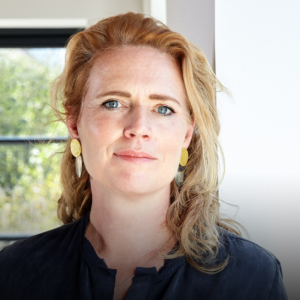
Have you ever experienced walking out of a meeting or closing it, thinking "Why didn’t I say this or ask that?” And then immediately rectified it in your head with: "The wrong moment" "They'll probably think I'm stupid" "It wouldn’t have added anything" and "Who am I to jeopardize a project's deadline?” For many, if not for everyone, a familiar situation. These occasions arise in a psychologically unsafe working environment.
When psychological safety is present in a team, then everyone feels at home, opinions and mistakes are shared, everyone contributes to the bigger picture from day 1, the status quo is challenged and everyone feels responsible, included and part of a positive atmosphere. Learn all about psychological safety in this inspiring and insightful session.
During the expert session, Joriene Beks engages the audience through a Q&A session using the Mentimeter app for interactive exercises, allowing participants to share experiences anonymously and promote open dialogue.
Understand how the presence or absence of psychological safety affects team dynamics, individual contributions, and overall workplace culture.
Learn practical strategies to foster psychological safety, encouraging open dialogue, risk-taking, and the sharing of ideas and mistakes without fear of negative consequences.
Discover how a psychologically safe environment leads to increased innovation, collaboration, and productivity, enhancing the overall performance and satisfaction of the team.
Have you ever left a meeting with thoughts like, "Why didn’t I say this or ask that?” only to justify your silence with reasons like, "The wrong moment," "They'll probably think I'm stupid," "It wouldn’t have added anything," or "Who am I to jeopardize a project's deadline?” This is a common scenario for many people, indicating a lack of psychological safety in the workplace. When psychological safety is lacking, individuals hesitate to share their thoughts, concerns, and ideas, fearing judgment or negative consequences.
In contrast, a team with psychological safety fosters an environment where everyone feels at home. Opinions and mistakes are freely shared, leading to greater innovation and collective problem-solving.
In such teams, everyone contributes to the bigger picture from day one, the status quo is continually challenged, and a sense of responsibility and inclusion permeates the atmosphere. Psychological safety encourages open dialogue, where team members feel respected and valued, enhancing collaboration and performance.
This inspiring and insightful session delves into the concept of psychological safety, its importance, and how it can transform team dynamics. Participants will learn practical strategies to create and maintain a psychologically safe environment within their teams.
By fostering psychological safety, organizations can unlock the full potential of their workforce, leading to increased creativity, productivity, and overall job satisfaction. Discover how to cultivate a culture where every voice is heard and valued, leading to a more engaged and effective team.
It is interactive, and the block above says exactly how for this session. Nobody has to speak up who does not want to: the chat and the polls carry most of it, and the questions can come in anonymously.
Have you ever experienced walking out of a meeting or closing it, thinking "Why didn’t I say this or ask that?” And then immediately rectified it in your head with: "The wrong moment" "They'll probably think I'm stupid" "It wouldn’t have added anything" and "Who am I to jeopardize a project's deadline?” For many, if... It is built for a general working audience: no prior knowledge is assumed, and people who already know the subject get the research and the practical side rather than an introduction.
It runs 45 min / 15 min: the talk, then live questions. All you do is pick a date. We brief Joriene, produce the session, host and moderate it, run the Q&A, and send you the report within an hour of the end.
A team, a department, an employee network or every single employee at once, with no cap and no per-seat price. It runs inside your own Microsoft Teams, Zoom or Google Meet, or on a branded page we build. No integration, no login, no company device or e-mail.
The session is delivered in English, Dutch. You can add high accuracy live subtitles in 8, 16 or 24 languages, so everyone follows in their own. That is a paid option, priced by the number of languages you need.
No, and that is by design. There is nothing to install, nothing to integrate and no connection to your systems, so there is nothing for IT to validate: we join your own Teams, Zoom or Meet as a guest speaker, or we host a page and your people open a link. No software, no accounts, and no data of yours that we can reach. It is why hundreds of companies, among them some of the largest technology and financial firms in the world, were able to start within a day.
We never receive or hold personal data about your employees. Because the session runs in your own environment, attendance and identity stay with you, and what we report back is aggregated: numbers, ratings and survey answers, not people. That is also why IT approval usually takes minutes rather than weeks.
This one is live only. You also get attendance over time, participant ratings for the content and the speaker, the survey answers, and the topics your people asked for next.
"People will forget what you said... but people will never forget how you made them feel," - Maya Angelou This hands-on workshop…
In a few interactive, playful exercises Rod shows people how to switch from ‘Yes, but’ to ‘Yes, and’.
How do you give and receive feedback? We often find it difficult to tell someone what we really think.
Robert Wolfe lets you experience how you can use a story from your own life to convey a message and convince the people around…

“Netflix’s biggest competitor is sleep.”That statement captures the reality of today’s attention economy.
Feedback should help people grow, but too often it creates tension, confusion or defensiveness.