Breaking the Burnout Cycle: A Pathway to Renewal and Vitality
Mark Rowe
Book a demo →from €2,250 for your whole company
Book a demo →from €2,250 for your whole company
This one runs as an interactive workshop: the hour includes exercises your colleagues do themselves, not only a talk.
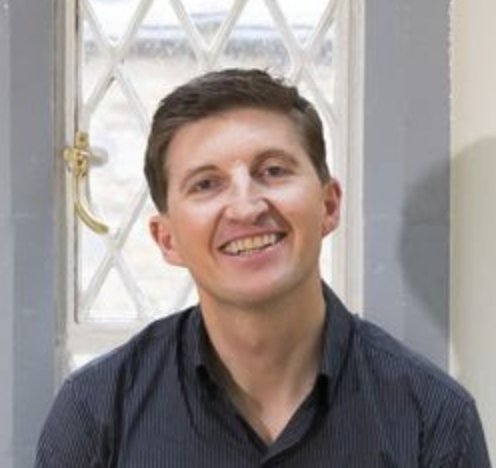
Dr. Mark Rowe has been a practicing family physician for nearly 30 years, having graduated from Medical School (UCD, Ireland) in 1991. H e is the founder of the Waterford Health Park, which has become both the base for Dr. Rowe’s medical practice as well as the ‘Lifestyle Medicine Be Well Clinic’. As a Keynote speaker, Mark regularly delivers events and workshops for organisations around the world. His TEDx talk titled ‘The Doctor of the Future: Prescribing Lifestyle as Medicine’ took place in University College Dublin in 2017. Notable engagements to date have included the American House of Representatives and a number of Fortune 500 companies. Mark is among the first medical professionals globally to be certified as a Diplomate of the International Board of Lifestyle Medicine. Mark has always held a strong desire to support people to become more active participants in their own wellbeing and thereby changing the culture of ‘a pill for every ill’. He advocates positive lifestyle change as the best medicine for burnout prevention and lasting wellbeing.
All sessions by Mark →Mark Rowe addresses burnout's root causes, intensified by chronic stress and factors like constant connectivity. He stresses that recovery requires a holistic approach beyond symptom management. Central to prevention is valuing sleep: he recommends creating a 90-minute pre-bed wind-down routine, avoiding work emails in bed, and limiting caffeine.
To regulate the circadian rhythm, he advises 30 minutes of morning outdoor natural light exposure. Recovery also involves self-care, including adjusting evening habits (exercise, cool/dark rooms) and combating self-sabotage through daily gratitude journaling.
Dr. Rowe emphasizes that burnout is manageable by seeking support and committing to daily self-awareness and vitality.
During the expert session, Mark Rowe engages the audience through a mix of interactive exercises and Q&A using the Mentimeter app.
Acknowledging the impact of chronic stress on mental and emotional health, focusing on personal well-being is vital in preventing and treating burnout. This may include practicing gratitude, engaging in enjoyable activities, seeking professional help like therapy or counseling, and creating a more sustainable work-life balance.
Understanding the importance of sleep in overall health, addressing contributing factors like mobile phone usage, caffeine intake, and bedtime routines can significantly improve sleep quality.
Confronting self-sabotaging behaviors requires awareness, daily gratitude practice, practicing kindness towards oneself, and seeking professional help like Cognitive Behavioral Therapy.
In this expert session, Dr. Rowe sheds light on the complex nature of burnout and its impact on our psychological and emotional wellbeing. Unlike medication that primarily addresses the symptoms, he emphasizes the importance of addressing the root causes to effectively treat and prevent burnout.
Dr. Rowe begins by explaining how chronic stress and emotional exhaustion are at the core of burnout. He goes on to discuss how factors such as the pandemic, heightened awareness, faster-paced world, and constant connectivity through mobile phones have contributed to a significant increase in burnout cases in recent years.
Regarding mobile phones, Dr. Rowe underlines their role in exacerbating burnout. He advises against bringing work devices and emails to bed due to the negative impact on sleep quality. To support healthy sleep patterns, he recommends listening to his podcast episode on sleep, which offers 15 strategies for improving sleep hygiene.
Dr. Rowe also emphasizes the importance of valuing sleep and understanding that it's not just about the hours spent in bed but rather a process that starts around 90 minutes before bedtime.
When addressing persistent sleeping problems, Dr. Rowe offers suggestions such as getting off mobile technology two hours before bed, creating a relaxing wind-down routine, and limiting caffeine intake due to its long half-life.
He also highlights the significance of morning exposure to natural light for activating the circadian rhythm and recommends spending 30 minutes outdoors in the mornings when blue light is most intense.
Furthermore, Dr. Rowe shares insights on various aspects of self-care and recovery from burnout. He encourages individuals to examine habits that affect sleep quality and quantity during the second part of the day.
His recommendations include considering exercise routines, ensuring bedrooms are cool and dark, and experimenting with relaxation techniques such as warm baths or magnesium supplements.
Dr. Rowe also addresses self-sabotaging behaviors, suggesting starting with awareness and practicing gratitude daily through journaling. He encourages being kinder to oneself in terms of thoughts and habits, fueling the body with nutritious foods, and changing the relationship with mobile phones.
For those dealing with anxious negative thoughts, he advises seeking professional help from a trained therapist, specifically Cognitive Behavioral Therapy (CBT).
Throughout the session, Dr. Rowe emphasizes that burnout is not fatal or final. He encourages individuals to become aware of their feelings, seek help and support, commit to taking better care of themselves daily, and live with more vitality.
With his holistic approach, Dr. Rowe offers valuable insights on managing burnout through lifestyle choices and self-care practices.
No prior knowledge is assumed. It is built for a general working audience, and people who already know the subject get the research and the practical side rather than an introduction. What the hour itself covers: Mark Rowe addresses burnout's root causes, intensified by chronic stress and factors like constant connectivity. He stresses that recovery requires a holistic approach beyond symptom management.
A workshop. The description of this session says so itself: the hour includes exercises and activities that participants do, not only an expert speaking. It still runs live and online, for as many colleagues as you want to invite.
Mark Rowe is one of the experts we auditioned ourselves, and we produce every session so we see how each one lands. Participants rate this session 4.7 out of 5, across 47 responses, and rate Mark personally 4.7 out of 5.
It is interactive, and the block higher up on this page says exactly how for this session. Nobody has to speak up who does not want to: the chat and the polls carry most of it, and the questions can come in anonymously.
It runs 45 min / 15 min: the talk, then live questions. All you do is pick a date. We brief Mark, produce the session, host and moderate it, run the Q&A, and send you the report within an hour of the end.
A team, a department, an employee network or every single employee at once, with no cap and no per-seat price. It runs inside your own Microsoft Teams, Zoom or Google Meet, or on a branded page we build. No integration, no login, no company device or e-mail.
The session is delivered in English. You can add high accuracy live subtitles in 8, 16 or 24 languages, so everyone follows in their own. That is a paid option, priced by the number of languages you need.
No, and that is by design. There is nothing to install, nothing to integrate and no connection to your systems, so there is nothing for IT to validate: we join your own Teams, Zoom or Meet as a guest speaker, or we host a page and your people open a link. No software, no accounts, and no data of yours that we can reach. It is why hundreds of companies, among them some of the largest technology and financial firms in the world, were able to start within a day.
We never receive or hold personal data about your employees. Because the session runs in your own environment, attendance and identity stay with you, and what we report back is aggregated: numbers, ratings and survey answers, not people. That is also why IT approval usually takes minutes rather than weeks.
You keep the recording and can share it internally. You also get attendance over time, participant ratings for the content and the speaker, the survey answers, and the topics your people asked for next.
Psychological Safety is a well documented driver of high performance in teams and organisations.
In a world of uncertainty, we cannot always control all the bad things that happen to us, but we can control the way that we…
“Netflix’s biggest competitor is sleep.”That statement captures the reality of today’s attention economy.
Stress appears to be one of the greatest threats to society. What can neuroscience tell you about what happens in your brain when…
1 in 4 people will experience a mental health disorder during their lifetime and the numbers keep rising.
There’s a myth fed by advertisement and social media that self-care is something like a luxurious spa-day, an extravagant weekend…