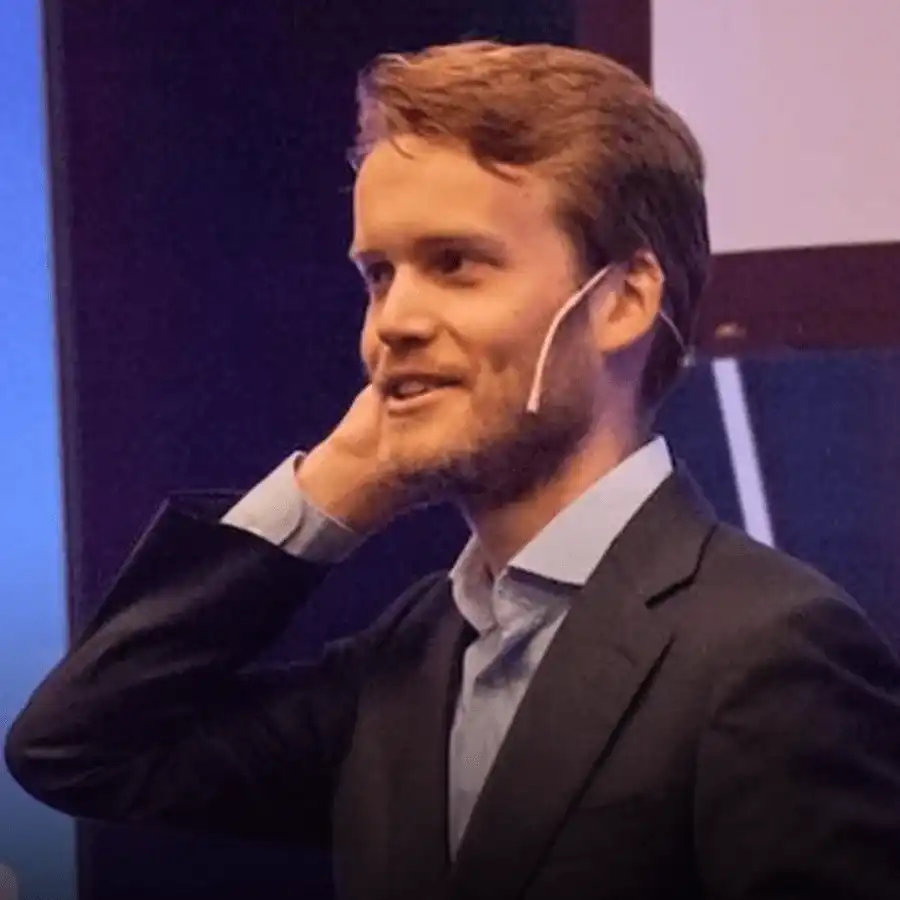
This one runs as a masterclass: Jeroen van Baar takes your colleagues through the research and the thinking behind it, with live questions throughout.
Our society is obsessed with achievement. For younger generations, competition and comparison pervade all aspects of life: from school and work to fitness and even our love life, thanks to Tinder and Instagram.
But does achievement drive happiness? Decades of science suggest otherwise. In this light-hearted and thought-provoking session, psychologist and neuroscientist Jeroen van Baar reveals the secrets of the satisfied mind and asks the question on everybody's mind: would life be better if we just embraced mediocrity?
During the expert session, Jeroen Van Baar engages the audience through interactive discussions on maximizers and satisficers, using real-life examples and the Mentimeter app for exercises. Participants share their thoughts in the chat function while Jeroen explores how societal pressures influence expectations and happiness.
He also introduces the concepts of intrinsic and extrinsic motivation, discussing their impact on decision-making and personal satisfaction.
Understanding how expectations shape our experiences of reality and the concept of hedonic adaptation can help individuals avoid the never-ending cycle of wanting more for greater happiness.
Distinguishing between maximizing and satisficing strategies in decision-making and their impact on long-term satisfaction, as well as focusing on intrinsic motivation, can lead to increased happiness and contentment.
While having fewer choices may provide more autonomy, it also comes with the challenge of making informed decisions. Embracing a mindful approach and considering intrinsic motivators can help individuals find balance in their pursuit of satisfaction and happiness.
In this expert session, speaker Jeroen Van Baar explores the themes of achievement anxiety, motivation, and happiness through his personal experiences and insights. The session begins with Jeroen sharing how attending a career convention left him feeling unfulfilled despite academic achievements and special access.
This experience led him to question the cultural assumption that more achievement leads to greater happiness.
Jeroen introduces the concept of the hedonic treadmill effect, or hedonic adaptation, which suggests people become accustomed to their current level of happiness and continuously raise their standards for contentment. Using examples from consumer goods and job hunting, Jeroen illustrates how this phenomenon creates unrealistic expectations and makes it difficult to be satisfied with anything less than perfection.
The speaker then discusses the role of expectations in shaping our experiences of reality and encourages a more mindful approach to achieving balance and contentment in life. Participants are encouraged to engage with Jeroen and share their thoughts via an interactive presentation tool.
Jeroen goes on to explain how society's evolution over the past century has made it easier for individuals to compare themselves to a greater number of people, leading to higher expectations. He discusses two methods for dealing with this issue: maximizing and satisfying.
Maximizers compare all options to find the best one, while satisficers settle for an acceptable option. While maximizers might end up with a better choice, they may also experience more negative feelings during decision-making.
Satisficers, on the other hand, feel happier in the long run as they are less focused on getting the most out of something.
Jeroen then introduces the concepts of intrinsic and extrinsic motivation. Intrinsic motivation refers to doing something because one enjoys it or feels good at it, while extrinsic motivation involves doing an activity for external rewards or punishments.
Jeroen shares a study demonstrating that people are more likely to choose an option when there are fewer alternatives. He encourages attendees to consider their tendencies towards maximization or satisficing and how these strategies impact decision-making and happiness in everyday life.
The session concludes with Jeroen discussing the benefits of having fewer working days, such as increased autonomy and time for personal interests. He recommends "The Paradox of Choice" by Barry Schwarz for those interested in learning more about maximizing and satisficing.
Throughout the expert session, Jeroen emphasizes the importance of recognizing the role of expectations in shaping our experiences, encouraging a more mindful approach to decision-making, and focusing on intrinsic motivation for sustainable motivation and long-term happiness.
From the survey every participant gets when the session ends, in their own words.
How expectations are created around us in an unconscious way, and how this influence the happiness. Fantastic lecture! Thanks a lot.
I have learnt the value of being satisfied in life. How it contributes to less pressure, contribute to happiness. I learnt the value of intrinsic motivation and why it is important. I really enjoyed the lecture and loved the relevant and clear examples.
Easy to understand, good mix of material and interesting topic.
De drie pijlers voor intrinsieke motivatie vond ik erg interessant, maar ook het stukje over op wie je jaloers bent en op wie niet.
Dat verwachtingen goed zijn, kader deze alleen anders wordt het lastig om gelukkig te zijn.
Dat ik het best goed die 👌
It is interactive, and the block above says exactly how for this session. Nobody has to speak up who does not want to: the chat and the polls carry most of it, and the questions can come in anonymously.
Our society is obsessed with achievement. For younger generations, competition and comparison pervade all aspects of life: from school and work to fitness and even our love life, thanks to Tinder and Instagram. It is built for a general working audience: no prior knowledge is assumed, and people who already know the subject get the research and the practical side rather than an introduction.
A masterclass. Jeroen van Baar takes your colleagues through the subject and the reasoning behind it, and answers live questions. It is practical in what people take away, without the hour turning into an exercise class.
Jeroen van Baar is one of the experts we auditioned ourselves, and we produce every session so we see how each one lands. Participants rate this session 4.0 out of 5, across 139 responses, and rate Jeroen personally 4.3 out of 5.
It runs 45 min / 15 min: the talk, then live questions. All you do is pick a date. We brief Jeroen, produce the session, host and moderate it, run the Q&A, and send you the report within an hour of the end.
A team, a department, an employee network or every single employee at once, with no cap and no per-seat price. It runs inside your own Microsoft Teams, Zoom or Google Meet, or on a branded page we build. No integration, no login, no company device or e-mail.
The session is delivered in English, Dutch. You can add high accuracy live subtitles in 8, 16 or 24 languages, so everyone follows in their own. That is a paid option, priced by the number of languages you need.
No, and that is by design. There is nothing to install, nothing to integrate and no connection to your systems, so there is nothing for IT to validate: we join your own Teams, Zoom or Meet as a guest speaker, or we host a page and your people open a link. No software, no accounts, and no data of yours that we can reach. It is why hundreds of companies, among them some of the largest technology and financial firms in the world, were able to start within a day.
We never receive or hold personal data about your employees. Because the session runs in your own environment, attendance and identity stay with you, and what we report back is aggregated: numbers, ratings and survey answers, not people. That is also why IT approval usually takes minutes rather than weeks.
You keep the recording and can share it internally. You also get attendance over time, participant ratings for the content and the speaker, the survey answers, and the topics your people asked for next.

Psychological Safety is a well documented driver of high performance in teams and organisations.

The menopause has an impact on everyone. At work, at home, in your social life - where women have to navigate this brain-body…
Stress and Burnout are on the rise in the workplace now more than ever before.
"What’s their name again? Why did I walk into this room? What were my 4 actions from that last team meeting?

In a world of uncertainty, we cannot always control all the bad things that happen to us, but we can control the way that we…

“Netflix’s biggest competitor is sleep.”That statement captures the reality of today’s attention economy.