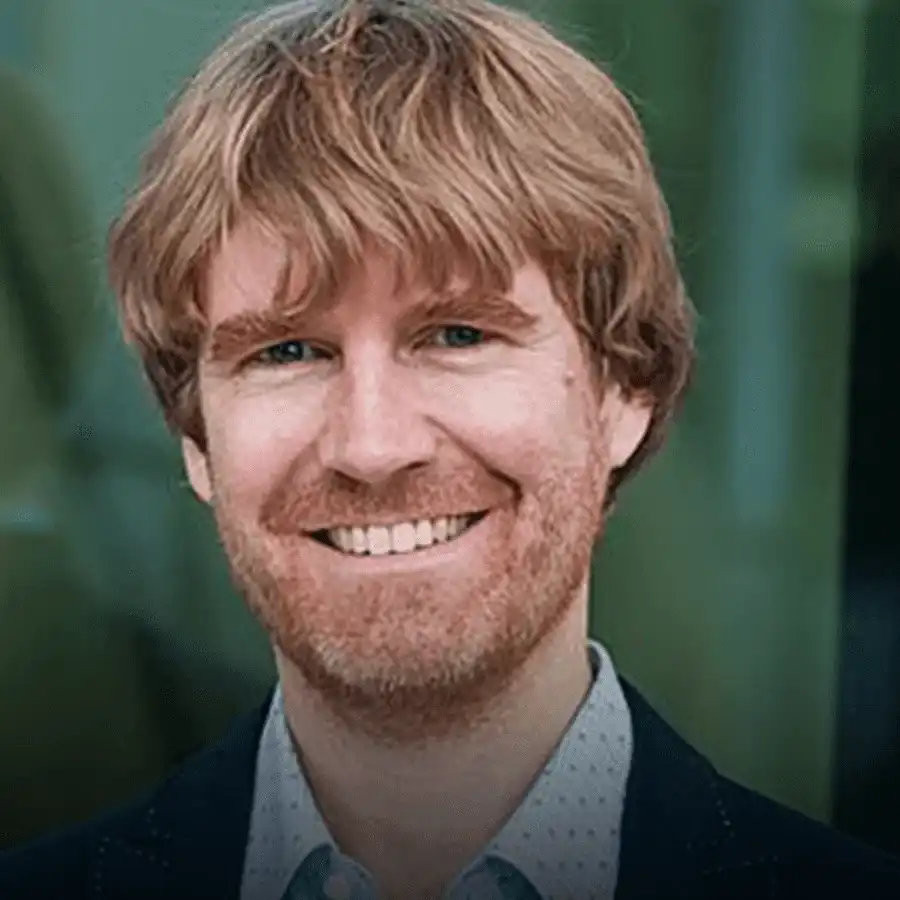
This one runs as a masterclass: Tobias Kalenscher takes your colleagues through the research and the thinking behind it, with live questions throughout.
Prof. Dr. Tobias Kalenscher has a diploma in psychology. He received a PhD in Cognitive Neuroscience from the Ruhr-University Bochum in 2005. He went to the University of Amsterdam, the Netherlands, for a post-doc position in systems biology and, later, an independent researcher position on a VENI grant. He was appointed professor of Comparative Psychology at Heinrich Heine University Düsseldorf in 2011. Tobias works on the interface between psychology, neuroscience, and economics. His main interest is to understand the psychology and neurobiology of decision-making in general, and deviations from optimal decision-making in particular.
All sessions by Tobias →Despite the still frequently made assumption that humans are consistent, sophisticated, and selfish decision-makers, decades of research in the behavioral sciences suggest that individuals are often much less rational and egoistic than originally assumed. Yet, it is still elusive what causes variations in judgment, choice, and social behavior within and across individuals.
One of the factors that may systematically influence decision-making is stress, or the underlying neuroendocrine stress response, respectively. In this session, Tobias will review recent findings in his lab on issues that alter decision-making, in particular social preferences.
During the expert session, Tobias Kalenscher engages the audience through methods like a Q&A session, live demonstrations using the Trier Social Stress Test (TSST), and interactive exercises with the Mentimeter app. These activities help the audience better understand the impact of stress on altruism and social discounting, as well as explore the differences between acute and chronic stress.
Understanding both the detrimental effects of chronic stress and the potential positive aspects of acute stress is crucial for appreciating the intricacies of this human experience.
Delving into how stress influences altruistic behaviors and uncovering the role of cortisol and noradrenaline in these actions offers valuable insights into our social interactions.
Gaining a deeper understanding of the neurobiological foundations of decision-making under stress can lead to improved problem-solving abilities and more informed choices.
In this expert session, Tobias Kalenscher delved into intriguing concepts related to human behavior, encompassing homo economics, altruism, stress, and social discounting.
Starting with homo economics, Tobias introduced the theory that individuals act rationally in their self-interest to maximize their own utility or benefit. However, he questioned the validity of this assumption, hinting at a more complex reality where humans' altruistic tendencies can influence their actions.
The tend-and-befriend hypothesis was then introduced, suggesting that under stressful conditions, individuals may become even more social and invest in relationships with others for emotional and concrete support. This idea challenges the notion that individuals become less prosocial when stressed.
A fascinating experiment came to light where participants were asked to donate money to different people based on their proximity. Tobias explained how this study demonstrated social discounting, where people are more generous towards those closer to them but give less as social distance increases. This phenomenon follows a hyperbolic decay function rather than an exponential one.
Delving further into the realm of stress, Tobias discussed research findings on its relationship with altruism. He highlighted how acute stressors can result in the release of cortisol and noradrenaline, which have prolonged effects even after the stressor has ended.
In a social discounting task, participants given medications to mimic these stress hormones (hydrocortisol and johimin) exhibited varying altruistic behaviors. Hydrocortisol increased prosocial behavior towards those nearby, while noradrenaline's effect on altruism was neutralized by cortisol.
Tobias also shared an insightful riddle that illustrates the dual-system theory and its implications for our understanding of human decision-making. He emphasized that our intuitive responses may not always align with our well-differentiated beliefs and encouraged the audience to explore this further.
Throughout the session, Tobias incorporated interactive elements using the Mentimeter app to engage participants and foster a dynamic exchange of ideas.
Lastly, Tobias highlighted the importance of understanding stress's influence on decision-making and encouraged the exploration of its neurobiological foundations. He concluded by expressing his hope that the audience found the session thought-provoking and expressed gratitude for their active engagement throughout.
No prior knowledge is assumed. It is built for a general working audience, and people who already know the subject get the research and the practical side rather than an introduction. What the hour itself covers: Despite the still frequently made assumption that humans are consistent, sophisticated, and selfish decision-makers, decades of research in the behavioral sciences suggest that individuals are often much less rational and egoistic than originally assumed. Yet, it is still elusive what causes variations in judgment,...
A masterclass. Tobias Kalenscher takes your colleagues through the subject and the reasoning behind it, and answers live questions. It is practical in what people take away, without the hour turning into an exercise class.
It is interactive, and the block higher up on this page says exactly how for this session. Nobody has to speak up who does not want to: the chat and the polls carry most of it, and the questions can come in anonymously.
It runs 45 min / 15 min: the talk, then live questions. All you do is pick a date. We brief Tobias, produce the session, host and moderate it, run the Q&A, and send you the report within an hour of the end.
A team, a department, an employee network or every single employee at once, with no cap and no per-seat price. It runs inside your own Microsoft Teams, Zoom or Google Meet, or on a branded page we build. No integration, no login, no company device or e-mail.
The session is delivered in German. You can add high accuracy live subtitles in 8, 16 or 24 languages, so everyone follows in their own. That is a paid option, priced by the number of languages you need.
No, and that is by design. There is nothing to install, nothing to integrate and no connection to your systems, so there is nothing for IT to validate: we join your own Teams, Zoom or Meet as a guest speaker, or we host a page and your people open a link. No software, no accounts, and no data of yours that we can reach. It is why hundreds of companies, among them some of the largest technology and financial firms in the world, were able to start within a day.
We never receive or hold personal data about your employees. Because the session runs in your own environment, attendance and identity stay with you, and what we report back is aggregated: numbers, ratings and survey answers, not people. That is also why IT approval usually takes minutes rather than weeks.
You keep the recording and can share it internally. You also get attendance over time, participant ratings for the content and the speaker, the survey answers, and the topics your people asked for next.
Psychological Safety is a well documented driver of high performance in teams and organisations.
In a world of uncertainty, we cannot always control all the bad things that happen to us, but we can control the way that we…

“Netflix’s biggest competitor is sleep.”That statement captures the reality of today’s attention economy.
Stress appears to be one of the greatest threats to society. What can neuroscience tell you about what happens in your brain when…
1 in 4 people will experience a mental health disorder during their lifetime and the numbers keep rising.
There’s a myth fed by advertisement and social media that self-care is something like a luxurious spa-day, an extravagant weekend…