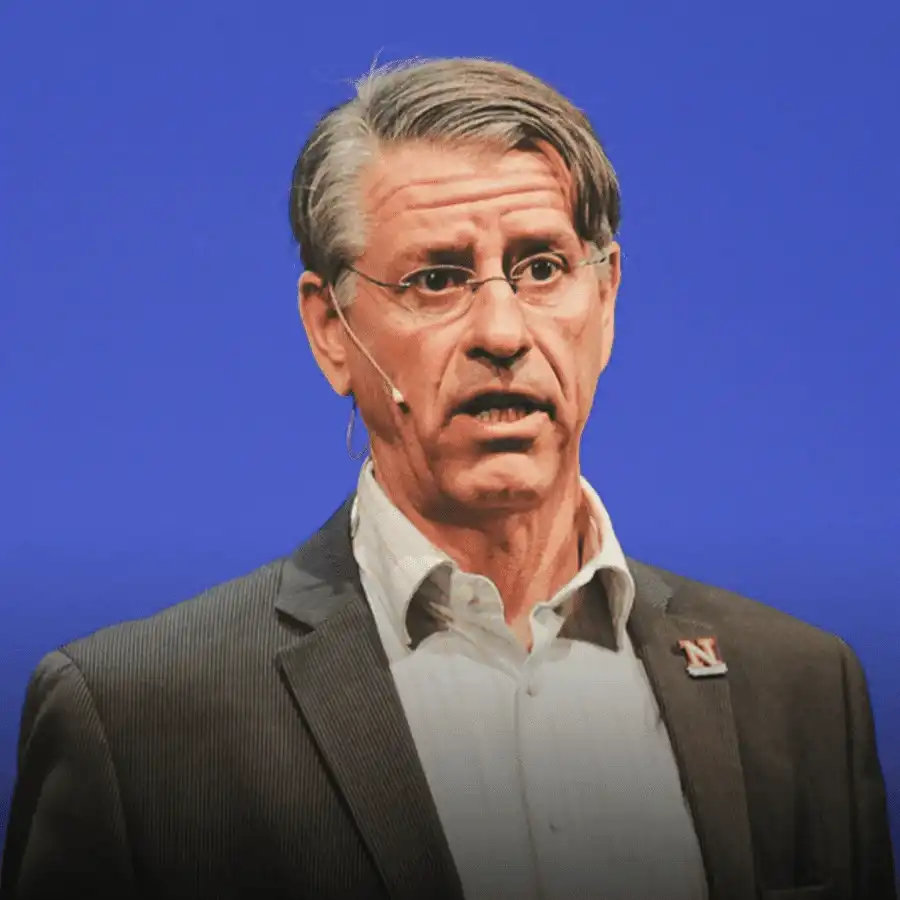
Frans von der Dunk is Professor of Space Law at the University of Nebraska and Director of Black Holes Consultancy on space law and policy in Leiden, The Netherlands. He is among the most well-known experts on space law and policy in the world, has authored two leading handbooks and over two hundred articles and has advised hundreds of clients world-wide on issues of space law and policy: governments, space agencies, international organizations such as the UN, the EU and ESA, private corporations and other private entities such as the Association of Space Explorers.
All sessions by Frans →Most people may never have heard about something called ’space law’. Yet, given the increasing importance of space applications even in our everyday life, law and regulation is becoming crucial. Take for instance space tourism.
A trip to space, flying weightlessly in a space-shuttle or a quick visit to the moon: it won’t last long before an exotic holiday trip can be spend in space. Right now international rules are developed to prepare for an age in which space activities and space applications will become indispensable for human life on Earth.
Frans von der Dunk is one of the first few space lawyers. In this session, he will show the audience how new rules and regulations are developed for this exciting new frontier in tourism.
During the expert session, Frans Von Der Dunk engages the audience through a Q&A session, live demonstrations using real-life examples of space law cases, and interactive exercises with the Mentimeter app. Frans discusses the importance and expanding field of space law, sharing his expertise on liability, regulation, and the complexities surrounding International Air law and space law.
The audience participates in hypothetical scenarios to gain insights into their perspectives regarding travel uncertainties, while Frans offers valuable insights on the current state and potential future developments of the space law industry.
Gain a foundational understanding of this lesser-known yet expanding legal discipline that deals with the legal framework for space travel and tourism.
Grasp the complexities of determining liability for damages in suborbital and orbital flights, whether they should be treated as aircraft or spacecraft, and how it impacts passenger compensation.
Learn from expert Frans Von Der Dunk's insights into the legal aspects of space projects and regulations, emphasizing the importance of addressing potential legal issues before operations begin to avoid disputes and financial losses.
In this expert session, legal scholar Frans Von Der Dunk offers a captivating exploration into the intriguing field of space law, an often overlooked yet essential discipline for our future in space travel. Frans initiates by posing a thought-provoking question to the audience: "Have any of you ever heard of space law?" He explains that most professionals in this area dedicate their time to client counseling, creating contracts, legislation, and licensing requirements.
However, Frans anticipates that future lawyers will represent clients in court cases related to space law.
Frans recounts a story about an encounter with a police officer during a lecture setup, who inquired about the nature of "space law," much like many attendees may have done before this session. He underscores the growing importance of space law due to the privatization trend in the space industry and tourism sector.
Frans then introduces space law to those unaware, emphasizing its significance for space tourists and the challenges that come with traveling through space.
He shares that the technology behind both air travel and space travel is similar, but the distances and costs differ significantly. Space travel involves flying on a large white body aircraft from one continent to another for an extended period or experiencing suborbital hops into space and back.
While space tourism remains expensive and inaccessible for most, a few have already signed up for the opportunity with companies like Virgin Galactic.
Frans then delves into the complexities of liability in space travel. He discusses how damages for property damage resulting from an aircraft crash are compensated under international air law, but full compensation is given under space law.
For contractual liability, passengers on board aircrafts have been generously compensated since aviation's inception, but under space law rules, there is no such international rule for passenger compensation.
The distinction between suborbital flights being treated as aircraft or spacecraft regarding liability plays a significant role in this discussion. Frans suggests that passengers may prefer discussions to be resolved under air law due to generous compensation, while non-flying citizens on the ground would favor space law for full damages and state payment.
However, determining what a passenger is actually flying on poses a challenge: an aircraft derives support from the atmosphere, whereas a spacecraft is less well-defined and may depend on the intention of reaching outer space.
Frans shares his experience as a consultant in the legal aspects of space projects and emphasizes the importance of addressing legal issues before operations begin to avoid potential financial losses or legal disputes. He uses examples from the European Union's development of the Galileo satellite navigation system and the United States' approach to regulating private commercial space flights, highlighting the significance of thorough background investigations and securing necessary rights and permissions.
The expert session then focuses on the complexities of defining vehicles that can both fly in the atmosphere and travel to outer space. Frans presents examples of vehicles like Armadillo Aerospace's vehicle, which uses wings for part of its flight but is intended for use in outer space, and the White Knight craft, which serves as a carrier aircraft for a spacecraft and also intends to go into the atmosphere but not outer space.
As the session concludes, Frans shares his expertise on the development of the space law industry and the importance of informed consent in this new frontier. He discusses the challenges posed by the balance between protecting interests and ensuring safety for all parties involved, particularly regarding liability and regulation.
While some clarity exists in the US approach, European regulations remain uncertain, leading to varied perspectives and ongoing debates.
No prior knowledge is assumed. It is built for a general working audience, and people who already know the subject get the research and the practical side rather than an introduction. What the hour itself covers: Most people may never have heard about something called ’space law’. Yet, given the increasing importance of space applications even in our everyday life, law and regulation is becoming crucial.
Frans von der Dunk is one of the experts we auditioned ourselves, and we produce every session so we see how each one lands. Participants rate this session 4.2 out of 5, across 21 responses, and rate Frans personally 4.5 out of 5.
It is interactive, and the block higher up on this page says exactly how for this session. Nobody has to speak up who does not want to: the chat and the polls carry most of it, and the questions can come in anonymously.
It runs 45 min / 15 min: the talk, then live questions. All you do is pick a date. We brief Frans, produce the session, host and moderate it, run the Q&A, and send you the report within an hour of the end.
A team, a department, an employee network or every single employee at once, with no cap and no per-seat price. It runs inside your own Microsoft Teams, Zoom or Google Meet, or on a branded page we build. No integration, no login, no company device or e-mail.
The session is delivered in English, Dutch. You can add high accuracy live subtitles in 8, 16 or 24 languages, so everyone follows in their own. That is a paid option, priced by the number of languages you need.
No, and that is by design. There is nothing to install, nothing to integrate and no connection to your systems, so there is nothing for IT to validate: we join your own Teams, Zoom or Meet as a guest speaker, or we host a page and your people open a link. No software, no accounts, and no data of yours that we can reach. It is why hundreds of companies, among them some of the largest technology and financial firms in the world, were able to start within a day.
We never receive or hold personal data about your employees. Because the session runs in your own environment, attendance and identity stay with you, and what we report back is aggregated: numbers, ratings and survey answers, not people. That is also why IT approval usually takes minutes rather than weeks.
You keep the recording and can share it internally. You also get attendance over time, participant ratings for the content and the speaker, the survey answers, and the topics your people asked for next.
"People will forget what you said... but people will never forget how you made them feel," - Maya Angelou This hands-on workshop…
Despite constant warnings, we are reluctant to change our ways when it comes to accumulating more and more things.
Kilian gives an intriguing leqture on the effect of money and other incentives to reward behaviour.
Da Vinci is known for being an inventor and an artist, but most of all, he was an excellent observer.
Hoe is de Kim 'dynastie' aan de macht gekomen en kan het al zo lang functioneren?
When is an act considered as money laundering? Joras provides insights into this criminal activity.