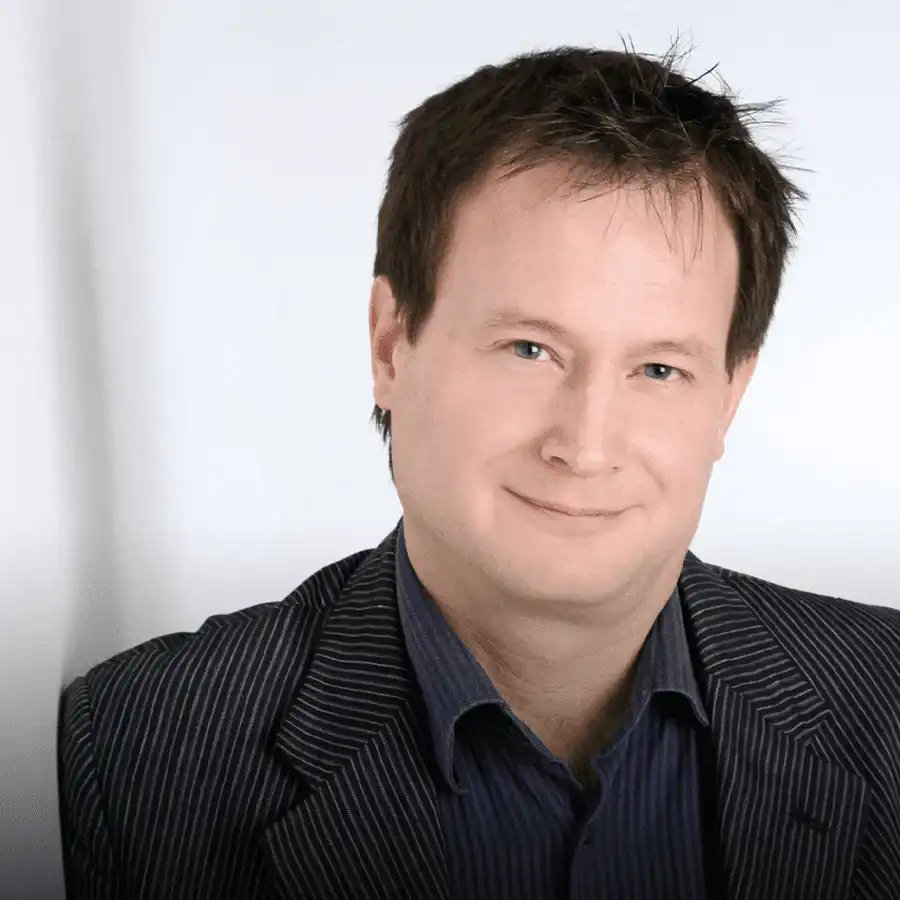
This one runs as a masterclass: Bruce Hood takes your colleagues through the research and the thinking behind it, with live questions throughout.
Despite constant warnings, we are reluctant to change our ways when it comes to accumulating more and more things. We are consuming evermore energy, adding countless landfills and we buy more stuff than ever before.
Why is this? The answer is our need for ownership of things. Ownership is a uniquely human pre-occupation that has its origins deeply rooted in our biology. Using fascinating examples from studies of child behavior, Bruce explains why psychological ownership is a state of mind that governs our behavior from the cradle to the grave, even when it is often irrational and destructive.
A must see session for every person who cares about human behavior and how it impacts the planet.
During the expert session, Bruce Hood explores the historical, psychological, and societal implications of our relationship with material possessions. He uses stories, research findings, and interactive activities using the Mentimeter app to engage the audience in thought-provoking discussions on ownership, identity, and sustainability.
Through a Q&A session, Bruce shares insights from studies and emerging trends that promote shared or rented models and discusses potential challenges and solutions to reduce individual ownership needs.
Gaining insight into how material possessions have shaped our identities and relationships throughout history is essential for recognizing their impact on our lives.
Awareness of the endowment effect and its variations across cultures can help us understand why people value possessions differently and adapt accordingly for more sustainable consumption habits.
Embracing emerging trends and collective ownership models, as well as recognizing the importance of community values and personal responsibility, are crucial steps towards reducing excessive individual ownership and promoting a more sustainable lifestyle.
In this expert session, Bruce Hood delves into the intricacies of human relationships with possessions and draws parallels to our connection with the planet. He emphasizes that the concept of ownership is complex and contentious, leading to conflicts and resource depletion throughout history.
Bruce begins by inviting us to reflect on our perspective when observing Earth from outer space. The vastness of the universe puts our concerns into perspective and highlights the insignificance of our material possessions.
He then explores how civilization's constant struggle for ownership has resulted in misery for individuals and societies, often fueled by a deep-rooted human desire for more than we need.
With his background in neuroscience and developmental psychology, Bruce sheds light on the psychological aspects of possession, using the story of Shannon Whisnant as an example. This man unintentionally acquired a human foot and found himself entangled in a legal battle over ownership.
Bruce argues that ownership is not a natural concept but rather a social construct that we agree upon, often through costly legal disputes.
The session then progresses into the historical significance of material possessions and their role in our identities and relationships. Bruce takes us back to the Industrial Revolution, where luxury goods became abundant and were used as status symbols to display wealth and status.
He discusses how Adrian Smith recognized the deep emotional connection between wealth and psychology, leading to the emergence of marketing and advertising to stimulate demand.
Bruce also delves into the concept of ownership and possessions' impact on personal happiness and societal structures. He explains that our possessions shape our lives and perceptions in various ways, from evolutionary origins to contemporary marketing techniques.
The endowment effect, a bias causing individuals to value their property more than others are willing to pay for it, is explored in detail.
Throughout the session, Bruce encourages active participation using the Mentimeter app, posing thought-provoking questions that challenge our perceptions of ownership and property. He emphasizes the need to recognize the consequences of excessive consumption on ourselves and future generations and encourages a shift towards more sustainable and interdependent lifestyles.
The session concludes with Bruce Hood sharing his thoughts on the unsustainability of unrelenting consumerism and the need for government policies and a shift towards community-minded success. He acknowledges the challenges of this transition but emphasizes its importance in addressing current situations. Bruce believes that valuing community over individualistic success is the way forward.
Throughout the session, Bruce Hood provides valuable insights into the complex relationship between ownership, consumption, and sustainability, encouraging greater awareness and mindfulness towards our actions and their impact on ourselves and future generations.
From the survey every participant gets when the session ends, in their own words.
Thank you for the wonderful presentation.
The session was good. I enjoyed Bruce's story line - a very good link and a clear message. Thanks
Great presentation from Bruce, highly engaging. Thank you!
Very well timed presentation, very relevant to our company audience. Special thanks for answering with simplicity and courage some questions that are very challenging.
Value and mindset of ownership/ possession. I really enjoyed much of this webinar!
New way of thinking, thanks
We need to modify our behaviour to make a difference in the world to reduce consumption. We need to be more conscientious. Very good examples showing the rise in Consumerism and how ownership provides an equation on how to lead our life and what we own.
A lot about what drives decision making in our everyday lives. Seems like having self controls in place could benefit not only individuals but subsequently society as a whole. Probably the most interesting presentation I've had in a work environment.
It is interactive, and the block above says exactly how for this session. Nobody has to speak up who does not want to: the chat and the polls carry most of it, and the questions can come in anonymously.
Despite constant warnings, we are reluctant to change our ways when it comes to accumulating more and more things. We are consuming evermore energy, adding countless landfills and we buy more stuff than ever before. It is built for a general working audience: no prior knowledge is assumed, and people who already know the subject get the research and the practical side rather than an introduction.
A masterclass. Bruce Hood takes your colleagues through the subject and the reasoning behind it, and answers live questions. It is practical in what people take away, without the hour turning into an exercise class.
Bruce Hood is one of the experts we auditioned ourselves, and we produce every session so we see how each one lands. Participants rate this session 4.2 out of 5, across 561 responses, and rate Bruce personally 4.4 out of 5.
It runs 45 min / 15 min: the talk, then live questions. All you do is pick a date. We brief Bruce, produce the session, host and moderate it, run the Q&A, and send you the report within an hour of the end.
A team, a department, an employee network or every single employee at once, with no cap and no per-seat price. It runs inside your own Microsoft Teams, Zoom or Google Meet, or on a branded page we build. No integration, no login, no company device or e-mail.
The session is delivered in English. You can add high accuracy live subtitles in 8, 16 or 24 languages, so everyone follows in their own. That is a paid option, priced by the number of languages you need.
No, and that is by design. There is nothing to install, nothing to integrate and no connection to your systems, so there is nothing for IT to validate: we join your own Teams, Zoom or Meet as a guest speaker, or we host a page and your people open a link. No software, no accounts, and no data of yours that we can reach. It is why hundreds of companies, among them some of the largest technology and financial firms in the world, were able to start within a day.
We never receive or hold personal data about your employees. Because the session runs in your own environment, attendance and identity stay with you, and what we report back is aggregated: numbers, ratings and survey answers, not people. That is also why IT approval usually takes minutes rather than weeks.
You keep the recording and can share it internally. You also get attendance over time, participant ratings for the content and the speaker, the survey answers, and the topics your people asked for next.