Self-directed Learning: Taking Ownership of Your Growth
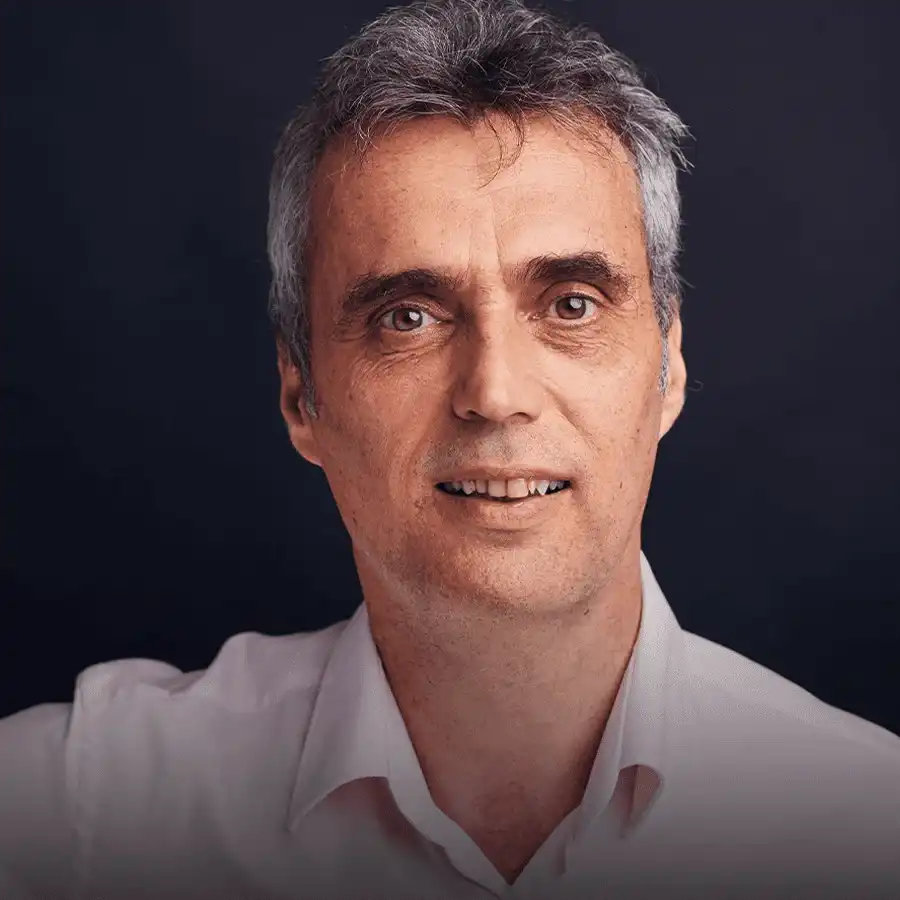
Steven Campbell-Harris
Book a demo →from €2,250 for your whole company

Book a demo →from €2,250 for your whole company
As a philosopher, facilitator, and writer, Steven specialises in helping businesses and professionals unlock their full potential by improving how they think. At The School of Life and Philosophy at Work, he empowers individuals and teams to solve problems more effectively, make better decisions, and work more cohesively. His sessions are designed to be practical and engaging, offering actionable insights that participants can immediately apply to their work and lives.
All sessions by Steven →In today’s fast-changing world, learning can no longer depend solely on formal training or external direction. In this session, Steven Campbell Harris explores self-directed learning as a vital skill for modern professionals.
Participants discover how to take ownership of their development by identifying knowledge gaps, building motivation, challenging limiting beliefs, and creating sustainable learning habits. The session offers practical frameworks to help individuals become more adaptable, curious, and confident lifelong learners.
During the expert session, Steven Campbell-Harris engages the audience through interactive exercises, Q&A sessions, and live demonstrations.
Effective learning requires awareness of a knowledge gap, a compelling reason to learn, belief that the skill is learnable, and confidence in your own ability to improve. Missing any one of these conditions can block progress.
Expertise can sometimes limit growth through fixed routines and assumptions. Cultivating curiosity and openness helps uncover blind spots and creates new learning possibilities.
Large, overwhelming goals become achievable when broken down into smaller components. Focusing on one micro-skill at a time builds confidence and momentum over time.
Steven Campbell Harris, philosopher and writer, opens the session by introducing self-directed learning as one of the most important capabilities for the 21st-century workplace. He explains that most people are educated in highly structured environments where learning is externally guided, which can leave adults feeling uncertain about how to continue developing without a roadmap.
Self-directed learning, he argues, is the antidote: a way to regain ownership, adaptability, and empowerment in personal and professional growth.
The session centres around a practical framework: four essential conditions required for learning something independently. These include recognising a knowledge gap, having a meaningful reason to close it, believing the skill can be learned, and trusting in one’s own ability to improve.
Steven shows how learning stalls whenever one of these conditions is missing, offering a diagnostic tool for identifying personal learning blockers.
Steven then explores how individuals can become more aware of what they don’t know. Drawing on cognitive psychology, he introduces the Einstellung Effect, explaining how expertise can narrow problem-solving and reduce openness to new approaches.
He contrasts this with the concept of “beginner’s mind,” highlighting how curiosity and humility expand learning potential.
The session also emphasises the importance of challenging assumptions and asking better questions, noting that breakthroughs often begin not with answers but with discovering the right question. Steven shares examples of innovation driven by naïve or unexpected questioning, encouraging participants to adopt a more exploratory mindset.
Another key theme is the role of information environments. Steven warns against “algorithmic containment,” where personalised content bubbles limit exposure to new ideas. He encourages participants to intentionally invite serendipity into their learning through varied sources, unexpected reading, and exploration beyond familiar patterns.
Finally, Steven focuses on confidence and sustainability. He introduces the idea of breaking complex abilities into manageable micro-skills and working within the “challenge zone” between comfort and overwhelm.
By taking small, repeatable steps, individuals can steadily expand their capabilities and build long-term learning habits.
The session concludes with actionable takeaways: diagnose which learning condition is missing, practise one small stretch each week, and schedule moments of curiosity to keep learning dynamic, empowering, and continuous.
No prior knowledge is assumed. It is built for a general working audience, and people who already know the subject get the research and the practical side rather than an introduction. What the hour itself covers: In today’s fast-changing world, learning can no longer depend solely on formal training or external direction. In this session, Steven Campbell Harris explores self-directed learning as a vital skill for modern professionals.
Steven Campbell-Harris is one of the experts we auditioned ourselves, and we produce every session so we see how each one lands. Participants rate this session 4.0 out of 5, across 31 responses, and rate Steven personally 4.3 out of 5.
It is interactive, and the block higher up on this page says exactly how for this session. Nobody has to speak up who does not want to: the chat and the polls carry most of it, and the questions can come in anonymously.
It runs 45 min / 15 min: the talk, then live questions. All you do is pick a date. We brief Steven, produce the session, host and moderate it, run the Q&A, and send you the report within an hour of the end.
A team, a department, an employee network or every single employee at once, with no cap and no per-seat price. It runs inside your own Microsoft Teams, Zoom or Google Meet, or on a branded page we build. No integration, no login, no company device or e-mail.
The session is delivered in English. You can add high accuracy live subtitles in 8, 16 or 24 languages, so everyone follows in their own. That is a paid option, priced by the number of languages you need.
No, and that is by design. There is nothing to install, nothing to integrate and no connection to your systems, so there is nothing for IT to validate: we join your own Teams, Zoom or Meet as a guest speaker, or we host a page and your people open a link. No software, no accounts, and no data of yours that we can reach. It is why hundreds of companies, among them some of the largest technology and financial firms in the world, were able to start within a day.
We never receive or hold personal data about your employees. Because the session runs in your own environment, attendance and identity stay with you, and what we report back is aggregated: numbers, ratings and survey answers, not people. That is also why IT approval usually takes minutes rather than weeks.
You keep the recording and can share it internally. You also get attendance over time, participant ratings for the content and the speaker, the survey answers, and the topics your people asked for next.
Many of us think of our ‘problems’ in a very limiting way- as things that are broken which need to be fixed.
We often think innovation begins with a brilliant idea, but the real breakthrough usually comes earlier.
Generative AI is transforming knowledge work. But while the technology feels revolutionary, the underlying challenge is not new.

"People will forget what you said... but people will never forget how you made them feel," - Maya Angelou This hands-on workshop…

Stress and Burnout are on the rise in the workplace now more than ever before.

How do successful people, teams, and organisations become even more successful?
Robert Wolfe lets you experience how you can use a story from your own life to convey a message and convince the people around…

What does being an ‘Ally’ mean? From case studies to the Wheel of Power and Privilege, this interactive session will take you…

In a world of uncertainty, we cannot always control all the bad things that happen to us, but we can control the way that we…