Character & Culture in Corporate Ethics
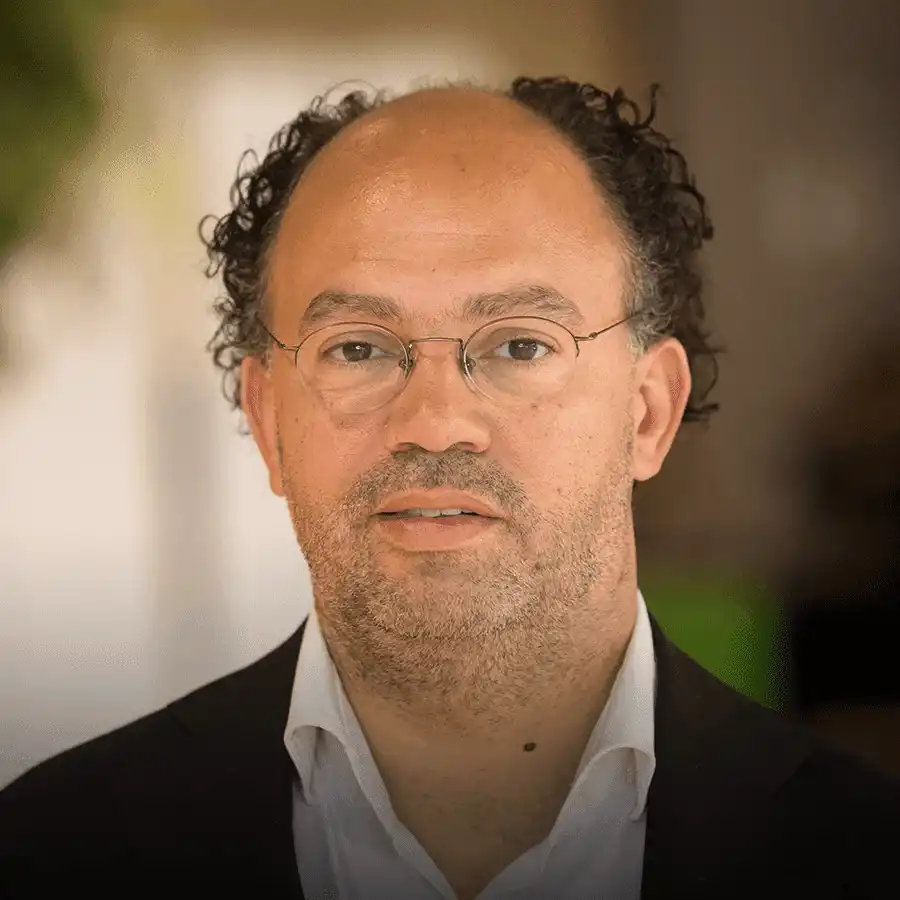
Julian Baggini
Book a demo →from €2,250 for your whole company

Book a demo →from €2,250 for your whole company
Dr Julian Baggini is the author, co-author, or editor of over 20 books including The Godless Gospel, How The World Thinks, The Virtues of the Table, The Ego Trick (all Granta), and The Edge of Reason (Yale University Press). He was the founding editor of The Philosophers’ Magazine and has written for numerous newspapers and magazines, as well as for the think tanks The Institute of Public Policy Research, Demos and Counterpoint. He is Academic Director of the Royal institute of Philosophy and an Honorary Research Fellow at the University of Kent.
All sessions by Julian →Organisations are increasingly aware of the importance of values for both employees and clients. It is, however, very difficult to translate a statement of values into something the organisation truly displays.
This can lead to scepticism and even cynicism from employees and clients who come to see these statements of values as fine words not matched by action. Baggini will argue that the mistake many make is to focus too much on principes, procedures and policies.
Julian will explain why one of the most effective ways for organisations to make their values come to life is to focus instead on their culture, or what Julian calls; corporate character. Drawing on both western and eastern philosophy, he will show why this is essential for the flourishing of any organisation.
During the expert session, Julian Baggini engages the audience through a Q&A session, live demonstrations using the Mentimeter app for interactive exercises, and sharing his insights on ethical conduct in businesses. The use of Mentimeter allows for real-time responses and valuable data visualization, making the experience more engaging and dynamic.
Julian emphasizes the importance of considering consequences, duties, character, and virtues to foster ethical behavior within organizations.
Going beyond just following ethical rules and policies, consider the consequences of actions, your duties towards various stakeholders, and building strong character as essential elements of ethical conduct within an organization.
Encourage ethical behavior daily by empowering employees to make decisions that align with organizational values, practicing ethics as a natural part of their work, and cultivating virtues through shared experiences and 'upside-down management' principles.
Ensure open communication with advisors or consultants by providing them the necessary resources to speak truthfully about ethical concerns within your organization, recognizing that honesty and transparency are crucial for ethical conduct and growth.
In this expert session, Julian Baggini delves into the subject of corporate ethics, debunking three prevalent myths that often misguide organizations. Firstly, he challenges the notion that good ethics equate to good business, explaining that ethics extend beyond financial success and require a deeper understanding of consequences, duties, and character.
The second myth Baggini dispels is the belief that ethical behavior can be codified into rules and policies. While detailed handbooks are essential, he warns against rigidity in adhering to rules without considering context.
Starbucks serves as an example, illustrating that strict adherence to rules may lead to problems if not applied thoughtfully.
Thirdly, Baggini clarifies the distinction between ethics and corporate social responsibility (CSR). He explains that while CSR focuses on external impacts, ethics concern how an organization behaves and treats its colleagues internally.
To cultivate a truly ethical work environment, Baggini advocates for considering the significance of consequences, duties, and character. Consequences involve understanding the impact of actions on society and clients.
Duties refer to responsibilities towards employees, suppliers, customers, and society in general. Character is often overlooked but plays a crucial role as it influences individuals' decision-making and shapes an organization's culture or 'corporate character.'
Baggini also encourages organizations to practice ethical behavior daily by cultivating virtues among their workforce. This means empowering employees to make decisions that align with the organization's values and encouraging them to think ethically as a natural part of their daily work.
He cites examples like TSon, a family-owned key cutting and shoe repair company in the UK, which embodies high ethical standards through its 'upside down management' principle.
Moreover, Baggini emphasizes that doing good is not just about avoiding harm but also involves positively contributing to the work environment. Organizations should focus on ethics as a whole, encompassing everyone's conduct within the organization.
Julian's expert session continues by emphasizing the importance of having a strong moral character as individuals and fostering a positive ethical culture within organizations. He encourages everyone to lead by example and negotiate shared values across different cultural contexts.
By debunking these myths and shedding light on the true essence of ethics, Julian offers valuable insights for businesses striving to create a flourishing work environment where people want to grow and thrive.
From the survey every participant gets when the session ends, in their own words.
Thank you so much! This was a refreshing hour of my day - I learned so much and I think my colleagues did too..
Respect is key in everything, take a moment to realize what respect is and for who. Thanks Julian.
Good culture and good ethics come from practicing being good all the time. Using time seriously and consistently being able to be the good example most possibly leads having possitive influence wherever. Good to start with the self.
Acknowledgement of my ideas on this, very clear build up.
Some values (trust) are not always 100% only good Ethics are important for a business but it's not always easy to integrate them
It’s an very interesting topic. Especially how it is handeld, that can make the difference.
Good lecture and speaker. I was interested during the whole session.
No prior knowledge is assumed. It is built for a general working audience, and people who already know the subject get the research and the practical side rather than an introduction. What the hour itself covers: Organisations are increasingly aware of the importance of values for both employees and clients. It is, however, very difficult to translate a statement of values into something the organisation truly displays.
Julian Baggini is one of the experts we auditioned ourselves, and we produce every session so we see how each one lands. Participants rate this session 4.1 out of 5, across 34 responses, and rate Julian personally 4.3 out of 5.
It is interactive, and the block higher up on this page says exactly how for this session. Nobody has to speak up who does not want to: the chat and the polls carry most of it, and the questions can come in anonymously.
It runs 45 min / 15 min: the talk, then live questions. All you do is pick a date. We brief Julian, produce the session, host and moderate it, run the Q&A, and send you the report within an hour of the end.
A team, a department, an employee network or every single employee at once, with no cap and no per-seat price. It runs inside your own Microsoft Teams, Zoom or Google Meet, or on a branded page we build. No integration, no login, no company device or e-mail.
The session is delivered in English. You can add high accuracy live subtitles in 8, 16 or 24 languages, so everyone follows in their own. That is a paid option, priced by the number of languages you need.
No, and that is by design. There is nothing to install, nothing to integrate and no connection to your systems, so there is nothing for IT to validate: we join your own Teams, Zoom or Meet as a guest speaker, or we host a page and your people open a link. No software, no accounts, and no data of yours that we can reach. It is why hundreds of companies, among them some of the largest technology and financial firms in the world, were able to start within a day.
We never receive or hold personal data about your employees. Because the session runs in your own environment, attendance and identity stay with you, and what we report back is aggregated: numbers, ratings and survey answers, not people. That is also why IT approval usually takes minutes rather than weeks.
You keep the recording and can share it internally. You also get attendance over time, participant ratings for the content and the speaker, the survey answers, and the topics your people asked for next.

"People will forget what you said... but people will never forget how you made them feel," - Maya Angelou This hands-on workshop…

Despite constant warnings, we are reluctant to change our ways when it comes to accumulating more and more things.
Kilian gives an intriguing leqture on the effect of money and other incentives to reward behaviour.

Da Vinci is known for being an inventor and an artist, but most of all, he was an excellent observer.

Hoe is de Kim 'dynastie' aan de macht gekomen en kan het al zo lang functioneren?
When is an act considered as money laundering? Joras provides insights into this criminal activity.