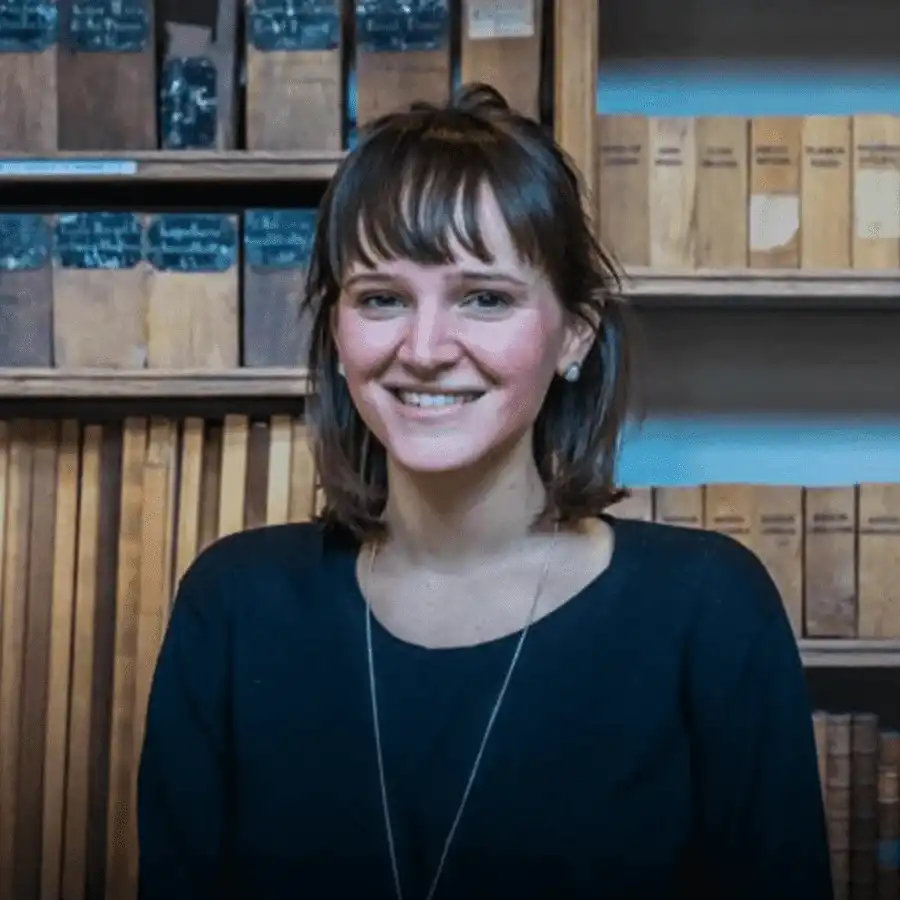
Christina Mergenthaler is an expert in infectious disease epidemiology at KIT Royal Tropical Institute. Her work focuses on the development of methods and statistical approaches to predict geographic distributions of disease. Christina analyses subnational TB spatial trends, hotspots and anomalies to better inform strategic decision making, planning and prioritisation of TB programs.
All sessions by Christina →How can such a tiny particle, which is not even alive, do so much harm? By understanding the nature of viruses and COVID-19 in particular, you will understand how viruses work, and the best ways to protect yourself.
Christina explains in what light we should perceive the sometimes dreadful images and numbers presented by the media. She also provides tips for practical implications to take utmost care for your own safety.
What is the likelihood of dying from this virus? What are the rationales behind the approach in various countries? What can we expect from the future? Join Cristina in this interactive session to understand the nature of viruses, followed by a Q&A.
During the expert session, Christina Mergenthaler engages the audience through interactive questions via tooling or chat, and a Q&A session.
Gain a comprehensive understanding of the biology and mechanisms of viruses, particularly COVID-19, and how they cause disease.
Learn about the different approaches taken by countries to combat the pandemic and the scientific rationale behind these strategies.
Acquire practical tips and advice on how to protect oneself from viral infections and understand the importance of personal responsibility in maintaining community health.
In this informative session, Christina delves into the fascinating world of viruses, with a particular focus on COVID-19, to uncover how such tiny particles, which are not even considered alive, can cause so much harm. By exploring the biology and mechanisms of viruses, participants will gain a deeper understanding of how viruses operate and spread.
Christina will address common misconceptions and provide a clear perspective on the sometimes alarming images and statistics presented by the media, helping participants to critically evaluate the information they encounter.
Christina will also discuss the various strategies implemented by different countries to combat the pandemic, offering insights into the rationale behind these approaches. She will explore the effectiveness of various measures and explain the scientific principles guiding public health decisions.
By understanding these strategies, participants will be better equipped to assess the responses in their own countries and make informed decisions about their health and safety.
The session will include practical advice on how to protect oneself and others from viral infections, emphasizing personal responsibility and community safety. Christina will provide tips for reducing the risk of infection, including hygiene practices, social distancing, and the use of personal protective equipment.
Participants will also explore the likelihood of severe outcomes, such as death from COVID-19, and discuss what can be expected in the future regarding the virus and potential pandemics. The session will conclude with a Q&A, allowing attendees to ask questions and engage with the material on a deeper level.
No prior knowledge is assumed. It is built for a general working audience, and people who already know the subject get the research and the practical side rather than an introduction. What the hour itself covers: How can such a tiny particle, which is not even alive, do so much harm? By understanding the nature of viruses and COVID-19 in particular, you will understand how viruses work, and the best ways to protect yourself.
Christina Mergenthaler is one of the experts we auditioned ourselves, and we produce every session so we see how each one lands. Participants rate this session 4.3 out of 5, across 18 responses, and rate Christina personally 4.4 out of 5.
It is interactive, and the block higher up on this page says exactly how for this session. Nobody has to speak up who does not want to: the chat and the polls carry most of it, and the questions can come in anonymously.
It runs 45 min / 15 min: the talk, then live questions. All you do is pick a date. We brief Christina, produce the session, host and moderate it, run the Q&A, and send you the report within an hour of the end.
A team, a department, an employee network or every single employee at once, with no cap and no per-seat price. It runs inside your own Microsoft Teams, Zoom or Google Meet, or on a branded page we build. No integration, no login, no company device or e-mail.
The session is delivered in English. You can add high accuracy live subtitles in 8, 16 or 24 languages, so everyone follows in their own. That is a paid option, priced by the number of languages you need.
No, and that is by design. There is nothing to install, nothing to integrate and no connection to your systems, so there is nothing for IT to validate: we join your own Teams, Zoom or Meet as a guest speaker, or we host a page and your people open a link. No software, no accounts, and no data of yours that we can reach. It is why hundreds of companies, among them some of the largest technology and financial firms in the world, were able to start within a day.
We never receive or hold personal data about your employees. Because the session runs in your own environment, attendance and identity stay with you, and what we report back is aggregated: numbers, ratings and survey answers, not people. That is also why IT approval usually takes minutes rather than weeks.
You keep the recording and can share it internally. You also get attendance over time, participant ratings for the content and the speaker, the survey answers, and the topics your people asked for next.

As AI becomes part of our everyday routines, this session shows how to use generative tools (e.g., ChatGPT) to think more…

AI is transforming our lives inside and outside of the workplace - but it is only as effective as the input we give it.
We’ve all seen how generative AI can write, draw, code and create. The next big shift however isn’t about creating more content…

The World Economic Forum has called critical thinking "the one skill we all need in the age of AI”.

In China as elsewhere in the world, cybersecurity and data protection have become major topics of concern as daily life continues…
In this expert session, renowned AI researcher and thought leader Zappa discusses the current state and future implications of…