Cybersecurity: What Every Employee Should Know
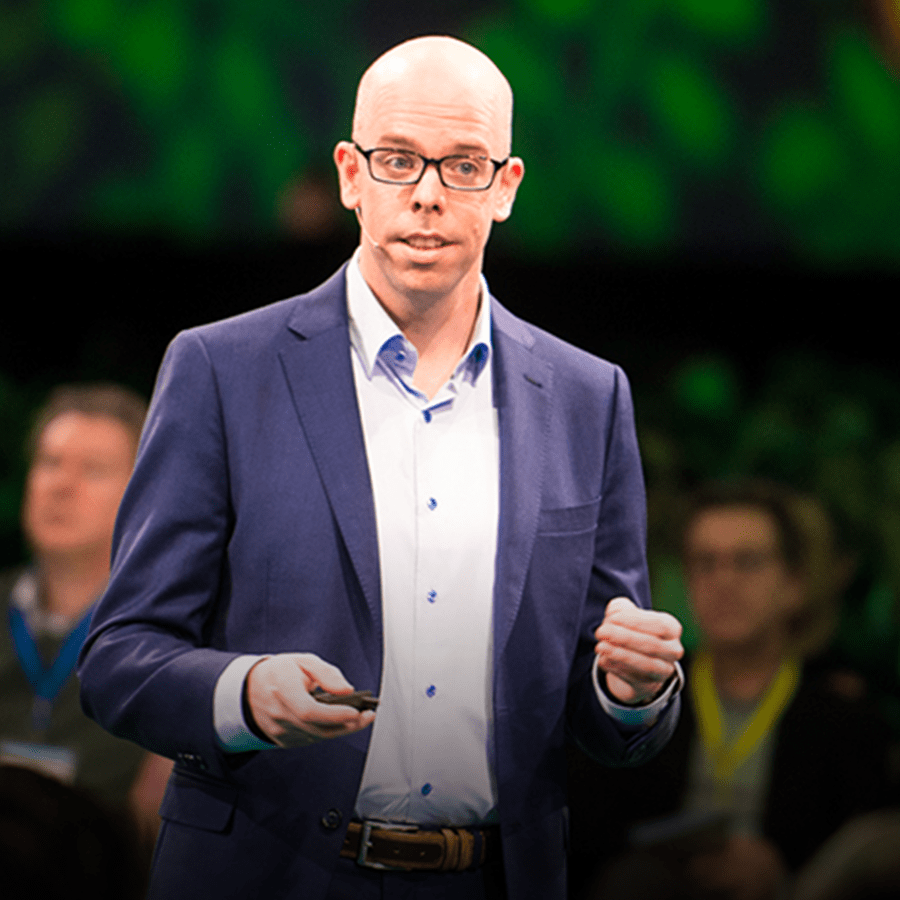
Rolf van Wegberg
Book a demo →from €2,250 for your whole company

Book a demo →from €2,250 for your whole company
Rolf studies how cyber criminals earn their money. Originally trained as a criminologist, he is now an Assistant Professor (UD) at the Faculty of Technology, Policy and Management of Delft University of Technology. With his interdisciplinary background, he studies digital and financial crime in a socio-technical context.
All sessions by Rolf →Taking a computer hostage, remotely, with malicious software. By automating this prominent form of cybercrime, criminals would constantly break into companies, lock things up and become rich while sleeping.
But seems to be deceiving. Criminals earned little from these digital hostages, precisely because of computerisation. Unfortunately for us, they are now taking a different approach. In this leqture you will learn about how cyber criminals work and how to protect yourself against them.
During the expert session, Rolf Van Wegberg engages the audience through various means, including a Q&A session, live demonstrations, and the use of the Mentimeter app for interactive exercises. He discusses the psychological tactics used by cybercriminals to pressure victims into paying ransom and the importance of understanding these methods to protect against attacks.
Rolf also emphasizes the role of automation in the entire process, from development and distribution to interaction with victims and cashing out stolen funds. Throughout the session, Rolf shares insights into targeted cyber-attacks and the tactics of attackers, encouraging everyone to fill out the survey before leaving.
Gaining insight into the psychological manipulation techniques used by cybercriminals during ransomware attacks is crucial in protecting against potential threats.
Recognizing how automation plays a significant role in the entire process, from development and distribution to interaction with victims and cashing out stolen funds, is essential in staying informed and prepared.
Being aware of targeted attacks on specific industries and organizations, as well as the tactics used by attackers, is key to strengthening security measures and preventing potential breaches.
In this expert session, cybersecurity specialist Rolf Van Wegberg discusses various cyber threats and the motivations behind cybercrimes. Rolf begins by asking participants to optimize their viewing experience by muting microphones and adjusting screens.
He introduces the topic of cybersecurity, emphasizing its importance in protecting oneself, companies, and loved ones from various threats.
Rolf explores the motivations for cybercrimes, which can range from profitability to activism or even nation-state sponsorship. Many cybercriminals lack technical capabilities and instead rely on underground services, making it an outsourced means of executing attacks. Common threats include ransomware attacks, spam emails, and scams.
Rolf delves deeper into the economics behind cybercrimes, explaining that attackers aim to minimize costs while maximizing gains through cost optimization and outsourcing resources if needed. He discusses psychological tactics used by cybercriminals to pressure victims into paying ransom, such as manipulating emotions with fear and time pressure.
Cybercriminals often use automation throughout the process, from attack development to distribution and cashing out stolen funds. Automated methods make attacks more efficient and profitable for criminals. Rolf advises understanding these tactics to better protect against potential threats.
Rolf focuses on targeted cyber-attacks and provides insights into the strategies of attackers. Attackers now look for multiple entry points, making them not limited to a specific operating system. They also optimize attacks during periods when IT staffing is minimal, such as holidays.
Investing in excellent customer service can make victims more likely to comply with ransom demands.
Regarding cybercrime services and their developers or programmers, Rolf explains they can be prosecuted as accessories to a crime due to their facilitation of these attacks. However, finding and prosecuting these individuals is challenging due to their use of anonymous environments like underground markets on the dark web.
The session concludes with an invitation for participants to ask further questions through the chat feature and fill out a survey. Rolf emphasizes that targeted organizations, such as hospitals and universities, are common targets due to their inability to go offline and potential liability claims.
These organizations may be asked for large ransom amounts, making them prime targets for attackers.
Overall, Rolf Van Wegberg provides valuable insights into cybersecurity threats, the motivations behind cybercrimes, and the tactics of attackers. Understanding these aspects is crucial in taking steps to protect oneself, one's company, and loved ones from potential harm.
No prior knowledge is assumed. It is built for a general working audience, and people who already know the subject get the research and the practical side rather than an introduction. What the hour itself covers: Taking a computer hostage, remotely, with malicious software. By automating this prominent form of cybercrime, criminals would constantly break into companies, lock things up and become rich while sleeping.
Rolf van Wegberg is one of the experts we auditioned ourselves, and we produce every session so we see how each one lands. Participants rate this session 4.2 out of 5, across 51 responses, and rate Rolf personally 4.3 out of 5.
It is interactive, and the block higher up on this page says exactly how for this session. Nobody has to speak up who does not want to: the chat and the polls carry most of it, and the questions can come in anonymously.
It runs 45 min / 15 min: the talk, then live questions. All you do is pick a date. We brief Rolf, produce the session, host and moderate it, run the Q&A, and send you the report within an hour of the end.
A team, a department, an employee network or every single employee at once, with no cap and no per-seat price. It runs inside your own Microsoft Teams, Zoom or Google Meet, or on a branded page we build. No integration, no login, no company device or e-mail.
The session is delivered in Dutch. You can add high accuracy live subtitles in 8, 16 or 24 languages, so everyone follows in their own. That is a paid option, priced by the number of languages you need.
No, and that is by design. There is nothing to install, nothing to integrate and no connection to your systems, so there is nothing for IT to validate: we join your own Teams, Zoom or Meet as a guest speaker, or we host a page and your people open a link. No software, no accounts, and no data of yours that we can reach. It is why hundreds of companies, among them some of the largest technology and financial firms in the world, were able to start within a day.
We never receive or hold personal data about your employees. Because the session runs in your own environment, attendance and identity stay with you, and what we report back is aggregated: numbers, ratings and survey answers, not people. That is also why IT approval usually takes minutes rather than weeks.
You keep the recording and can share it internally. You also get attendance over time, participant ratings for the content and the speaker, the survey answers, and the topics your people asked for next.

As AI becomes part of our everyday routines, this session shows how to use generative tools (e.g., ChatGPT) to think more…

AI is transforming our lives inside and outside of the workplace - but it is only as effective as the input we give it.
We’ve all seen how generative AI can write, draw, code and create. The next big shift however isn’t about creating more content…

The World Economic Forum has called critical thinking "the one skill we all need in the age of AI”.

In China as elsewhere in the world, cybersecurity and data protection have become major topics of concern as daily life continues…
In this expert session, renowned AI researcher and thought leader Zappa discusses the current state and future implications of…