Reach every employee, wherever they are, in their own language, without extra work on your end. Every week, your whole company gets a live, interactive 60-minute learning session with a global expert in mental health and wellbeing, so everyone can pick the session that fits their personal interest, timezone and schedule.
Leave your work email and we'll build a preview page for your company today. No call needed.
✓ Thank you. We build your page and send it by email, usually within one working day.
+ hundreds of organisations, from ambitious scale-ups to global multinationals, across dozens of countries.
The session was at 2pm CET. Your teams in Manila and São Paulo were asleep.
No access to Teams, no company laptop, no intranet. They never get to join.
And no live translations? Half the room mentally checks out.
Your internal platform requires SSO or a company login. Their phone doesn't qualify.
We built this platform specifically to solve the inclusion problem that no internal team can solve alone. Weekly live programming, every single week of the year. 16 languages. Any device. No login required. Every employee, everywhere, gets a seat to join.
If you want every employee across every country to join in, every single week, you're looking at 15 to 20 hours a month of prep, production and follow-up, for a fragmented initiative that still misses half your workforce. We build one unified, company-wide programme with global impact, live-translated for your teams worldwide, in a fraction of the time it would take you internally. That's it. We do the rest.
A live 60-minute interactive session, every week of the year. Employees pick the sessions that match their interest and schedule, all on a fully white-label landing page with your welcome video, branding and assets.
White-label landing page with your CEO or CHRO welcome video, branding and assets.
Built-in live captions and translation, so employees follow along in their own language.
We help you embed your wellbeing survey, EAP, company values or app preview directly on the page, live within 48 hours.
Every session recorded and available on-demand, fully branded.
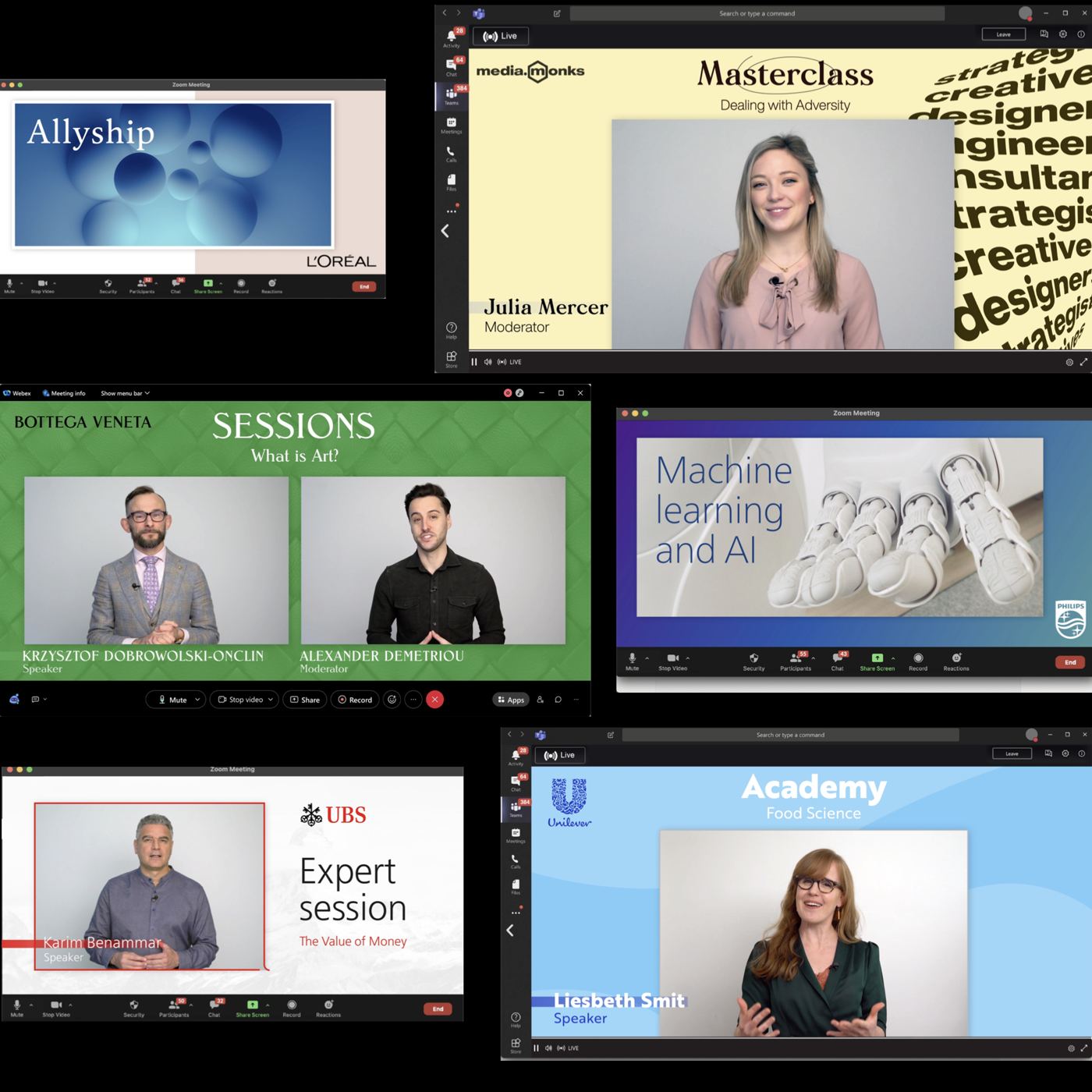
100% white-label. Your brand, front and centre. Bring anything that makes wellbeing yours: video messages from key leaders, your internal wellbeing survey, your wellbeing values, a sneak peek into your new wellbeing app, your EAP. We build it into your branded page so every employee feels this was made by their company, because it was.
The example below is just that: an example. There is no "manufacturing template" or "finance template". Every page is built from scratch for your company, in your brand, with your content.
"At Northbank, our people are our greatest asset. Every week we pause, together, to look after the minds behind the work. Take the hour. Take part. Take care. One thing keeps coming back in every conversation I have across our offices: we move fast, we deliver under pressure, and we don't always stop to check in on ourselves. That changes this year." Read more →
Geoff McDonald is a global campaigner against workplace mental-health stigma, drawing on his own experience inside Unilever to help organisations put purpose and wellbeing at the centre of business.
🌐 Live subtitles available in 16 languages. Switch anytime with the CC menu.
"When I joined Northbank, I promised our people we'd build a culture where it's normal to say you're struggling. Wellbeing Weekly is part of keeping that promise: one hour, every week, that belongs to you and only you."

Geoff McDonald, Global Campaigner Against Workplace Mental Health Stigma. Geoff McDonald shares his own powerful story of mental ill health, drawing on his experience inside Unilever, and provides practical learnings and insights on how to address the stigma of mental ill health in the workplace. This includes the role of leadership, campaigning, and storytelling in addressing stigma, with principles that are universal but require attention to cultural nuance in execution. He also describes the training interventions organisations need to help alleviate stigma internally.

Sarah Stein Lubrano, Researcher, Oxford University & Head of Research, Future Narratives Lab. Sarah Stein Lubrano explains one of the most important discoveries in psychology from the last 100 years: cognitive dissonance, the mental discomfort we feel when we encounter a contradiction between our own beliefs and actions, and part of what makes conspiracy theories so appealing and other people's minds so hard to change. She tells the story of the alien cult that first brought cognitive dissonance to light, describes how we all deceive ourselves regularly as a result of it, and teaches how to spot cognitive dissonance in our own lives.

David Waters, Business Coach, Psychotherapist & Corporate Trainer. This talk draws on Stoic philosophy and existential thinking to explore resilience as an emotional competency which can be learnt. David Waters invites participants to rethink setbacks as opportunities for learning, growth, and meaning, while acknowledging the inevitability of difficulties in work and life. Through storytelling and real-life examples, attendees gain practical tools to strengthen emotional steadiness, perspective, and agency, leaving with usable takeaways to face challenges with greater calm, self-awareness, and courage.

Will Schneider, Co-Founder, Focus Now Training & Co-Host, Men Talking Mindfulness Podcast. Your people are smart, capable, and motivated - and they're still losing two hours every workday to a system engineered to steal their attention, a performance problem that costs real money. "Attention Is Your New KPI" is an experiential training built to close that gap: Will Schneider breaks down exactly how and why fractured attention drains output, decision-making, and leadership presence, then equips participants with simple, repeatable tools they can use immediately to reclaim their focus when it matters most.

Alessandra Patti, Professional Trainer & Consultant, Linguistics, Psychology & Marketing. In the modern workplace, attention has become a scarce resource: constant notifications, multitasking, and digital overload can reduce cognitive performance and increase stress levels. This session explores digital wellbeing as an organisational and leadership matter, examining how technology impacts focus, mental health, and workplace culture, including email use, meetings, and the role of AI in written communication. Alessandra Patti unpacks the neuroscience of infinite scrolling so participants can become more intentional about their technology use, without eliminating it.

Haza Rahim, Psychology Lecturer, Utrecht University. What we consider 'normal' depends on culture, and culture even determines identity to a large extent. Haza Rahim takes the audience across a rich range of differences between Eastern and Western experience, from attitudes towards property and public space to how we perceive authority, drawing on growing up between Kurdish and Dutch culture herself. Research shows that a stable cultural identity is important for healthy mental wellbeing, and that identity conflicts arising from acculturation challenges are an important predictor of low psychological wellbeing in certain populations.

Cole Groom, Co-Founder, Balance Breathing. Cole Groom explains that chronic stress disrupts the body's balance, making it hard to reach a relaxed state, and shows how breathwork is an effective method for regulating the autonomic nervous system and activating the parasympathetic response through the vagus nerve. He shares techniques such as diaphragmatic (belly) breathing and box breathing to help participants manage stress and enhance focus, before leading a guided exercise combining deep belly breathing with the 4-7-8 technique to promote relaxation and calmness.

Julia Rucklidge, Director, Mental Health & Nutrition Research Lab, University of Canterbury. Despite the advent of medications and other therapies over the last 50 years, rates of mental illness have been rising rather than declining, and over the last decade scientists have been uncovering an uncomfortable truth: what we eat is affecting our mental health. Professor Julia Rucklidge discusses the vital importance of ensuring access to nutrient-dense food, and possibly supplementation in times of stress, to give the brain the foundation it needs to function optimally.
Click on the picture or the link below to watch the welcome video from Margaret Chen.
More information →Living the principles that guide how we look after each other, every day.
More information →Helping us understand how our people are really doing, every quarter.
More information →Learn, share and grow together through our internal community groups.
More information →Click on the picture or the link below to watch the welcome video from Daniel Osei.
More information →Living the principles that guide how we look after each other, every day.
More information →Helping us understand how our people are really doing, every quarter.
More information →Learn, share and grow together through our internal community groups.
More information →


From e-mail to your first live session in 48 hours. You do nothing except send out the invite.
Tell us which package you want. That's your entire contribution to step one.
Send us your CEO/CHRO welcome message, your colors, your logo and some company assets.
Have a look at your page, approve, and share the link to your entire workforce.
Enjoy the most inclusive wellbeing programme your company has ever had. (Prepare for the appreciation.)
Every session streams with high-accuracy live captions, so your whole global workforce can join in the language they think in.
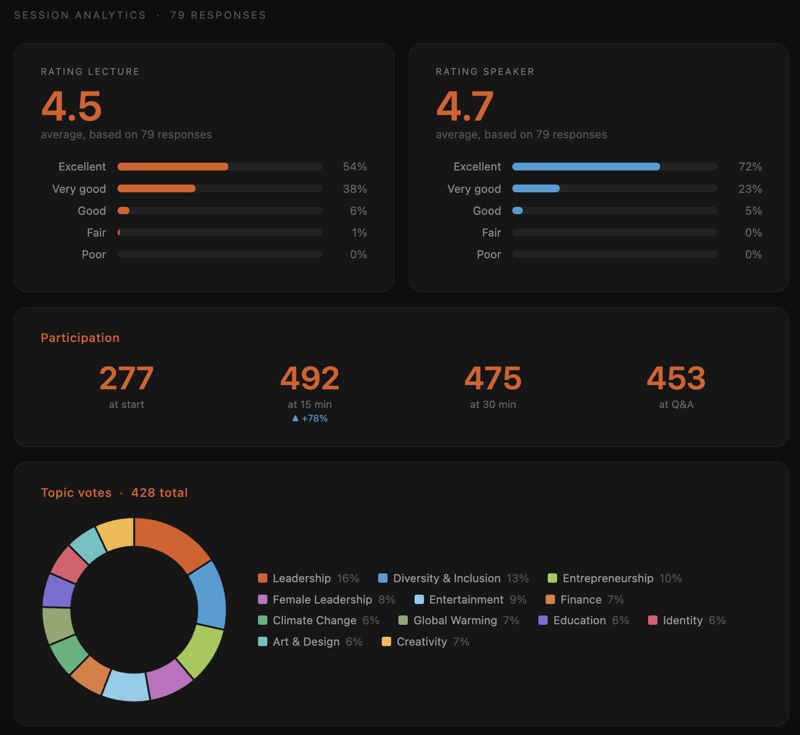
See actual participation numbers by region, country and session. Present your impact numbers with pride, every quarter.
Our wellbeing pulse survey is embedded directly in your branded page. Responses come in every week.
Prove the impact of your Wellbeing Weekly investment with data you can actually present internally.
Handpicked from thousands of people through actual auditions. Every speaker has been vetted: whether they teach at MIT or run a local mindfulness studio. We check expertise, body language, pace, accents, vocabulary, presence, charisma and storytelling: all the things you'd normally only find out after hiring someone.

Claire Ashley, NHS GP Turned Burnout Speaker & Author, The Burnout Doctor. In this session, participants learn about common burnout misconceptions and their impact on health and productivity. Dr. Claire Ashley outlines five burnout stages: Denial, Honeymoon Phase, Onset of Stress, Chronic Stress, and Habitual Burnout, and shows how individuals often miss warning signs during the denial phase. Key recovery strategies covered include regaining control over work-life balance, building supportive workplace relationships, and managing workload to match current capacity, empowering participants to take control of their stress.

Tobias Kalenscher, Professor of Comparative Psychology, Heinrich Heine University Düsseldorf. Despite the common assumption that people are consistent, rational decision-makers, decades of behavioural science research show individuals are often far less rational and self-interested than expected, and it remains unclear what drives variation in judgment, choice, and social behaviour. One factor that systematically influences decision-making is stress, and the underlying neuroendocrine stress response. In this session, Tobias Kalenscher reviews recent findings from his lab on how stress alters decision-making, with a particular focus on social preferences.

Rose Auyeung-Chen, Clinical Counsellor, BC Occupational Stress Injury Clinic. This session explores the practice of mindfulness and its powerful benefits, from reduced stress and improved focus to greater emotional balance and relationship satisfaction. Participants are guided through simple, sensory-based mindfulness exercises that promote presence and self-compassion. Rose Auyeung-Chen shares practical ways to integrate mindfulness into daily life, encouraging small actions and moments of pause to foster calm, clarity, and overall well-being.

Gina Cleo, Habit Change Researcher & Founder, Habit Change Institute. If you want to change outcomes, you need to change habits, and to change habits you first need to understand them. In this engaging, science-backed session, Dr. Gina Cleo takes the mystery out of habit formation and shows how small shifts can create powerful, long-lasting change. With practical tools and real-world examples, the session empowers individuals, teams, and organisations to build better habits that support both mental health and performance without relying on willpower alone.

Roy Gluckman, Attorney & Director, Run to the Monster (DEIB Training). Psychological safety exists within authentic relationships, and building authentic relationships takes time, effort and emotional vulnerability - three things often missing from organisational spaces today. This session unpacks the characteristics and benefits of psychologically safe relationships and spaces, and how they help people thrive within organisations. It discusses various models of trust within relationships, looks at privilege and the trust deficit that exists within them, and offers solutions for building safer relationships at work.

Rory Tol, Prompt Engineer, AI Trainer & Consultant. "Netflix's biggest competitor is sleep" captures the reality of today's attention economy: our phones and apps are not neutral tools, they are designed to capture as much of our time and focus as possible. This session explores how short-form content, infinite scroll, and constant notifications shape attention, behaviour, and long-term cognitive functioning, using current research and internal statements from technology companies to show why resisting these systems through willpower alone rarely works. Rather than promoting digital detox or extreme measures, the session focuses on awareness first and action second, offering a small number of highly actionable steps to make smartphone use meaningfully less addictive and more intentional.

Ali Orhan, Chief Executive, Orchid (Male Cancer Charity). In this session, Ali Orhan, CEO of Orchid and a veteran in public health and cancer awareness, focuses on the prevention, early detection, and understanding of male cancers. Drawing on his experience leading awareness programmes and health messaging campaigns, he guides participants through key risk factors, telltale signs and symptoms to watch for, and practical steps individuals and organisations can take to act early. By demystifying the disease journey and empowering proactive behaviours, the session helps foster a healthier, better-informed population, both male and female.

Zoia Mahjoubi, Psychologist, Speaker & Facilitator, Mindfulness & Self-Leadership. We all take our psychology with us wherever we go - at home, at work, or elsewhere - and our level of psychological flexibility influences how well we can adapt our thoughts, feelings, and behaviours in response to the increasing challenges of the modern world. The good news is that the skills which build psychological flexibility and resilience can be learned. In this session, Zoia Mahjoubi demonstrates why these skills are so powerful and how participants can begin developing them for themselves.

Aurelie Litynski, Certified Chief Happiness & Wellbeing Officer, TEDx Speaker. This session equips participants with the knowledge and tools to prevent, avoid, and effectively handle burnout, fostering a healthier and more resilient workforce. Aurelie Litynski shares evidence-based techniques and practices to prevent burnout, including stress management, time management, self-care, and boundary-setting strategies, so that participants can build habits that protect their wellbeing before burnout takes hold.

Sarah Farmer, Global Executive Coach & Founder, Bright & Brilliant Ltd.. At the heart of bold decisions and breakthrough results is a confident, emotionally intelligent inner world; when self-doubt takes over, even high performers hesitate, hold back, or undermine their own success, with a ripple effect on team culture and business results. This fast-paced masterclass breaks down what Imposter Syndrome really is (and isn't), why it affects top talent the most, and how it shows up in everyday behaviours. Participants leave with a practical brain-rewiring technique to shift their thinking, strengthen their confidence, and take stronger, more decisive action.

Scott Davenport, Founder, Pink Cactus Training (Personal Resilience & Effectiveness). Personal resilience is now considered an essential skill in any workplace, so this session explores how participants can supercharge their personal resilience to bring their best self to work every day. Scott Davenport, who spent 10 years as Learning Manager at Booking.com before founding Pink Cactus Training, draws on 20+ years of experience helping leaders and teams understand themselves. After this interactive session, participants leave with a fresh focus and new tools to strengthen their ability to weather the storm.

Bruce Hood, Director, Cognitive Development Centre, University of Bristol. In a world of uncertainty, we cannot always control the bad things that happen to us, but we can control the way we respond to them by regulating our emotions. In this session, award-winning psychologist Bruce Hood explains why our minds seem unable to stay reasonable in the face of threat and danger, and reveals three simple techniques to control our emotions that are grounded in hard scientific evidence.

Jérôme Gijselaers, PhD Researcher, Biopsychology & Educational Sciences. Stability is a great thing: being able to make choices without panic, not letting setbacks get you down, staying in the process even when things are going badly. Employees who feel mentally well create good work relationships, show consistent performance, and hold a constructive outlook, all of which contribute positively to KPIs such as a pleasant work atmosphere and high productivity. In this session, Dr. Jérôme Gijselaers discusses a number of aspects that make you feel good about yourself mentally.

Kirsty Hulse, Award-Winning Confidence Coach & Motivational Speaker. We're living in an age of chaos - AI is transforming work, burnout is everywhere, and the pace of change feels relentless. This talk from Kirsty Hulse is an anti-panic playbook: a practical, evidence-based guide to staying calm, confident, and human when everything feels too fast, drawing on her experience training 40,000+ people at companies including LinkedIn, Amazon, and Spotify.

Stefan van der Stigchel, Professor of Cognitive Psychology, Utrecht University. Emails, apps, banners, push notifications, trending topics, and cat videos: today it's harder than ever to concentrate for more than a few minutes at a time, which is a problem because concentration is indispensable for creative and productive work. Attention expert Stefan van der Stigchel shows how concentration works, explains how we sometimes misuse our working memory, and shares the latest scientific insights. In this interactive session, he teaches techniques for maintaining concentration for longer while working hybrid.

Jason Gill, Professor of Cardiometabolic Health, University of Glasgow. Obesity is a major public health problem which affects life expectancy and costs billions, yet it's also a complex and confusing topic with a bewildering array of often conflicting information about its causes. In this session, Professor Jason Gill aims to make attendees an instant expert on diet and obesity by providing evidence-based answers to key questions, including why some people can gain weight and stay healthy while for others even a small increase leads to poor health, which aspects of diet most affect body weight, and whether we should be concerned about ultra-processed foods.

Elaine Broe, Leadership Development Specialist (Formerly Banff Centre & lululemon). While trust and psychological safety are intertwined, they are different concepts: trust is about how much I believe others, whereas psychological safety is about how much slack I believe others will cut me. In this session, Elaine Broe sets out how a culture of trust and psychological safety can be created in the workplace, using an easy-to-apply model that provides a framework and common language for the components of trust. Participants learn how to self-evaluate, at the team or individual level, how trustworthy they appear to others, and develop strategies to build trust.

Joyce Marter, Licensed Psychotherapist & Author, The Financial Mindset Fix. In this session, psychotherapist and financial wellness expert Joyce Marter reveals how improving mental health can directly enhance financial well-being, and vice versa. Through six transformative steps, she helps participants explore the psychological roots of money behaviours, including financial trauma, unconscious money scripts, and common cognitive biases, and learn how to shift from a scarcity mindset to one of abundance and set healthier financial boundaries. Grounded in neuroscience, behavioural economics, and over 25 years of clinical experience, the session equips attendees with tools to increase clarity, confidence, and prosperity.

Geoff McDonald, Global Campaigner Against Workplace Mental Health Stigma. Geoff McDonald shares his own powerful story of mental ill health, drawing on his experience inside Unilever, and provides practical learnings and insights on how to address the stigma of mental ill health in the workplace. This includes the role of leadership, campaigning, and storytelling in addressing stigma, with principles that are universal but require attention to cultural nuance in execution. He also describes the training interventions organisations need to help alleviate stigma internally.

Sarah Stein Lubrano, Researcher, Oxford University & Head of Research, Future Narratives Lab. Sarah Stein Lubrano explains one of the most important discoveries in psychology from the last 100 years: cognitive dissonance, the mental discomfort we feel when we encounter a contradiction between our own beliefs and actions, and part of what makes conspiracy theories so appealing and other people's minds so hard to change. She tells the story of the alien cult that first brought cognitive dissonance to light, describes how we all deceive ourselves regularly as a result of it, and teaches how to spot cognitive dissonance in our own lives.

David Waters, Business Coach, Psychotherapist & Corporate Trainer. This talk draws on Stoic philosophy and existential thinking to explore resilience as an emotional competency which can be learnt. David Waters invites participants to rethink setbacks as opportunities for learning, growth, and meaning, while acknowledging the inevitability of difficulties in work and life. Through storytelling and real-life examples, attendees gain practical tools to strengthen emotional steadiness, perspective, and agency, leaving with usable takeaways to face challenges with greater calm, self-awareness, and courage.

Will Schneider, Co-Founder, Focus Now Training & Co-Host, Men Talking Mindfulness Podcast. Your people are smart, capable, and motivated - and they're still losing two hours every workday to a system engineered to steal their attention, a performance problem that costs real money. "Attention Is Your New KPI" is an experiential training built to close that gap: Will Schneider breaks down exactly how and why fractured attention drains output, decision-making, and leadership presence, then equips participants with simple, repeatable tools they can use immediately to reclaim their focus when it matters most.

Alessandra Patti, Professional Trainer & Consultant, Linguistics, Psychology & Marketing. In the modern workplace, attention has become a scarce resource: constant notifications, multitasking, and digital overload can reduce cognitive performance and increase stress levels. This session explores digital wellbeing as an organisational and leadership matter, examining how technology impacts focus, mental health, and workplace culture, including email use, meetings, and the role of AI in written communication. Alessandra Patti unpacks the neuroscience of infinite scrolling so participants can become more intentional about their technology use, without eliminating it.

Haza Rahim, Psychology Lecturer, Utrecht University. What we consider 'normal' depends on culture, and culture even determines identity to a large extent. Haza Rahim takes the audience across a rich range of differences between Eastern and Western experience, from attitudes towards property and public space to how we perceive authority, drawing on growing up between Kurdish and Dutch culture herself. Research shows that a stable cultural identity is important for healthy mental wellbeing, and that identity conflicts arising from acculturation challenges are an important predictor of low psychological wellbeing in certain populations.

Cole Groom, Co-Founder, Balance Breathing. Cole Groom explains that chronic stress disrupts the body's balance, making it hard to reach a relaxed state, and shows how breathwork is an effective method for regulating the autonomic nervous system and activating the parasympathetic response through the vagus nerve. He shares techniques such as diaphragmatic (belly) breathing and box breathing to help participants manage stress and enhance focus, before leading a guided exercise combining deep belly breathing with the 4-7-8 technique to promote relaxation and calmness.

Julia Rucklidge, Director, Mental Health & Nutrition Research Lab, University of Canterbury. Despite the advent of medications and other therapies over the last 50 years, rates of mental illness have been rising rather than declining, and over the last decade scientists have been uncovering an uncomfortable truth: what we eat is affecting our mental health. Professor Julia Rucklidge discusses the vital importance of ensuring access to nutrient-dense food, and possibly supplementation in times of stress, to give the brain the foundation it needs to function optimally.

Basma Aziz, Wellbeing Consultant & Strategist, Creator of the '3R Method'. You can be the most competent, high-performing professional in the room and still feel paralyzed by a 2pm meeting or a sudden shift in strategy, not because you lack skills but because your biology is reacting to a modern workplace fundamentally at odds with how your brain evolved. This session provides a science-informed, practical framework for building Mental Agility, designed for leaders and teams navigating a volatile, uncertain, complex, and ambiguous world who need to stay calm, flexible, and decisive under pressure. Basma Aziz moves beyond generic motivation to help participants integrate their brain's wiring with their body's signals to navigate change without losing energy.

Mark Rowe, Family Physician & Founder, Waterford Health Park Lifestyle Medicine Clinic. Dr. Mark Rowe addresses burnout's root causes, intensified by chronic stress and factors like constant connectivity, and stresses that recovery requires a holistic approach beyond symptom management. Central to prevention is valuing sleep: he recommends a 90-minute pre-bed wind-down routine, avoiding work emails in bed, limiting caffeine, and getting 30 minutes of morning outdoor light exposure to regulate the circadian rhythm. Recovery also involves self-care, including adjusting evening habits and combating self-sabotage through daily gratitude journaling.

Kilian Wawoe, Organisational Psychologist & Professor of HR Management. We are suddenly driven into a rapidly changing world: uncertainty, changes in work/life balance, workload, and personal challenges have significantly increased the stress we encounter as individuals and in our teams. Kilian Wawoe explores how to deal with stress in a team, noting that we don't always have control over the bad things that happen to us, but we can control how we react to them. In this session, he explains how to cope with stress and reveals techniques for controlling emotions grounded in hard scientific evidence.

Daphne Feller, Founder, BrainExplainers & Certified Neuro-Coach. Stress appears to be one of the greatest threats to society, so this session explores what neuroscience can tell you about what happens in your brain when you're stressed, and how your brain works. Daphne Feller shows that if you learn to recognise stress for what it is, you can turn it to your advantage. Completely grounded in neuroscientific insights, the session provides practical strategies to manage stress in daily life and optimise your brain condition to improve performance.

Mikela Fenech Pace, Visiting Lecturer, University of Malta & Accredited Executive Coach. Have you ever had to drag yourself out of bed to go to work, felt scared to face your boss, or felt you weren't free to speak your mind? Mikela Fenech Pace explores where these feelings come from and how to identify work environments that foster psychological safety, connecting how you feel at work to how safe your environment really is for you to thrive. She takes participants through those uncomfortable feelings that prevent people from working at their best, while exploring the aspects that define a psychologically safe environment.

Laura te Hennepe, Founder, The Third (D&I Strategy & Leadership Programs). Harvard professor and psychiatrist Dr. Chester Pierce described microaggressions as subtle, mind-boggling, often automatic, and nonverbal exchanges that 'put people down', and while his 1970s research focused on Black people, microaggressions are familiar to all people of colour and other marginalised groups. In this session, Laura te Hennepe teaches participants to recognise microaggressions, from seemingly innocuous comments to backhanded compliments, showing how subtle these expressions can be and how intensely they are often experienced by the person on the receiving end. She explores how to discover microaggressions and how to speak to others about them.

Marjon van Opijnen, Breath & Trauma Therapist, Founder of the Embodiment LAB. Is there a correct way of breathing? Many of us think so, yet although we breathe our entire lives, we know very little about how it affects the physical and mental processes in our body and how we feel, and our busy, fast way of living has increased the speed and depth of our breathing with physical and mental consequences. In this interactive and practical session, Marjon van Opijnen shows how participants can use their breath to improve mental capacity, gain more energy, and have more focus through simple exercises and a bit of knowledge.

Thomas den Hartog, Yoga & Meditation Trainer. Most of us try to "manage" time as if it were a puzzle we could eventually solve, making tighter schedules and better to-do lists, and it works for a while - until the pressure returns and we feel like we're racing again. Thomas den Hartog argues the real question isn't how to manage time better, but how to live with it more lightly, inviting participants to step off the productivity treadmill and look at what really matters instead of treating every minute as a problem to optimise. Together, the session explores how to use limited time in a way that brings more joy, energy, and meaning, through wiser, lighter choices rather than squeezing in more.

Dominique Hansen, Professor of Rehabilitation & Exercise Physiology, Hasselt University. Physical activity and exercise are not an unnecessary luxury for spare time, they are a foundation for good health and longevity - but why, and how does this actually work? Should we exercise very intensively, or simply sit down a little less? Over the last decade, scientific studies have made discoveries that contradict many of the myths persistently circulating online while also opening up entirely new insights, and Professor Dominique Hansen walks participants through exactly what these findings mean.

Björn Atterstam, Psychologist & Pioneer in Human-Driven Innovation. This session is an invitation to consider our relationship with ourselves and with others, and how digital technologies impact our capacity to be, to know, and to do. It is not a session about technology; it is about what we as humans risk losing as we live increasingly technology-centred lives. Björn Atterstam offers advice for how to reclaim and honour our fundamental human needs and capabilities, aiming not to be alarmist or anti-technology, but to increase our awareness and capacity to be human with each other when it matters most.

Michelle Schechter, Career Purpose Coach & Founder, Vantage Point. Burnout is no longer seen as an individual resilience issue, it is a critical organisational risk: persistent stress, increasing cognitive load, and always-on ways of working are leaving employees exhausted, disengaged, and struggling to sustain performance. Michelle Schechter explains that burnout isn't a personal failure but a physiological response to prolonged stress without adequate recovery, and that prevention starts with understanding the nervous system. Participants explore the science behind stress, energy, and recovery, and build sustainable habits that support both wellbeing and performance.

Zsombor Szabo, Breathwork Coach & Corporate Performance Specialist. This practical, science-backed masterclass explores how pressure affects performance, and what the highest performers actually do differently to stay clear, focused, and in control when it matters most. Drawing on neuroscience, behavioural research, and insights from working with 100+ companies, Zsombor Szabo introduces the 3R Performance Model - Regulate, Recover, Reframe - a framework for managing pressure in real time and over time. Participants learn why stress quietly degrades decision-making, working memory, and focus, and leave with simple, usable tools that take only 60 seconds to reset and perform better under pressure.

Charlotte Edelsten, Performance Sleep Specialist. How much attention do you pay to your sleep and recovery, and do you notice the impact it has on your mood, health, and performance? In this expert session, Dr. Charlotte Edelsten explains the mechanisms that make us sleep and what happens when these systems are disrupted, showing why sleep underpins all of our other biological functions. She shows participants how to harness the science of sleep to improve performance, whether in the workplace, at home, or physically.

Rens van der Vorst, Techno Philosopher & Best-Selling Author. Rens van der Vorst examines how technology is reshaping individuals and society, highlighting concerns about privacy, ethics, and our understanding of humanity, using examples like biased recognition systems to illustrate the dangers of relying too heavily on technology for decision-making. He discusses how technology influences daily life, from weather apps to online education, altering human interactions, and compares data-driven systems to dating apps to warn of skewed perceptions caused by algorithmic bias. He advocates for technology that enhances human potential rather than exploiting negativity, and stresses the importance of law and consumer awareness in shaping a better technological future.

Andy Hix, Leadership Consultant, Men's Mental Health at Work. Men face statistically higher risks of suicide, addiction, and premature death, yet workplace culture often reinforces stereotypes of masculinity that keep them silent about their struggles. In this session, Andy Hix explores how these ingrained expectations contribute to burnout and poor management practices, often driving talented people out of organisations altogether. Drawing on his own experience founding a men's group during the 2020 lockdowns to explore masculinity and vulnerability, he offers practical ways for individuals and organisations to build a culture where men feel safe to ask for help.

Jodie Lowinger, CEO & Founder, Sydney Anxiety Clinic; Clinical Psychologist. Anxiety is a feeling of unease that can range from mild discomfort to overwhelming distress, and it shows up everywhere from public speaking and project deadlines to exams and interviews. In this interactive session, Dr. Jodie Lowinger unpacks the common triggers behind everyday anxiety and explains what is actually happening in the mind and body when it takes hold. Drawing on two decades of clinical experience, she equips participants with practical strategies to manage fear and uncertainty, before opening the floor to a live Q&A on the challenges that matter most to the audience.

Spencer Heijnen, Positive Psychology Trainer & Lecturer, University of Amsterdam. What is the theory of happiness, and what can we actually do to become happier? Should we believe in karma, or take matters into our own hands? Spencer Heijnen explores why wellbeing and happiness courses have become some of the most popular classes at Ivy League universities, and what makes the science of positive psychology so compelling. In this interactive session, he blends storytelling with fresh perspectives on the psychology behind happiness.

Kerstin Plehwe, Award-Winning Entrepreneur, TEDx Speaker & Bestselling Author. One in four people will experience a mental health disorder during their lifetime, and the numbers keep rising. In this interactive and inspiring talk, Kerstin Plehwe shares powerful learnings from her own experience of healing to invite listeners to take a completely new look at mental wellbeing and prevention. She offers an authentic, highly practical view on how we can protect ourselves and support colleagues and friends when they need it most, calling for collaboration to de-stigmatise mental health. Kerstin's own pathway to recovery and resilience becomes a door opener for participants to redesign their habits, lifestyle, and work rituals in pursuit of lasting personal excellence.

Jeroen van Baar, Psychologist & Neuroscientist; Author, The Achievement Generation. Our society is obsessed with achievement: for younger generations, competition and comparison pervade every part of life, from school and work to fitness and even dating apps. But does achievement actually drive happiness? Decades of science suggest otherwise. In this light-hearted, thought-provoking session, psychologist and neuroscientist Jeroen van Baar reveals the secrets of the satisfied mind and asks the question on everyone's mind: would life be better if we simply embraced mediocrity?

Liesbeth Smit, Nutrition Scientist & Science Communicator, Author of Eat Like an Expert. Are superfoods real? Is intermittent fasting actually healthy? Should we eat more eggs, and is milk a healthy drink? Nutrition scientist Liesbeth Smit separates fact from fiction in the confusing world of food advice, showing how misinformation and pseudoscience spread through media, marketing, and influencers. Drawing on her research background and her bestselling book Eat Like an Expert, she helps participants understand why nutrition advice seems to change every year, and what they can actually do to eat and live healthier.

Florien Cramwinckel, Behavioural Psychologist, PhD. Small money hacks can create big improvements in both happiness and financial wellbeing, but our brains often work against us: we regret small purchases, and our emotions silently shape financial decisions more than we realise. In this lively, evidence-based session, behavioural psychologist Dr. Florien Cramwinckel shows participants how to design money systems that keep working even when they're tired, stressed, hungry, or distracted. She reveals how to structure finances so desired behaviour becomes easy and automatic, offering simple, low-effort hacks that boost financial wellbeing and support a happier everyday life.

Colleen Lightbody, International Coach, Trainer & Speaker; PhD in Neuroscience and Mindfulness. This session introduces participants to their own brain in an engaging, practical new way, translating neuroscience into techniques for making wiser choices and responding with a centred, mindful presence under pressure. Dr. Colleen Lightbody draws on her PhD in Neuroscience and Mindfulness and decades of international coaching experience to help participants navigate personal and interpersonal mastery in times of extraordinary complexity and change. Participants leave with practical tools to find greater meaning and purpose amid uncertainty.
Based on 4,000+ post-session surveys.


From €950 per year. No setup fee. Priced by company size.
A fresh live session every single week
Live subtitles in 16 languages, EMEA + Americas time zones
White-label service & CEO/CHRO video intros
Branded landing page, fully hosted & moderated
Recordings available on-demand
Monthly engagement reporting
Pricing is per year · Prices in EUR, USD/GBP on request
Nothing says "we care" more than offering your Wellbeing Weekly page in every language your colleagues speak.
All our sessions are live, so people can really interact with the experts in real time, every single week.
A 48-week programme curated so that everyone can find a topic that suits their interest and knowledge level.
Live captions in 16 languages help every employee engage and feel included.
We enable your employees to participate in a live Q&A with the expert at the end of every session.
Your employees can instantly join from any personal or company device: laptop, iPad or smartphone. No downloads required.
Every employee is anonymous and every company is on its own private island, so everyone can feel safe at all times.
Our solution is designed for the lowest barrier to entry. No login whatsoever: one click brings them into the live session.
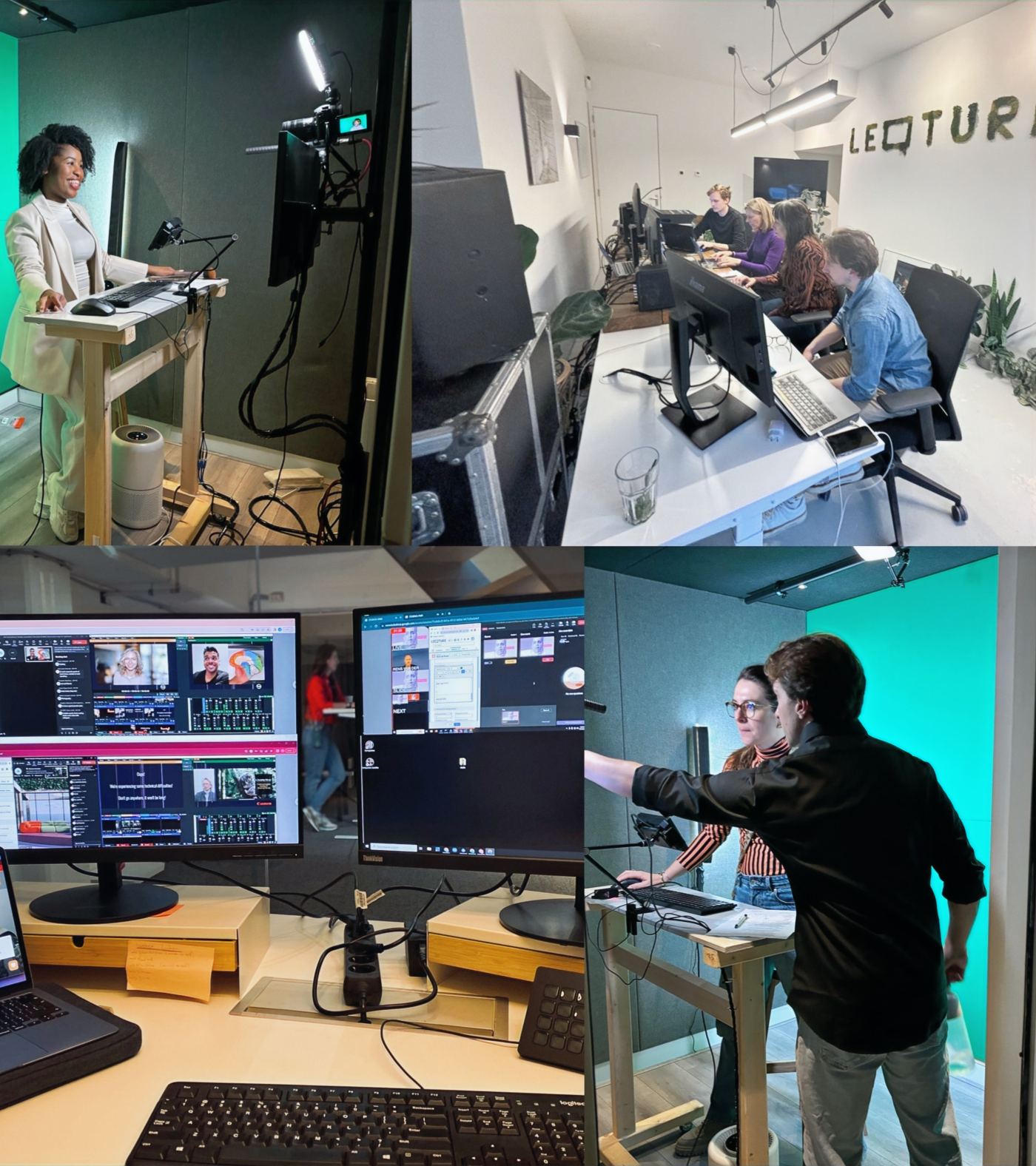
Setting up your page is done in a whiff, but we stay connected before, during and after every session, all year.
Qualitative and quantitative data for your internal reporting is available within days of every session.
Our solution truly includes every single employee, no matter what timezone, country, language, shift or device.
We enable your colleagues to come back and rewatch every session, all year round.
No. It works without any employee login: no SSO, no account, no app. They simply open the link on any device and join.
A fresh session every week, live subtitles in 16 languages, a fully white-label landing page, recordings on-demand, and monthly engagement reporting.
Entirely your own: your logo, colors, CEO welcome message, and links to your own wellbeing survey, EAP or internal hub. See the Northbank example above: every page is built from scratch, in your brand.
Sessions cover EMEA, APAC and the Americas time zones, with live subtitles in 16 languages, so everyone can join at a reasonable local hour, in their own language.
No. Pricing scales with your company size, from 100 employees up to 1,000+, so you only pay for the size you actually are.
Yes. Every session is recorded and available on-demand, fully branded, for the full length of your subscription.
Finally, a solution your IT colleagues will instantly approve. This is a standalone solution that requires zero integration with your company IT infrastructure. Because it works without employee logins, in 99% of organisations there is zero IT or security review needed. It is GDPR-compliant and privacy-first, so teams across Europe and the US can join with confidence.
Yes. We never hold personal employee data, every employee joins anonymously, and every company is its own private island: no cross-company visibility, ever.
Wellbeing Weekly runs alongside whatever you already have: pin your own internal events on your branded page next to the weekly sessions. It's designed to complement, not replace.
Your plan runs for the annual term you sign up for. Get in touch before renewal if you'd like to make changes, we'll talk it through, no long tie-ins beyond the current year.
As many as you like. Your price is set by which company-size bracket you fall into, not by how many employees actually join each session.
Live subtitles are available in 16 languages by default, with extra languages available as an add-on for your branded landing page.
From e-mail to a live, branded page in 48 hours. Upon confirmation, we will set up your dedicated landing page and send you the login credentials, enabling you to customise the content and appearance to best fit your organisation.
Schedule a 15-minute demo, discover how we can help you make more impact than ever before, and get your Wellbeing Weekly programme sorted by tomorrow.
Book a 15-min demo →We've produced thousands of live online sessions for hundreds of clients around the world. We work hand-in-hand with HR teams at companies big and small, and we know what it takes to make high-quality content genuinely interactive. From branding and recordings to surveys and everything in between, we sweat every detail to keep surprising the people we work with.