Women in Art: The Avant-Gardes
Krzysztof Dobrowolski-Onclin
Book a demo →from €2,250 for your whole company
Book a demo →from €2,250 for your whole company
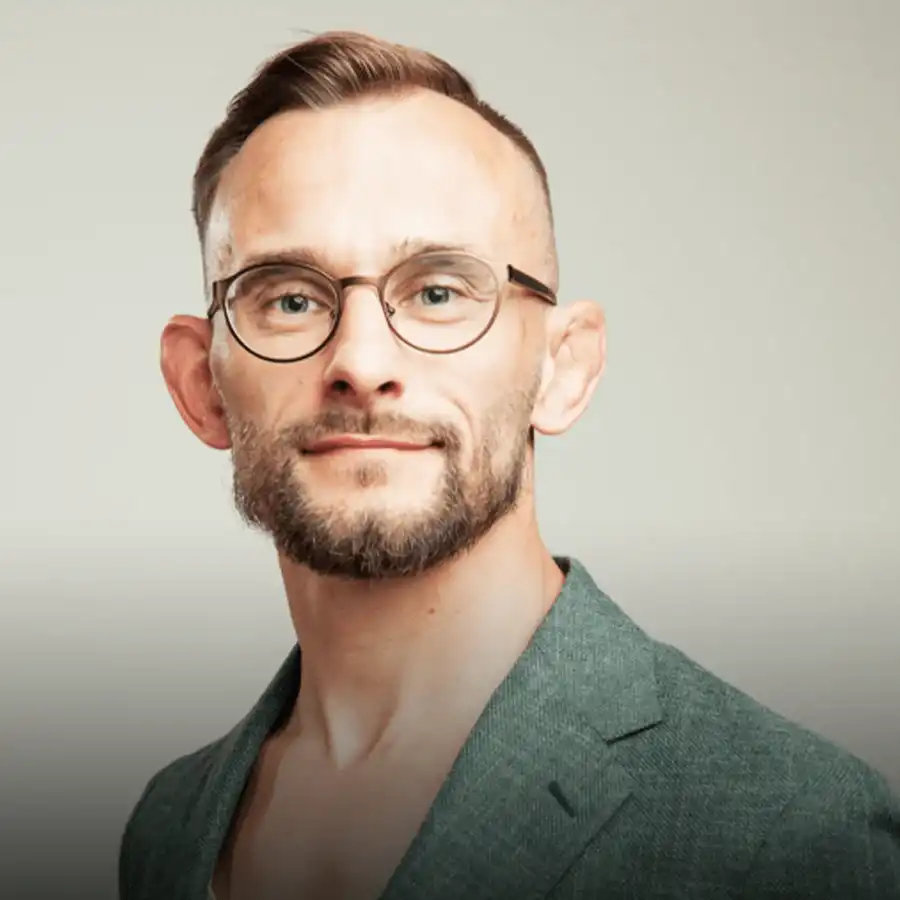
Krzysztof Dobrowolski studied art history and French literature at the UvA, Paris IV-Sorbonne and the Jagielloński in Krakow. Since 2006 he has been working as an art history teacher. Krzysztof Dobrowolski-Onclin graduated cum laude in art history and French literature and studied at the universities of Amsterdam, Paris and Krakow. Since 2006 he has been lecturing on art history without restricting himself to a specialism or subject. He is a volunteer at COC Amsterdam and was appointed Member of the royal Order of Orange-Nassau in 2019.
All sessions by Krzysztof →The first quarter of the twentieth century brought many new art styles and concepts, some figurative, others abstract, all modern. Art historian Krzysztof Dobrowolski-Onclin introduces the women who shaped them, from Paula Modersohn-Becker and Natalia Goncharova to Sonia Delaunay and Katarzyna Kobro.
1. The women behind the avant-gardes
Who shaped the new styles of the early twentieth century, and why their names are less known than those of their male peers.
2. Four artists, four directions
Paula Modersohn-Becker in Worpswede, Natalia Goncharova's vast and diverse oeuvre, Sonia Delaunay's art as design, and Katarzyna Kobro's abstract sculpture.
3. A new way of looking
How to recognise these artists' contributions in museums and in the story of modern art.
The first quarter of the twentieth century brought many new art styles and concepts. Some figurative, others abstract, all modern. In this session, art historian Krzysztof Dobrowolski-Onclin invites you to discover the women who shaped them.
Paula Modersohn-Becker was unmistakably the most avant-garde painter of the German art colony of Worpswede until her premature death in 1907. Natalia Goncharova was the author of a breathtakingly big and diverse oeuvre by the mid-1910s already.
Sonia Delaunay used art as design for cars and clothes, and Katarzyna Kobro stressed the voids in her abstract sculptures in the Poland of the 1920s.
No prior knowledge is assumed. It is built for a general working audience, and people who already know the subject get the research and the practical side rather than an introduction. What the hour itself covers: The first quarter of the twentieth century brought many new art styles and concepts, some figurative, others abstract, all modern. Art historian Krzysztof Dobrowolski-Onclin introduces the women who shaped them, from Paula Modersohn-Becker and Natalia Goncharova to Sonia Delaunay and Katarzyna Kobro.
Krzysztof Dobrowolski-Onclin is one of the experts we auditioned ourselves, and we produce every session so we see how each one lands. Participants rate this session 4.3 out of 5, across 62 responses, and rate Krzysztof personally 4.5 out of 5.
It runs 45 min / 15 min: the talk, then live questions. All you do is pick a date. We brief Krzysztof, produce the session, host and moderate it, run the Q&A, and send you the report within an hour of the end.
A team, a department, an employee network or every single employee at once, with no cap and no per-seat price. It runs inside your own Microsoft Teams, Zoom or Google Meet, or on a branded page we build. No integration, no login, no company device or e-mail.
The session is delivered in English. You can add high accuracy live subtitles in 8, 16 or 24 languages, so everyone follows in their own. That is a paid option, priced by the number of languages you need.
No, and that is by design. There is nothing to install, nothing to integrate and no connection to your systems, so there is nothing for IT to validate: we join your own Teams, Zoom or Meet as a guest speaker, or we host a page and your people open a link. No software, no accounts, and no data of yours that we can reach. It is why hundreds of companies, among them some of the largest technology and financial firms in the world, were able to start within a day.
We never receive or hold personal data about your employees. Because the session runs in your own environment, attendance and identity stay with you, and what we report back is aggregated: numbers, ratings and survey answers, not people. That is also why IT approval usually takes minutes rather than weeks.
You keep the recording and can share it internally. You also get attendance over time, participant ratings for the content and the speaker, the survey answers, and the topics your people asked for next.