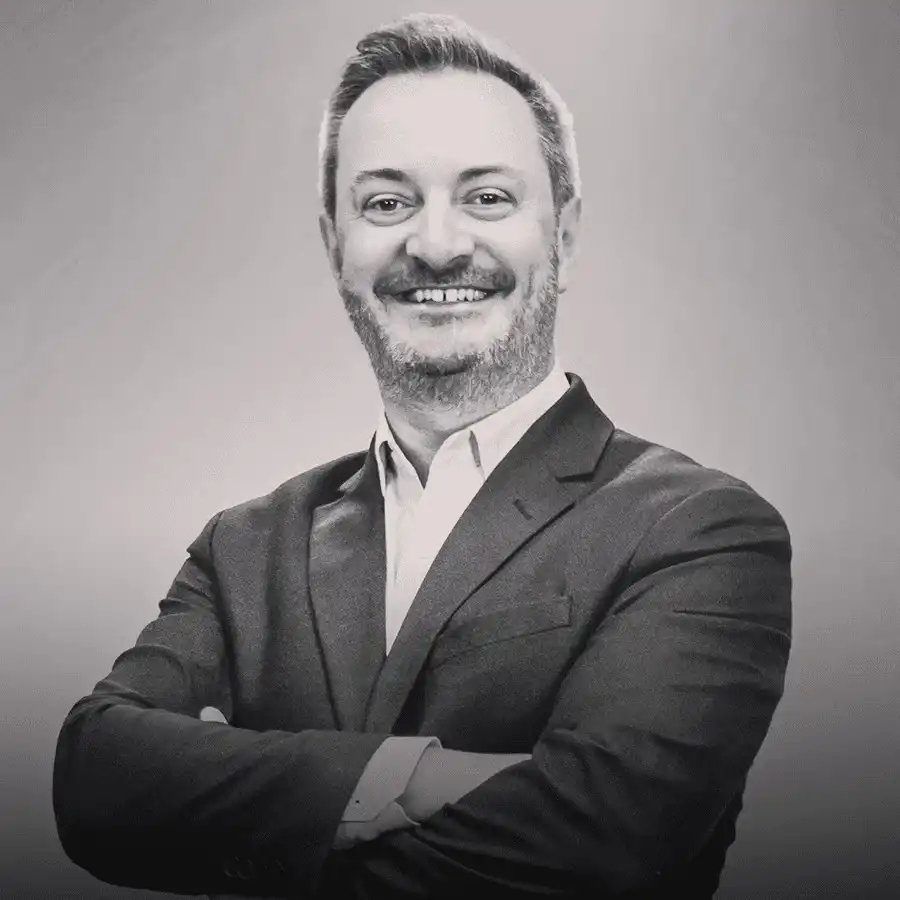
This one runs as a masterclass: Jonathan Reichental takes your colleagues through the research and the thinking behind it, with live questions throughout.
Dr. Jonathan Reichental is a multiple-award-winning technology and business leader whose career has spanned both the private and public sectors. He is an adjunct professor in the School of Management at the University of San Francisco and instructs at several other universities. He also won a best CIO in Silicon Valley award and a national IT leadership prize. In 2016, he was named one of the top 20 most influential CIO’s in the United States. Reichental is currently the founder of advisory, investment, and education firm, Human Future, and also creates online education for LinkedIn Learning. He recently published the bestseller, Smart Cities for Dummies. His latest book, Exploring Smart Cities Activity Book for Kids, was released in 2021.
All sessions by Jonathan →All of the evidence suggests we are in the opening years of a fourth industrial revolution. Changes in the way we live, work, and play are occurring at an accelerated rate. Humanity’s future is now firmly in an urban context and technology is driving new behaviours, expectations, and challenges.
Breakthroughs in science, major demographic shifts, and the onset of a climate in crisis, are some of the macro trends shaping a more unpredictable future. In this context, in order for individuals and organisations to continue to thrive in a world in transition, they must get a grasp of many of the big trends in motion and ahead.
Leadership must begin with understanding. This session builds the context and shares insights on a number of essential areas of change that includes the future of our cities and technologies that are driving this new revolution.
Participants will walk away inspired and optimistic and ready to explore relevant topics more deeply in their environment.
During the expert session, Jonathan Reichental engages the audience through methods like a Q&A session, live demonstrations of IoT technologies, and using the Mentimeter app for interactive exercises on urbanization challenges and potential solutions. These activities help the audience grasp the importance of creating smarter and more sustainable communities and inspire them to contribute to this goal.
The speaker also shares real-life examples and encourages collaboration among cities to address common issues like traffic congestion, air pollution, and waste management.
Understanding the historical significance and current challenges of urbanization is crucial for addressing issues such as traffic congestion, air pollution, and excessive consumerism in our communities.
Exploring alternative transportation systems, waste management solutions, and technologies to detect and address poor air quality are essential steps towards creating smarter and more sustainable cities.
Utilizing the Internet of Things (IoT) for optimizing city services and improving connectivity between humans and devices can lead to a more efficient, sustainable future for urban environments.
In this expert session, Jonathan Reichental explores the future of cities and the importance of creating smarter and more sustainable communities. He begins by reflecting on the significance of cities in human history, sharing images and maps illustrating their growth throughout time.
However, he also acknowledges the challenges posed by modern cities such as traffic congestion, air pollution, and excessive consumerism.
Reichental discusses the consequences of our society's love affair with automobiles, pointing out the negative impact on health and the environment. He encourages the audience to find sustainable answers to these challenges, emphasizing that this century will be defined by cities and our human future lies within them.
The speaker shares insights from his extensive travels around the world and emphasizes the importance of addressing urbanization's issues, including waste management and the impact of plastic consumption on health. He advocates for improving waste management systems in cities, especially for marginalized populations, and making cities more inclusive.
Reichental also discusses the digitalization of city services as an opportunity to enhance user experience, reduce costs, and increase scalability. He mentions the ongoing energy revolution, highlighting how solar energy production has become increasingly attractive due to its cost-effectiveness.
The expert then delves into the role of the Internet of Things (IoT) in cities and urban environments, sharing examples such as smart traffic management and air quality monitoring systems. He stresses how IoT can help optimize city services for a more efficient and sustainable future.
Additionally, Reichental talks about the potential of connected buildings and the importance of collecting and managing data to make better decisions and create innovative solutions.
When addressing questions from the audience, Reichental discusses the timeline for the implementation of autonomous vehicles and the need for collaboration between cities to support innovation. He also shares his enthusiasm for continuing learning about new topics and mentions his books on smart cities for various audiences.
Throughout the session, Jonathan Reichental encourages each person to reflect on their individual role in creating smarter and more sustainable communities. He emphasizes that cities are essential for human development but require collective effort to address the challenges they pose.
The expert concludes by encouraging everyone to contribute to creating a better future for cities and urban environments.
No prior knowledge is assumed. It is built for a general working audience, and people who already know the subject get the research and the practical side rather than an introduction. What the hour itself covers: All of the evidence suggests we are in the opening years of a fourth industrial revolution. Changes in the way we live, work, and play are occurring at an accelerated rate.
A masterclass. Jonathan Reichental takes your colleagues through the subject and the reasoning behind it, and answers live questions. It is practical in what people take away, without the hour turning into an exercise class.
Jonathan Reichental is one of the experts we auditioned ourselves, and we produce every session so we see how each one lands. Participants rate this session 3.9 out of 5, across 25 responses, and rate Jonathan personally 4.2 out of 5.
It is interactive, and the block higher up on this page says exactly how for this session. Nobody has to speak up who does not want to: the chat and the polls carry most of it, and the questions can come in anonymously.
It runs 45 min / 15 min: the talk, then live questions. All you do is pick a date. We brief Jonathan, produce the session, host and moderate it, run the Q&A, and send you the report within an hour of the end.
A team, a department, an employee network or every single employee at once, with no cap and no per-seat price. It runs inside your own Microsoft Teams, Zoom or Google Meet, or on a branded page we build. No integration, no login, no company device or e-mail.
The session is delivered in English. You can add high accuracy live subtitles in 8, 16 or 24 languages, so everyone follows in their own. That is a paid option, priced by the number of languages you need.
No, and that is by design. There is nothing to install, nothing to integrate and no connection to your systems, so there is nothing for IT to validate: we join your own Teams, Zoom or Meet as a guest speaker, or we host a page and your people open a link. No software, no accounts, and no data of yours that we can reach. It is why hundreds of companies, among them some of the largest technology and financial firms in the world, were able to start within a day.
We never receive or hold personal data about your employees. Because the session runs in your own environment, attendance and identity stay with you, and what we report back is aggregated: numbers, ratings and survey answers, not people. That is also why IT approval usually takes minutes rather than weeks.
You keep the recording and can share it internally. You also get attendance over time, participant ratings for the content and the speaker, the survey answers, and the topics your people asked for next.