Advancing Equity: A Call to Action for Anti-Racism
Tash Koster-Thomas
Book a demo →from €2,250 for your whole company
Book a demo →from €2,250 for your whole company

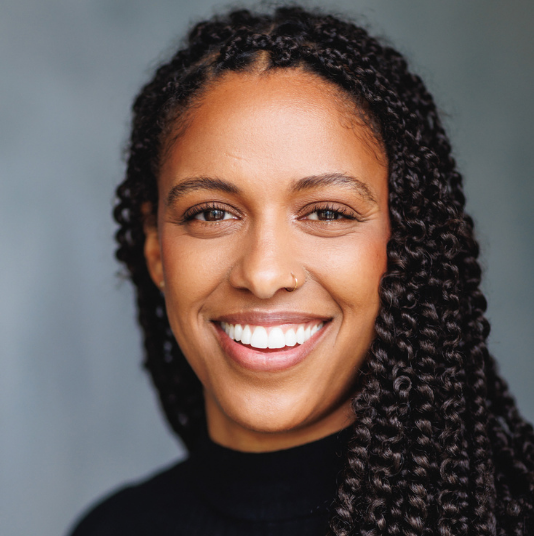
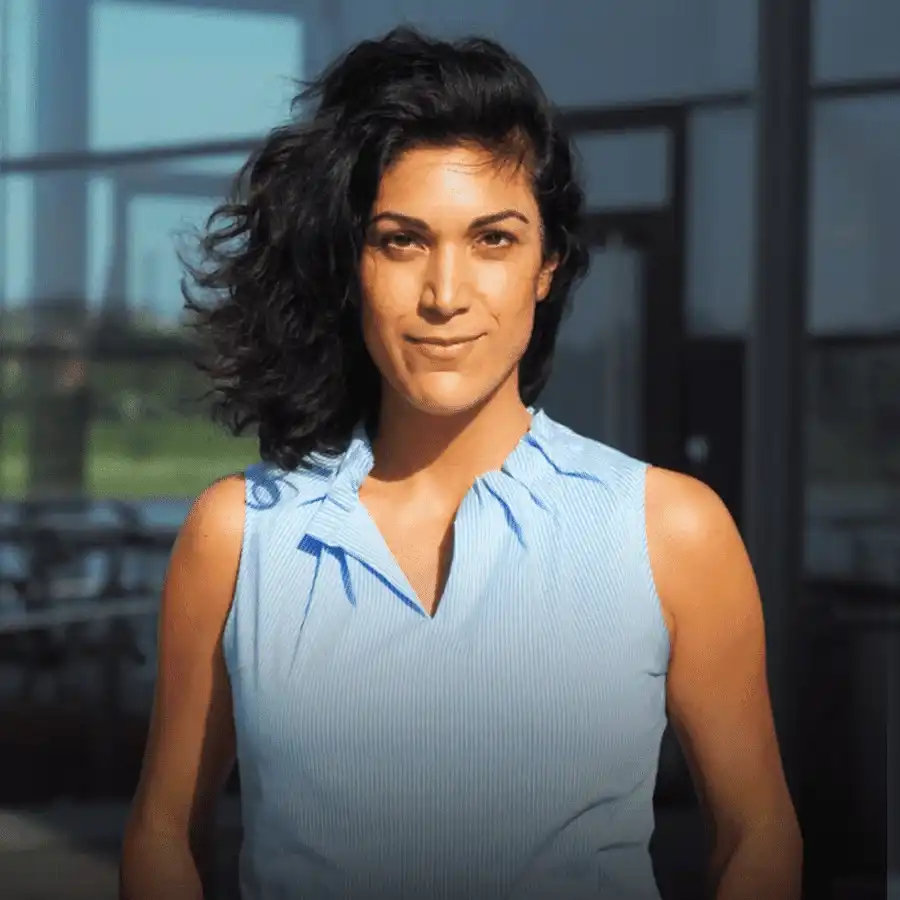
Tash Koster-Thomas (she/her) is an Inclusion and Diversity Consultant, presenter, speaker, and LGBTQ+ Activist who stands at the forefront of transformative conversations. Leveraging her identity and lived experience as a Black queer woman, Tash champions the cause of diversity and inclusion in both society and the workplace. Tash understands that embracing diversity is not only a moral imperative but also a strategic advantage. She is committed to guiding organizations through transformative journeys that go beyond compliance, fostering cultures that champion diversity, equity, and inclusion at every level.
All sessions by Tash →In this expert session, Tash Koster-Thomas guides participants through an exploration of racial equity. She begins by creating an inclusive environment and using a scenario to prompt reflection on organizational experiences.
Tash clarifies key terms such as POC, BIPOC, and racialized groups, and stresses that race is a social construct upheld by systems of power. She discusses how women of color face compounded discrimination and how media reinforces harmful stereotypes.
Tash encourages acknowledging privilege, engaging in difficult conversations with empathy, challenging unconscious bias, and viewing DEI as essential daily practice.
During the expert session, Tash Koster-Thomas engages the audience through interactive exercises using the Mentimeter app, Q&A sessions, and live demonstrations.
Gain a deeper insight into the complexities of race and discrimination by clarifying key concepts and recognizing the interplay of various identities and experiences.
Learn how to approach difficult conversations about race with empathy, acknowledging emotions and being open to learning from others.
Discover practical strategies for identifying and addressing unconscious bias in your daily life, such as using 'flip it' questions or creating psychologically safe spaces.
In this expert session, Tash Koster-Thomas, a renowned diversity, equity, and inclusion consultant, leads participants through an insightful discussion on advancing equity.
Tash sets the stage with a thought-provoking scenario, inviting attendees to reflect upon how the experience of a hypothetical new employee named EO from Nigeria would compare to their own organizations. This open-ended question encourages deep introspection and self-reflection, setting the tone for an engaging exploration of racial equity.
Throughout the session, Tash emphasizes the importance of understanding language and its role in addressing racism and discrimination. She clarifies various terms related to race and identities, such as People of Color (POC), Black Indigenous People of Color (BIPOC), minoritized groups, and racialized individuals.
To further ignite the conversation, Tash asks attendees to share one word that comes to mind when they think about racism. This simple yet powerful activity elicits honest responses and initiates a dialogue on the topic.
Tash also shares her own insights, emphasizing the importance of acknowledging biases and being open-minded.
The expert explains that race is a social construct used to categorize groups based on physical traits, such as skin color, facial features, and hair texture. Society has historically treated these categories as biologically significant, but there is no scientific evidence supporting this notion.
The speaker emphasizes that racism is the system of power and oppression that results from these categorizations.
Tash shares statistics illustrating how women of color are disproportionately affected by various forms of discrimination and feeling compelled to change their appearance or presentation to be seen as acceptable leaders.
The expert highlights the significant role media plays in shaping our perceptions and reinforcing stereotypes. They provide examples of subtle ways media influences our understanding of black and brown people, such as portrayal of certain hairstyles and language used to describe defendants in trials.
The speaker also notes that the movie industry has a considerable impact on our collective consciousness by influencing how we perceive and represent people from diverse backgrounds.
Tash shares her personal journey towards understanding racial inequality and the significance of listening and learning from the experiences of people of color. She encourages individuals to recognize their privilege and use it to support those impacted by harmful actions or words, even if unintentionally delivered as jokes. Tash also emphasizes acknowledging emotional labor during times of social unrest.
In addressing the current climate's focus on DEI (Diversity, Equity, and Inclusion), Tash emphasizes that DEI is not an additional task but rather a part of everyday work. By creating psychologically safe spaces where individuals can be their authentic selves and practicing self-awareness and consciousness of stereotypes, one can contribute to fostering an inclusive environment.
Throughout the session, Tash recommends various resources for further learning about understanding the black experience, recognizing bias and stereotypes, and addressing structural racism. She closes the session by encouraging everyone to continue the conversation and do their part in promoting equity and inclusion.
It is interactive, and the block above says exactly how for this session. Nobody has to speak up who does not want to: the chat and the polls carry most of it, and the questions can come in anonymously.
In this expert session, Tash Koster-Thomas guides participants through an exploration of racial equity. She begins by creating an inclusive environment and using a scenario to prompt reflection on organizational experiences. It is built for a general working audience: no prior knowledge is assumed, and people who already know the subject get the research and the practical side rather than an introduction.
Tash Koster-Thomas is one of the experts we auditioned ourselves, and we produce every session so we see how each one lands. Participants rate this session 4.5 out of 5, across 193 responses, and rate Tash personally 4.8 out of 5.
It runs 45 min / 15 min: the talk, then live questions. All you do is pick a date. We brief Tash, produce the session, host and moderate it, run the Q&A, and send you the report within an hour of the end.
A team, a department, an employee network or every single employee at once, with no cap and no per-seat price. It runs inside your own Microsoft Teams, Zoom or Google Meet, or on a branded page we build. No integration, no login, no company device or e-mail.
The session is delivered in English. You can add high accuracy live subtitles in 8, 16 or 24 languages, so everyone follows in their own. That is a paid option, priced by the number of languages you need.
No, and that is by design. There is nothing to install, nothing to integrate and no connection to your systems, so there is nothing for IT to validate: we join your own Teams, Zoom or Meet as a guest speaker, or we host a page and your people open a link. No software, no accounts, and no data of yours that we can reach. It is why hundreds of companies, among them some of the largest technology and financial firms in the world, were able to start within a day.
We never receive or hold personal data about your employees. Because the session runs in your own environment, attendance and identity stay with you, and what we report back is aggregated: numbers, ratings and survey answers, not people. That is also why IT approval usually takes minutes rather than weeks.
You keep the recording and can share it internally. You also get attendance over time, participant ratings for the content and the speaker, the survey answers, and the topics your people asked for next.
This session focuses on exploring the systemic barriers that contribute to gender disparities in the workplace.
This session is designed to empower participants with the knowledge and tools to become effective allies for colleagues with…
This session equips leaders with the knowledge and tools to build strong, respectful relationships across cultural boundaries.
The session explores how overlapping identities such as race, gender, sexuality, disability, culture, and age shape women’s…
This expert session focused on understanding LGBTQ+ language and terminology and highlighted how important inclusive…
This expert session highlights the importance of increasing awareness and understanding of the challenges faced by LGBTQIA+…
In her lecture, Tash Thomas-Koster explains that psychological safety is the bedrock of innovation and mental health.
Have you ever left a meeting wishing you'd spoken up? Witnessed a comment that didn't sit right but weren't sure whether to say…
In this session, Tash explores women’s empowerment in the workplace through an intersectional lens.

Psychological Safety is a well documented driver of high performance in teams and organisations.
Ramadan and Eid are deeply significant periods in the Islamic calendar, marked by fasting, prayer, and community celebrations.
The topic of culture can sometimes seem dry or theoretical, however in reality we all have a natural ability to connect with…
Female Leadership is in high demand in organizations but numbers show that often women are still not present at the tables of…
Skillful communication and warm connection are needed today more than ever before — whether that be in your professional or…

AI has the power to shape our world, and is increasingly becoming part of our daily lives - but what happens when it inherits…