Psychological Safety in Action: Creating Safer, Stronger Teams
Tash Koster-Thomas
Book a demo →from €2,250 for your whole company
Book a demo →from €2,250 for your whole company
This one runs as a masterclass: Tash Koster-Thomas takes your colleagues through the research and the thinking behind it, with live questions throughout.

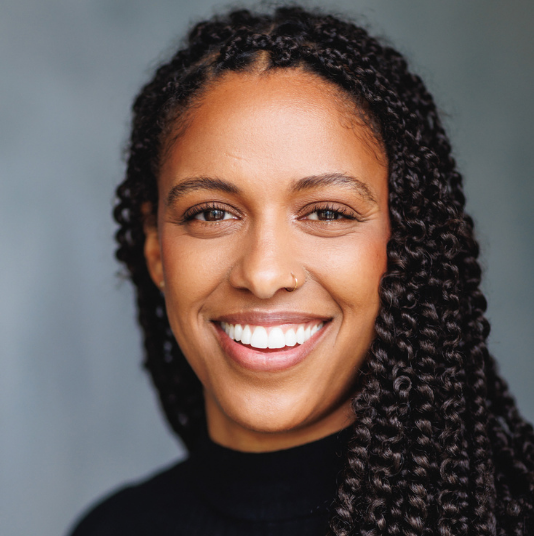
Tash Koster-Thomas (she/her) is an Inclusion and Diversity Consultant, presenter, speaker, and LGBTQ+ Activist who stands at the forefront of transformative conversations. Leveraging her identity and lived experience as a Black queer woman, Tash champions the cause of diversity and inclusion in both society and the workplace. Tash understands that embracing diversity is not only a moral imperative but also a strategic advantage. She is committed to guiding organizations through transformative journeys that go beyond compliance, fostering cultures that champion diversity, equity, and inclusion at every level.
All sessions by Tash →In her lecture, Tash Thomas-Koster explains that psychological safety is the bedrock of innovation and mental health. She defines it as an environment where individuals feel safe to take risks and be themselves without fear of punishment.
By exploring the neuroscience of trust, she shows how safety activates the brain for learning rather than defense. The session highlights Timothy Clark's four stages: inclusion, learner, contributor, and challenger safety.
Tash urges leaders to model vulnerability, reward curiosity, and replace judgment with 'yes and' thinking. Ultimately, she demonstrates that when teams feel safe to challenge the status quo, they achieve higher productivity and belonging.
During the expert session, Tash Koster-Thomas engages the audience through interactive exercises using the Mentimeter app, Q&A sessions, and live demonstrations.
Creating an inclusive work environment where individuals feel heard and valued is the first step in building psychological safety. Leaders can start by setting ground rules that encourage open communication, modeling vulnerability, and trusting team members.
Understanding the neuroscientific principles behind psychological safety can help leaders create a more effective work environment. These principles include purpose, learner safety, contributor safety, and challenger safety.
Collecting hard data through employee surveys and anecdotal evidence is crucial in measuring psychological safety within a team or organization. Leaders should respond positively when team members share their ideas, address power dynamics, and create opportunities for collaboration to improve psychological safety.
In this expert session, speaker Tash discussed the significance of psychological safety in the workplace and its impact on mental health and performance. Psychological safety is a shared understanding among team members that they can express ideas, concerns, make mistakes, and challenge each other without fear of retaliation or judgment.
This sense of security leads to reduced stress levels, improved collaboration, innovation, and better mental health.
Tash introduced the three core principles for creating psychological safety from Amy Edmonson's research: framing work as a learning problem, modeling curiosity, and building a culture of psychological safety through trust and respect. She also emphasized the importance of neuroscience in understanding how behaviors affect brain chemistry to create either a state of learning and engagement or fear and stress.
Tash then delved deeper into the role of psychological safety within teams, focusing on the responsibility of leaders in fostering a safer work environment. Tash highlighted four stages in creating psychological safety: establishing trust, setting ground rules, encouraging open communication, and practicing constructive feedback.
At the foundation of psychological safety is trust. Leaders should create an inclusive environment where team members feel valued and safe to be themselves. Learner safety follows, which requires vulnerability from both leaders and team members for open communication and growth.
Contributor safety empowers individuals to contribute effectively without fear of being undermined or ignored, while challenger safety encourages team members to challenge the status quo with new ideas. She also advocated collecting hard data through employee surveys to measure psychological safety within an organization and addressing power dynamics between team members.
The expert session concluded with Tash emphasizing that individuals leading by example, starting with small interactions like using affirmative language and genuine interest in others' opinions, can foster psychological safety and build stronger teams.
From the survey every participant gets when the session ends, in their own words.
Very nice practical approaches to encourage phycological safety. Interesting references for follow up! Thank you for a wonderful insightful lecture.
Psychological safety starts with us and grows with our self esteem. Thank you for an excellent insightful session.
A lot about how to build a psychological safe working space through building a personal relationship. And be aware of self-esteem to grow self-confidence. Thank you very much, for this inspiring lecture.
Brilliant mandatory lecture! thank you !
Great session with plenty of food for thought! Very interesting and engaging meeting and I enjoyed the audience participation as well. Glad I joined today!
Alot! This was a new topic for me, I found it very interesting. I enjoyed learning about the pillars to a high performance team and took many points away around honesty, authenticity and supporting each other.
Interesting topic, clearly delivered - quite an easy concept to introduce for quite a lot of benefit quite quickly I think. I enjoyed it, thank you.
We should pay more attention and spend more time on really working with Psychological safety in mind. I loved the lecture. Thank you!
It is interactive, and the block above says exactly how for this session. Nobody has to speak up who does not want to: the chat and the polls carry most of it, and the questions can come in anonymously.
In her lecture, Tash Thomas-Koster explains that psychological safety is the bedrock of innovation and mental health. She defines it as an environment where individuals feel safe to take risks and be themselves without fear of punishment. It is built for a general working audience: no prior knowledge is assumed, and people who already know the subject get the research and the practical side rather than an introduction.
A masterclass. Tash Koster-Thomas takes your colleagues through the subject and the reasoning behind it, and answers live questions. It is practical in what people take away, without the hour turning into an exercise class.
Tash Koster-Thomas is one of the experts we auditioned ourselves, and we produce every session so we see how each one lands. Participants rate this session 4.5 out of 5, across 193 responses, and rate Tash personally 4.8 out of 5.
It runs 45 min / 15 min: the talk, then live questions. All you do is pick a date. We brief Tash, produce the session, host and moderate it, run the Q&A, and send you the report within an hour of the end.
A team, a department, an employee network or every single employee at once, with no cap and no per-seat price. It runs inside your own Microsoft Teams, Zoom or Google Meet, or on a branded page we build. No integration, no login, no company device or e-mail.
The session is delivered in English. You can add high accuracy live subtitles in 8, 16 or 24 languages, so everyone follows in their own. That is a paid option, priced by the number of languages you need.
No, and that is by design. There is nothing to install, nothing to integrate and no connection to your systems, so there is nothing for IT to validate: we join your own Teams, Zoom or Meet as a guest speaker, or we host a page and your people open a link. No software, no accounts, and no data of yours that we can reach. It is why hundreds of companies, among them some of the largest technology and financial firms in the world, were able to start within a day.
We never receive or hold personal data about your employees. Because the session runs in your own environment, attendance and identity stay with you, and what we report back is aggregated: numbers, ratings and survey answers, not people. That is also why IT approval usually takes minutes rather than weeks.
You keep the recording and can share it internally. You also get attendance over time, participant ratings for the content and the speaker, the survey answers, and the topics your people asked for next.
In this expert session, Tash Koster-Thomas guides participants through an exploration of racial equity.
This session focuses on exploring the systemic barriers that contribute to gender disparities in the workplace.
This session is designed to empower participants with the knowledge and tools to become effective allies for colleagues with…
This session equips leaders with the knowledge and tools to build strong, respectful relationships across cultural boundaries.
The session explores how overlapping identities such as race, gender, sexuality, disability, culture, and age shape women’s…
This expert session focused on understanding LGBTQ+ language and terminology and highlighted how important inclusive…
This expert session highlights the importance of increasing awareness and understanding of the challenges faced by LGBTQIA+…
Have you ever left a meeting wishing you'd spoken up? Witnessed a comment that didn't sit right but weren't sure whether to say…
In this session, Tash explores women’s empowerment in the workplace through an intersectional lens.
Psychological Safety is a well documented driver of high performance in teams and organisations.

Ramadan and Eid are deeply significant periods in the Islamic calendar, marked by fasting, prayer, and community celebrations.
The topic of culture can sometimes seem dry or theoretical, however in reality we all have a natural ability to connect with…

Female Leadership is in high demand in organizations but numbers show that often women are still not present at the tables of…
Skillful communication and warm connection are needed today more than ever before — whether that be in your professional or…

AI has the power to shape our world, and is increasingly becoming part of our daily lives - but what happens when it inherits…