Intersectionality - Including ALL Women
Tash Koster-Thomas
Book a demo →from €2,250 for your whole company
Book a demo →from €2,250 for your whole company

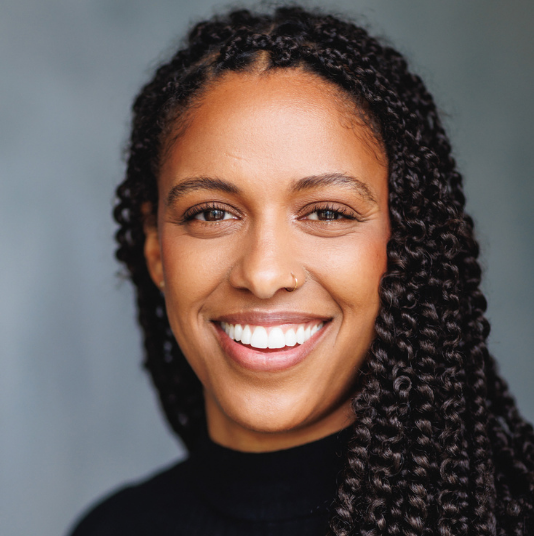
Tash Koster-Thomas (she/her) is an Inclusion and Diversity Consultant, presenter, speaker, and LGBTQ+ Activist who stands at the forefront of transformative conversations. Leveraging her identity and lived experience as a Black queer woman, Tash champions the cause of diversity and inclusion in both society and the workplace. Tash understands that embracing diversity is not only a moral imperative but also a strategic advantage. She is committed to guiding organizations through transformative journeys that go beyond compliance, fostering cultures that champion diversity, equity, and inclusion at every level.
All sessions by Tash →The session explores how overlapping identities such as race, gender, sexuality, disability, culture, and age shape women’s experiences at work. Tash Koster-Thomas explains how these intersections create unique challenges that are often overlooked in traditional gender-equity conversations.
She emphasizes the need for better allyship and support—both between women and from wider teams—and outlines practical steps organisations can take to create fairer, more inclusive environments where all women can thrive.
During the expert session, Tash Koster-Thomas engages the audience through interactive exercises using the Mentimeter app, Q&A sessions, and live demonstrations.
Understanding how multiple forms of discrimination or inequality compound, such as race, gender, disability, and sexuality, is essential for creating an inclusive society.
Using your power, privilege, and influence to uplift underrepresented groups, continuously educating yourself, being an upstander, and advocating for change are all crucial steps in supporting marginalized women.
Expanding conversations beyond just women's issues, recognizing men's experiences, dealing with ambiguity, and approaching situations with facts and data contribute to genuine gender equity discussions.
In this expert session, Tash Koster-Thomas, a leading voice in gender equity and intersectionality, emphasized the importance of understanding and addressing how multiple forms of discrimination or inequality can compound and create unique experiences for individuals based on their intersecting identities.
Tash began by sharing statistics that illustrate the intersectionality of race and gender in earnings: White women earn an average of 13.6% more than white men, but a black woman earns 20.5% less than a white man, and a Latina woman earns 46.8% less than a white man. These disparities highlight the importance of recognizing how race and gender intersect to create distinct experiences for women in the labor market.
Next, Tash discussed intersectionality's impact on maternal health. Women with disabilities are three times more likely to die during pregnancy and childbirth than women without disabilities. Moreover, black women in the United States are three to four times more likely to die from pregnancy-related complications than white women.
These statistics demonstrate how race and disability or race and womanhood intersect to create unique challenges that may not be fully addressed by focusing on one identity at a time.
Tash then emphasized the significance of intersectionality in leadership roles. Only 4% of executive positions are held by black women, and only 1% of Fortune 500 companies have CEOs who are black women.
The lack of representation in leadership positions further compounds the disadvantage faced by some women due to their intersecting identities.
To create a more equitable and inclusive society, Tash urged support for marginalized women in various ways, especially for those who hold privileged identities. She suggested being an ally by using one's power, privilege, and influence to support underrepresented groups, continuously educating oneself about the experiences of marginalized communities, speaking out against biased systems and policies, creating sponsorship programs, mentorship opportunities, and leadership development initiatives tailored to marginalized women, addressing hidden biases in hiring practices, providing safe reporting mechanisms, and supporting self-advocacy, networking, and participation in leadership programs for underrepresented women.
Tash also encouraged acknowledging the importance of intersectionality and individual experiences, listening to and including the voices of marginalized communities, making small daily actions towards equity, and valuing visibility. She emphasized that supporting gender equity requires recognizing and understanding men's experiences as well.
For genuine conversations on intersectionality, Tash advises dealing with ambiguity and being curious when encountering differences, focusing on behavior rather than trying to change opinions, utilizing resources like HR and anonymous speak-up tools, and speaking up in a non-confrontational manner for managers with unconscious biases.
Throughout the session, Tash encouraged active listening, awareness of microaggressions, supporting each other, expanding the conversation beyond just women's issues, and acknowledging the challenges faced by men in areas like mental health and paternity leave. The expert session concluded with a reminder that women can be stronger allies for one another and an invitation to the next session.
It is interactive, and the block above says exactly how for this session. Nobody has to speak up who does not want to: the chat and the polls carry most of it, and the questions can come in anonymously.
The session explores how overlapping identities such as race, gender, sexuality, disability, culture, and age shape women’s experiences at work. Tash Koster-Thomas explains how these intersections create unique challenges that are often overlooked in traditional gender-equity conversations. It is built for a general working audience: no prior knowledge is assumed, and people who already know the subject get the research and the practical side rather than an introduction.
Tash Koster-Thomas is one of the experts we auditioned ourselves, and we produce every session so we see how each one lands. Participants rate this session 4.5 out of 5, across 193 responses, and rate Tash personally 4.8 out of 5.
It runs 45 min / 15 min: the talk, then live questions. All you do is pick a date. We brief Tash, produce the session, host and moderate it, run the Q&A, and send you the report within an hour of the end.
A team, a department, an employee network or every single employee at once, with no cap and no per-seat price. It runs inside your own Microsoft Teams, Zoom or Google Meet, or on a branded page we build. No integration, no login, no company device or e-mail.
The session is delivered in English. You can add high accuracy live subtitles in 8, 16 or 24 languages, so everyone follows in their own. That is a paid option, priced by the number of languages you need.
No, and that is by design. There is nothing to install, nothing to integrate and no connection to your systems, so there is nothing for IT to validate: we join your own Teams, Zoom or Meet as a guest speaker, or we host a page and your people open a link. No software, no accounts, and no data of yours that we can reach. It is why hundreds of companies, among them some of the largest technology and financial firms in the world, were able to start within a day.
We never receive or hold personal data about your employees. Because the session runs in your own environment, attendance and identity stay with you, and what we report back is aggregated: numbers, ratings and survey answers, not people. That is also why IT approval usually takes minutes rather than weeks.
You keep the recording and can share it internally. You also get attendance over time, participant ratings for the content and the speaker, the survey answers, and the topics your people asked for next.
In this expert session, Tash Koster-Thomas guides participants through an exploration of racial equity.
This session focuses on exploring the systemic barriers that contribute to gender disparities in the workplace.
This session is designed to empower participants with the knowledge and tools to become effective allies for colleagues with…
This session equips leaders with the knowledge and tools to build strong, respectful relationships across cultural boundaries.
This expert session focused on understanding LGBTQ+ language and terminology and highlighted how important inclusive…
This expert session highlights the importance of increasing awareness and understanding of the challenges faced by LGBTQIA+…
In her lecture, Tash Thomas-Koster explains that psychological safety is the bedrock of innovation and mental health.
Have you ever left a meeting wishing you'd spoken up? Witnessed a comment that didn't sit right but weren't sure whether to say…
In this session, Tash explores women’s empowerment in the workplace through an intersectional lens.

Psychological Safety is a well documented driver of high performance in teams and organisations.
Ramadan and Eid are deeply significant periods in the Islamic calendar, marked by fasting, prayer, and community celebrations.
The topic of culture can sometimes seem dry or theoretical, however in reality we all have a natural ability to connect with…
Female Leadership is in high demand in organizations but numbers show that often women are still not present at the tables of…
Skillful communication and warm connection are needed today more than ever before — whether that be in your professional or…
AI has the power to shape our world, and is increasingly becoming part of our daily lives - but what happens when it inherits…