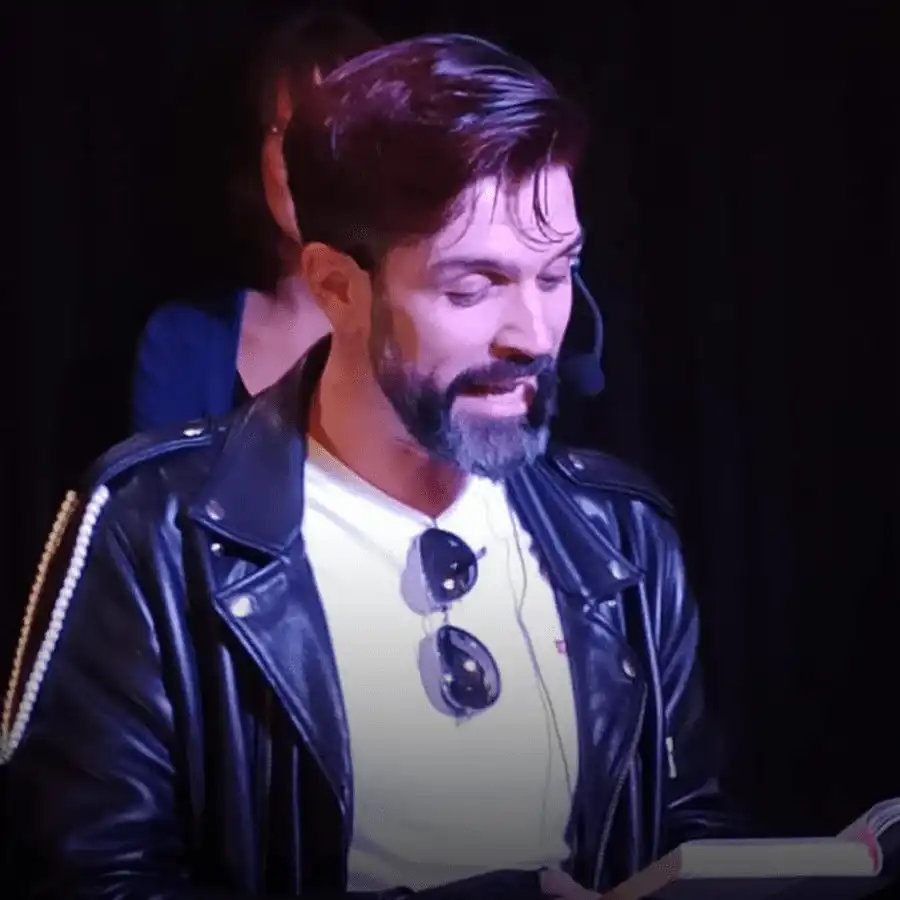
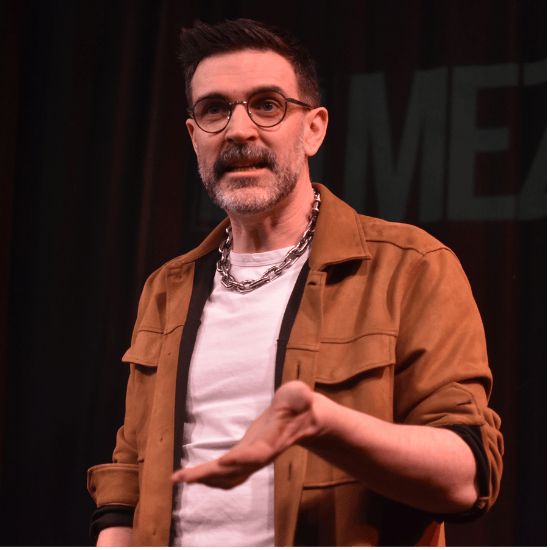
Joseph is a Drama-therapist and a storyteller who has also been a cultural journalist for almost 20 years. He started writing about queer culture in Dublin in the 00s for Totally Dublin and presented GayOK, a queer community TV show. Since moving to the Netherlands 8 years ago he has worked for a queer dating agency as the social media officer and leqtured on queer culture in Amsterdam, London and Berlin. Joseph also works for a queer men's community project, Village Berlin, running workshops on the power of language between men. He is a positive queer force of energy in the universe and brings his swagger and charm to every leqture.
All sessions by Joseph →In this eye-opening session, Joseph Kearney explores the untold stories that history left behind. From forgotten women in medieval Europe to the erasure of LGBTQ+ identities and the absence of people of colour in mainstream narratives, he uncovers the impact of bias in how history is recorded and remembered.
Through case studies like Femina by Janina Ramirez, queer resistance during WWII, and the legacy of artists like Geoffrey Van Der Ween, Joseph spotlights the power of reclaiming marginalized voices. He also examines how popular culture - from Bridgerton to historical fiction - is reshaping public memory. Whose stories have been lost, and how can we ensure they’re no longer left out?
During the expert session, Joseph Kearney engages the audience through interactive exercises using the Mentimeter app, and a Q&A segment. These activities facilitate open dialogue, promote inclusivity, and encourage thoughtful communication for creating a more welcoming environment for all individuals.
The session underscores how historical narratives have often been shaped by bias, leading to the marginalization or erasure of certain groups. Understanding this bias is essential for advancing D&I efforts today.
Joseph highlights the critical role that reclaiming and showcasing the stories of underrepresented groups plays in fostering a more inclusive, equitable society.
The session demonstrates how popular culture, such as media and historical fiction, can be a tool for reshaping collective memory and creating more inclusive narratives that reflect the diversity of human experiences.
From the survey every participant gets when the session ends, in their own words.
History, super interesting facts. The tellstory has been fantastic! Thank you. I wish this webinar was recorded to rewatch it. I could view/listen again and again. I have the feeling that there is sooo much we don't know about! This was wonderful. Thanks again.
It was eye-opening and so informative!
I enjoyed Everything! The content AND the speaker, way to go!
I learned so many things! Amazing session.
As a queer person myself I knew about some of the events and people talked about but it's been great to see more stories that I didn't know about!
I have learnt so much in such a small amount of time. The speaker is very engaging, enthusiastic and energetic. Brings the content to life. Excellent.
No prior knowledge is assumed. It is built for a general working audience, and people who already know the subject get the research and the practical side rather than an introduction. What the hour itself covers: In this eye-opening session, Joseph Kearney explores the untold stories that history left behind. From forgotten women in medieval Europe to the erasure of LGBTQ+ identities and the absence of people of colour in mainstream narratives, he uncovers the impact of bias in how history is recorded and remembered.
Joseph Kearney is one of the experts we auditioned ourselves, and we produce every session so we see how each one lands. Participants rate this session 4.3 out of 5, across 87 responses, and rate Joseph personally 4.5 out of 5.
It is interactive, and the block higher up on this page says exactly how for this session. Nobody has to speak up who does not want to: the chat and the polls carry most of it, and the questions can come in anonymously.
It runs 45 min / 15 min: the talk, then live questions. All you do is pick a date. We brief Joseph, produce the session, host and moderate it, run the Q&A, and send you the report within an hour of the end.
A team, a department, an employee network or every single employee at once, with no cap and no per-seat price. It runs inside your own Microsoft Teams, Zoom or Google Meet, or on a branded page we build. No integration, no login, no company device or e-mail.
The session is delivered in English. You can add high accuracy live subtitles in 8, 16 or 24 languages, so everyone follows in their own. That is a paid option, priced by the number of languages you need.
No, and that is by design. There is nothing to install, nothing to integrate and no connection to your systems, so there is nothing for IT to validate: we join your own Teams, Zoom or Meet as a guest speaker, or we host a page and your people open a link. No software, no accounts, and no data of yours that we can reach. It is why hundreds of companies, among them some of the largest technology and financial firms in the world, were able to start within a day.
We never receive or hold personal data about your employees. Because the session runs in your own environment, attendance and identity stay with you, and what we report back is aggregated: numbers, ratings and survey answers, not people. That is also why IT approval usually takes minutes rather than weeks.
You keep the recording and can share it internally. You also get attendance over time, participant ratings for the content and the speaker, the survey answers, and the topics your people asked for next.
Psychological Safety is a well documented driver of high performance in teams and organisations.
Ramadan and Eid are deeply significant periods in the Islamic calendar, marked by fasting, prayer, and community celebrations.
The topic of culture can sometimes seem dry or theoretical, however in reality we all have a natural ability to connect with…
Female Leadership is in high demand in organizations but numbers show that often women are still not present at the tables of…
Skillful communication and warm connection are needed today more than ever before — whether that be in your professional or…
AI has the power to shape our world, and is increasingly becoming part of our daily lives - but what happens when it inherits…