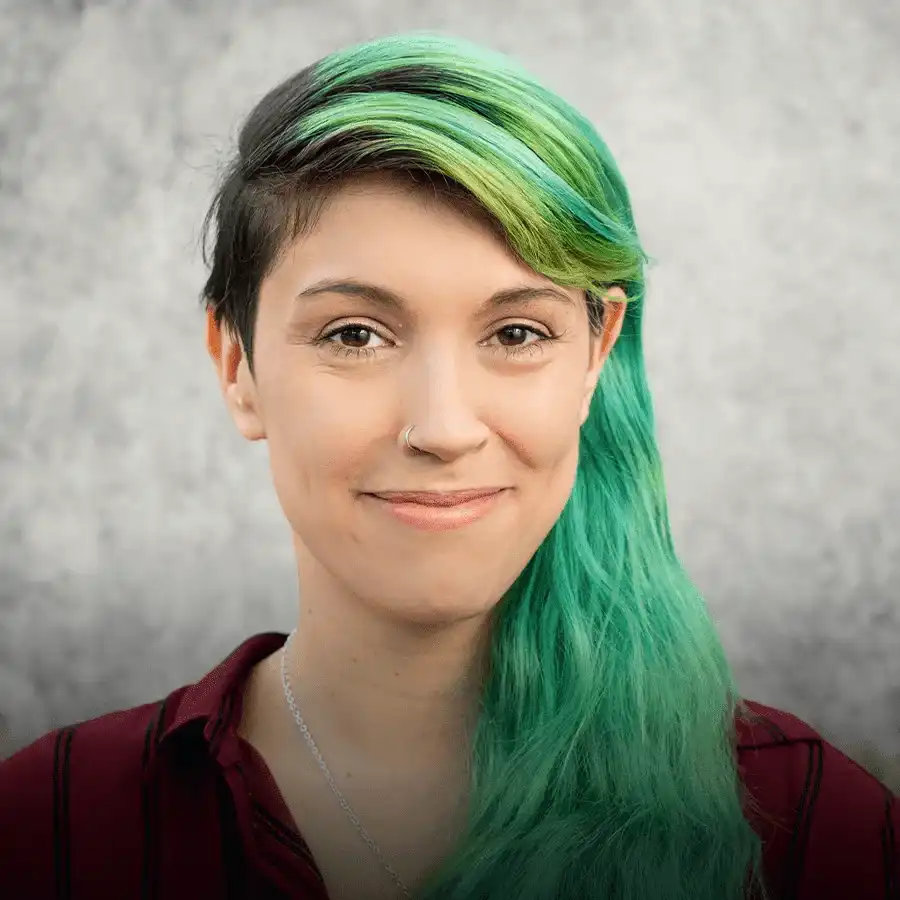
It is no secret that technology is having a diversity crisis. Despite initiatives to diversify, technology is still perceived as a predominantly white, male, middle-class industry. But this wasn't always the case - in 1943, computing was dominated by women.
What happened? Join Antonia Forster, XR Technical Specialist, for a data-driven exploration of the gender gap:- how it affects your bottom line, how AI and machine-learning reinforce bias, and how we can employ evidence-based strategies to combat it.
During the expert session, Antonia Forster engages the audience through a Q&A session, live demonstrations using the Mentimeter app for interactive exercises, and storytelling. She discusses addressing gender gaps in various industries and creating inclusive workplaces, covering topics like understanding the problem, identifying mechanisms causing bias, exploring solutions, and building diverse teams.
The Mentimeter app allows participants to share opinions on related questions, fostering active participation. Antonia also emphasizes the importance of diversity and inclusion in companies, discussing her personal experiences and sharing examples of successful initiatives.
Understanding the current state of the gender gap and mechanisms that perpetuate bias and inequality is essential for creating inclusive workplaces.
Shifting focus from exclusive qualifications to diverse backgrounds and demographics will help include individuals from various underrepresented groups, leading to equitable representation across teams.
Companies like Harvey Mudd College and Patagonia have successfully increased female representation by rebranding and implementing effective gender-inclusive policies. Encouraging diversity in recruitment and retention, as well as role modelling representation from leaders, can make a significant impact on closing the gender gap.
In this expert session, Antonia Forster explores the topic of addressing the gender gap and fostering inclusive workplaces. She begins by sharing a thought-provoking anecdote about two journalists, Marty and Nicole, who faced disparate treatment based on their genders, shedding light on one of many challenges women and marginalized individuals confront in professional settings.
Antonia delves deeper into the root causes of biases that perpetuate inequality, focusing her advocacy efforts on advancing gender equity for transgender, queer, neurodivergent, and gender non-conforming individuals. She shares her own journey of persevering in the tech industry despite encountering discrimination and how she's learned to navigate these challenges.
The expert session encompasses four primary themes: recognizing the issue at hand (the existing gender gap), identifying underlying mechanisms causing bias and inequality, proposing solutions for creating inclusive workplaces, and offering practical strategies to maintain a diverse and welcoming environment. Throughout her talk, Antonia employs interactive elements using the Mentimeter app, enabling participants to contribute their insights on topics related to the session's theme.
Antonia underlines the significance of diversity and inclusion within companies, emphasizing that parents and schools significantly influence individuals' perceptions of their capabilities. However, businesses can make a difference by ensuring diverse representation across all departments.
Creating an inclusive team may present challenges for organizations without a diverse workforce initially.
Antonia discusses her personal experiences as a queer woman in Tech and the expectations placed upon her to serve representational roles, which often detract from her engineering focus. She advocates for businesses to reconsider their recruitment and retention strategies by prioritizing skills over specific qualifications, enabling a more inclusive workforce.
Antonia cites instances of institutions that have effectively increased female representation, such as Harvey Mudd College's revamp of computer science courses. She also acknowledges companies like Patagonia for their gender-inclusive policies and practices.
According to Antonia, closing the gender pay gap varies across industries and specific companies within each sector. Nordic countries like Sweden, Finland, and Switzerland are recognized for their progress but rely heavily on social policies that support childcare and workplace benefits.
To address underrepresented minorities such as CIS transgender individuals, Antonia suggests that representation within a population should be reflected in companies, ensuring equitable representation across all roles. She encourages further exploration of industry-specific research for comprehensive analyses on gender and ethnicity disparities.
Antonia leaves participants with a call-to-action, encouraging them to make small strides towards promoting equity within their organizations and continuing their learning journey to implement change.
From the survey every participant gets when the session ends, in their own words.
It was very inspirational. Easy to grasp and to understand. Loved the use of mentometer in the session. Very good speaker!
Great inspirational and informative talk! thanks so much, I have learnt a lot today :)
Thank you for an inspiring session.
Thank you for an inspiring session
It was excellent! Loved it.
I loved the use of visuals, examples and statistics (I am Dyslexic, it helps a lot). Speaker was great, very clear and kept it engaging start to finish. Also I found the part about diverse teams performing better especially relatable.
The session has been extremely interesting and it got my attention all the time. Hopefully, the world can change and forget about all the biases that are present today. Thank you, Antonia, for being so inspirational.
I really enjoyed the session, it being not only informative, but also very inclusive. Loved the inclusive language the speaker used. I feel more confident now to pursue my dream job in Tech. The best Key Speaker we had in the company so far! Thanks a lot!
Interactive throughout. The chat runs the whole hour and the speaker works with what people put in it, and there is usually a live poll partway through so the room can see its own answers. It closes with live questions. People type more than they talk, which is deliberate: it gets the quieter half of the room in.
Both, and that is not a hedge. Every concept is explained from scratch, so someone who has never thought about it can follow the whole hour. The substance underneath is heavier than the language suggests, so people who already work on diversity get new material rather than a recap.
Yes. The examples come from technology because that is where the speaker works, but the mechanisms are generic: how a vacancy is worded, who gets referred by whom, what a reviewer reads into a gap in a CV, who does the talking in a meeting. Teams outside engineering get as much out of it.
It is closer to an operations session than an awareness session. Less time on why it matters, more on where in your own process people fall out and what to change first. If your previous training left people convinced but not sure what to do on Monday, this is the other half.
She is a senior engineer working in mixed reality at a software company, so she is in the industry she is describing rather than commenting on it. She is also an award-winning diversity and inclusion consultant and a TEDx speaker, and she speaks from personal experience as well as from the research.
Backed up, and heavily. Expect a steady stream of figures and studies rather than anecdote, with the sources named as they come. The practical half is built on those numbers rather than on what feels right.
It is interactive, and the block above says exactly how for this session. Nobody has to speak up who does not want to: the chat and the polls carry most of it, and the questions can come in anonymously.
It is no secret that technology is having a diversity crisis. Despite initiatives to diversify, technology is still perceived as a predominantly white, male, middle-class industry. It is built for a general working audience: no prior knowledge is assumed, and people who already know the subject get the research and the practical side rather than an introduction.
Antonia Forster is one of the experts we auditioned ourselves, and we produce every session so we see how each one lands. Participants rate this session 4.5 out of 5, across 384 responses, and rate Antonia personally 4.7 out of 5.
It runs 45 min / 15 min: the talk, then live questions. All you do is pick a date. We brief Antonia, produce the session, host and moderate it, run the Q&A, and send you the report within an hour of the end.
A team, a department, an employee network or every single employee at once, with no cap and no per-seat price. It runs inside your own Microsoft Teams, Zoom or Google Meet, or on a branded page we build. No integration, no login, no company device or e-mail.
The session is delivered in English. You can add high accuracy live subtitles in 8, 16 or 24 languages, so everyone follows in their own. That is a paid option, priced by the number of languages you need.
No, and that is by design. There is nothing to install, nothing to integrate and no connection to your systems, so there is nothing for IT to validate: we join your own Teams, Zoom or Meet as a guest speaker, or we host a page and your people open a link. No software, no accounts, and no data of yours that we can reach. It is why hundreds of companies, among them some of the largest technology and financial firms in the world, were able to start within a day.
We never receive or hold personal data about your employees. Because the session runs in your own environment, attendance and identity stay with you, and what we report back is aggregated: numbers, ratings and survey answers, not people. That is also why IT approval usually takes minutes rather than weeks.
You keep the recording and can share it internally. You also get attendance over time, participant ratings for the content and the speaker, the survey answers, and the topics your people asked for next.
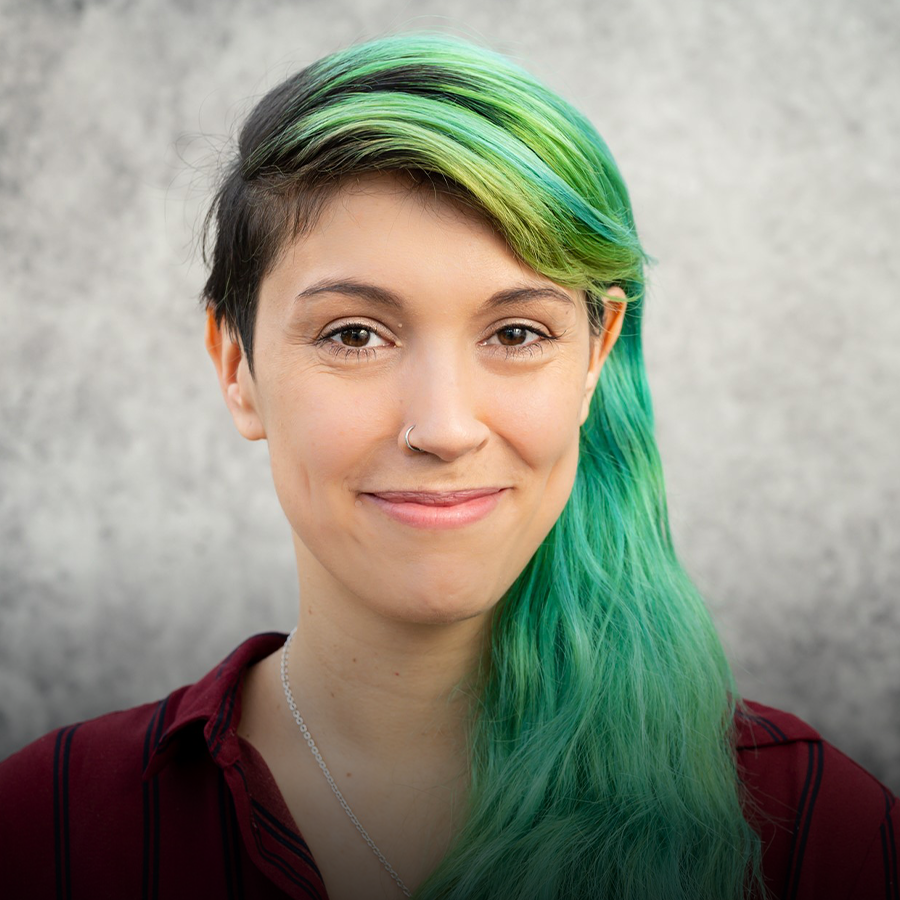
AI has the power to shape our world, and is increasingly becoming part of our daily lives - but what happens when it inherits…
"When I came out of the closet I was blackmailed, threatened, even bribed.
AI is transforming our lives inside and outside of the workplace - but it is only as effective as the input we give it.

Psychological Safety is a well documented driver of high performance in teams and organisations.
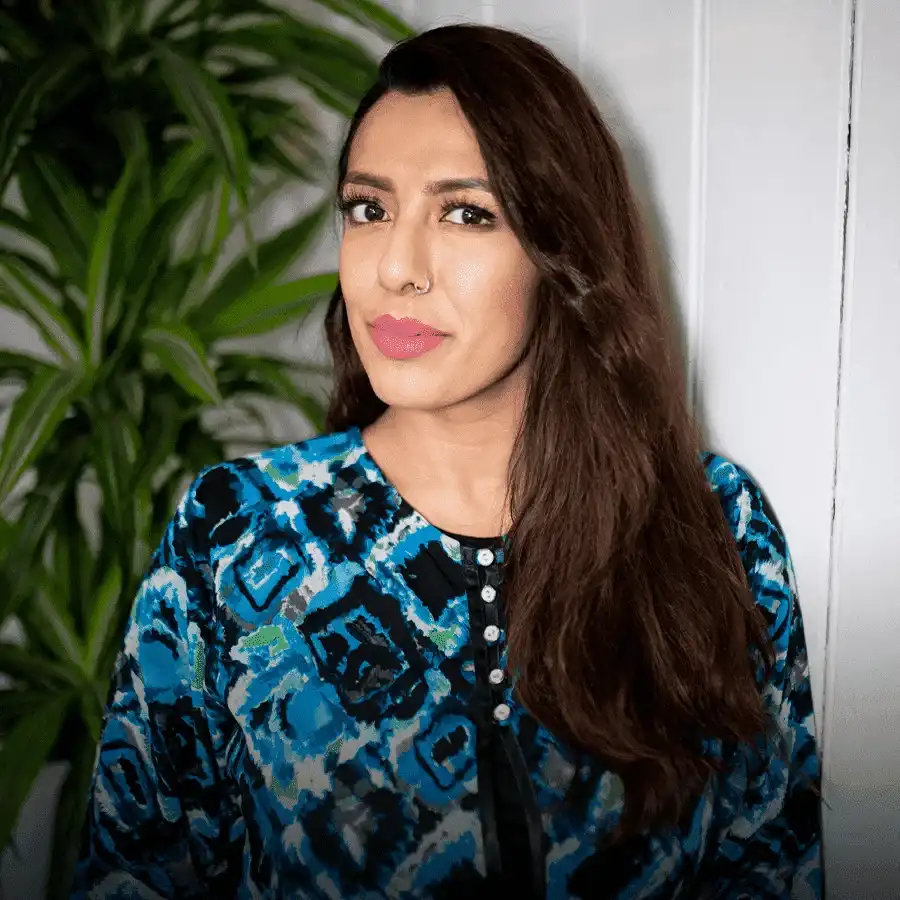
Ramadan and Eid are deeply significant periods in the Islamic calendar, marked by fasting, prayer, and community celebrations.
What does being an ‘Ally’ mean? From case studies to the Wheel of Power and Privilege, this interactive session will take you…
During Taz's session ‘inclusive thinking’ you’ll learn to understand the impact of unconscious bias.
Having white privilege and recognising it is not racist. But white privilege exists because of historic, enduring racism and…
The topic of culture can sometimes seem dry or theoretical, however in reality we all have a natural ability to connect with…