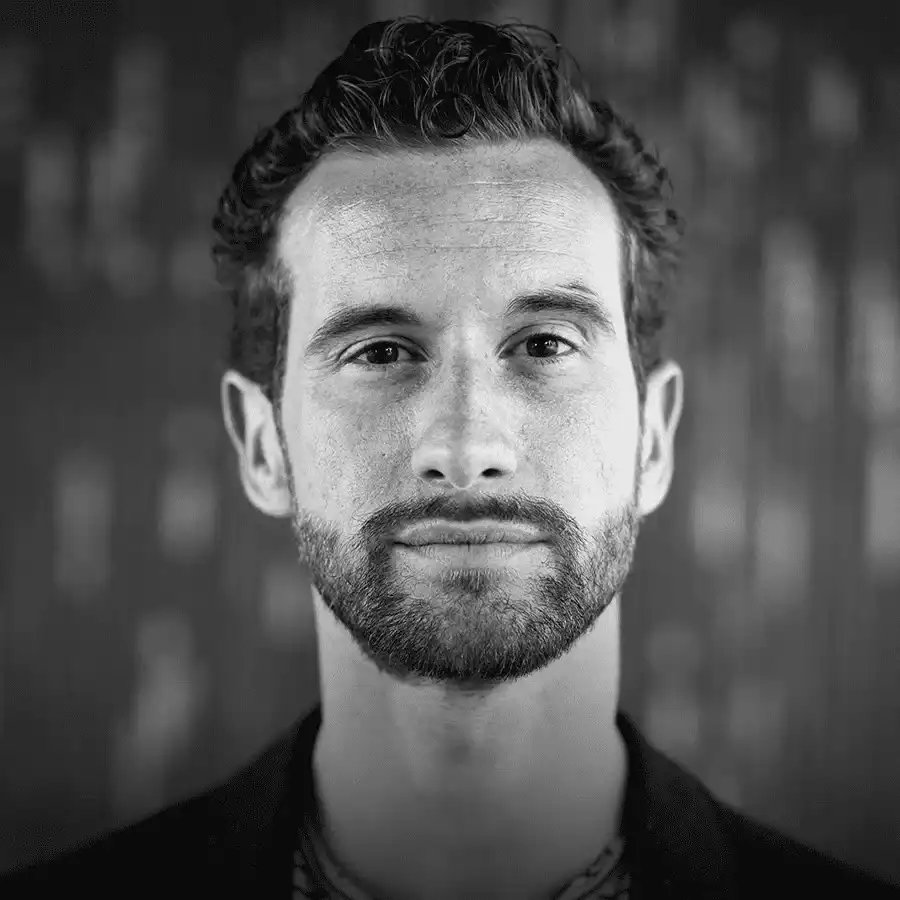
This one runs as an interactive workshop: the hour includes exercises your colleagues do themselves, not only a talk.
Stability is a great thing. Being able to make choices without panic. Not letting setbacks get you down. Being in the process, even when things are not going well, or when things simply go badly. If this goes well for your employees, then you are blessed with an excellent work force.
In fact, employees who are feeling well create good work relationships, show consistent performance and have a constructive outlook, a number of things that contribute positively to important KPIs such as a pleasant work atmosphere and high productivity. In this lecture, Jerome will discuss a number of aspects that make you feel good about yourself mentally.
These can be summarized under mindset, attention and self-knowledge. In this lecture a clear explanation of these aspects will be given, as well as practical examples of how you can use them to feel good about yourself.
The expert also draws from his own life experience and shows how changes in his own mindset, attention and self-knowledge have helped him deal with difficult life events. He gives concrete tips that you and your employees can put into practice immediately.
During the expert session, Jerome engages the audience through methods like a Q&A session, live demonstrations, and interactive exercises using the Mentimeter app for polling questions.
Stability is a valuable asset, especially in the workplace. It enables employees to make decisions without succumbing to panic, to stay resilient in the face of setbacks, and to remain engaged even when circumstances are challenging or unfavorable.
When employees achieve this level of stability, the benefits to the organization are profound. They foster strong work relationships, maintain consistent performance, and uphold a constructive outlook.
These qualities significantly contribute to crucial key performance indicators (KPIs) such as a positive work atmosphere and high productivity.
In this insightful lecture, Jerome delves into several key aspects that contribute to mental well-being. These can be summarized under three main themes: mindset, attention, and self-knowledge. Jerome will provide a clear and detailed explanation of these concepts, demonstrating how they are integral to feeling good about oneself.
He will offer practical examples to illustrate how these aspects can be effectively utilized to enhance personal well-being. By understanding and applying these principles, employees can achieve greater stability and resilience, leading to both personal and professional growth.
Drawing from his own life experiences, Jerome will share how shifts in his mindset, attention, and self-knowledge have enabled him to navigate difficult life events successfully. He will present concrete tips and strategies that can be immediately implemented by you and your employees.
These actionable insights are designed to improve mental well-being, fostering a more stable and productive workforce. By the end of the lecture, participants will be equipped with practical tools to enhance their mental resilience and overall job performance.
It is interactive, and the block above says exactly how for this session. Nobody has to speak up who does not want to: the chat and the polls carry most of it, and the questions can come in anonymously.
Stability is a great thing. Being able to make choices without panic. It is built for a general working audience: no prior knowledge is assumed, and people who already know the subject get the research and the practical side rather than an introduction.
A workshop. The description of this session says so itself: the hour includes exercises and activities that participants do, not only an expert speaking. It still runs live and online, for as many colleagues as you want to invite.
Jérôme Gijselaers is one of the experts we auditioned ourselves, and we produce every session so we see how each one lands. Participants rate this session 4.2 out of 5, across 417 responses, and rate Jérôme personally 4.4 out of 5.
It runs 45 min / 15 min: the talk, then live questions. All you do is pick a date. We brief Jérôme, produce the session, host and moderate it, run the Q&A, and send you the report within an hour of the end.
A team, a department, an employee network or every single employee at once, with no cap and no per-seat price. It runs inside your own Microsoft Teams, Zoom or Google Meet, or on a branded page we build. No integration, no login, no company device or e-mail.
The session is delivered in English, Dutch. You can add high accuracy live subtitles in 8, 16 or 24 languages, so everyone follows in their own. That is a paid option, priced by the number of languages you need.
No, and that is by design. There is nothing to install, nothing to integrate and no connection to your systems, so there is nothing for IT to validate: we join your own Teams, Zoom or Meet as a guest speaker, or we host a page and your people open a link. No software, no accounts, and no data of yours that we can reach. It is why hundreds of companies, among them some of the largest technology and financial firms in the world, were able to start within a day.
We never receive or hold personal data about your employees. Because the session runs in your own environment, attendance and identity stay with you, and what we report back is aggregated: numbers, ratings and survey answers, not people. That is also why IT approval usually takes minutes rather than weeks.
You keep the recording and can share it internally. You also get attendance over time, participant ratings for the content and the speaker, the survey answers, and the topics your people asked for next.

Psychological Safety is a well documented driver of high performance in teams and organisations.

The menopause has an impact on everyone. At work, at home, in your social life - where women have to navigate this brain-body…
Stress and Burnout are on the rise in the workplace now more than ever before.
"What’s their name again? Why did I walk into this room? What were my 4 actions from that last team meeting?

In a world of uncertainty, we cannot always control all the bad things that happen to us, but we can control the way that we…

“Netflix’s biggest competitor is sleep.”That statement captures the reality of today’s attention economy.